
I’ll never forget walking into my friend Sarah’s apartment about five years ago. She’d just moved in, and the place felt cold, empty, almost institutional despite the decent natural light. Six months later, I visited again, and the transformation was remarkable. Same rental, same white walls she couldn’t paint, same laminate floors, but it felt like an entirely different space. Warm, inviting, completely her.
That experience stuck with me because it proved what I’ve come to believe after years of experimenting with my own spaces and helping others with theirs: you don’t need a massive budget, a homeowner’s freedom to renovate, or even particularly good “taste” to make a house feel like home. You just need to understand a few fundamental principles and be willing to try things.
Here are ten decorating ideas that work in almost any space, whether you’re in a 400-square-foot studio or a sprawling suburban house. I’ve seen these approaches succeed in rentals, starter homes, family houses, and everything in between.
1. Layer Your Lighting (This Changes Everything)
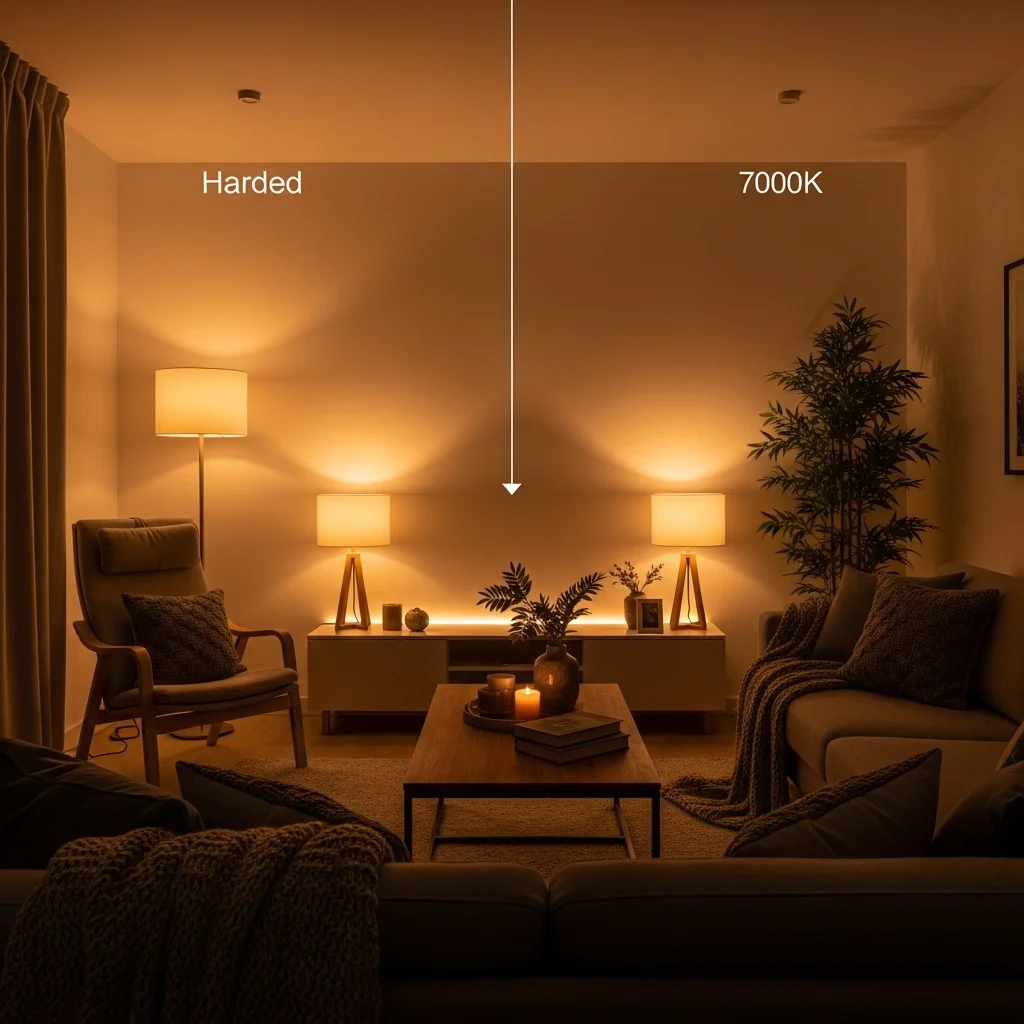
Most homes come with builder-grade overhead lighting that makes everything look like a dentist’s office. I learned this the hard way in my first apartment when I couldn’t figure out why my carefully chosen furniture looked so uninviting every evening.
The solution isn’t complicated: you need light at different heights and from different sources. Table lamps, floor lamps, even string lights or LED strips behind furniture create depth and warmth that a single ceiling fixture never will.
InrarelyIn my current living room, I have five light sources on different circuits (or switches, in the case of lamps). Overhead recessed lights for cleaning and serious tasks, a floor lamp next to the reading chair, two table lamps on either side of the sofa, and LED strips behind the TV console. Sounds like a lot? Maybe. But I rarely use the overhead lights anymore. The layered lighting makes the space feel cozy without being dim, and I can adjust the mood depending on whether I’m reading, watching TV, or having people over.
The practical bit: start with one or two quality lamps with warm-toned bulbs (2700K-3000K color temperature, if you want to get specific). Position them where you actually spend time. You’ll immediately notice the difference.
2. Large-Scale Art (Even If It’s From IKEA)
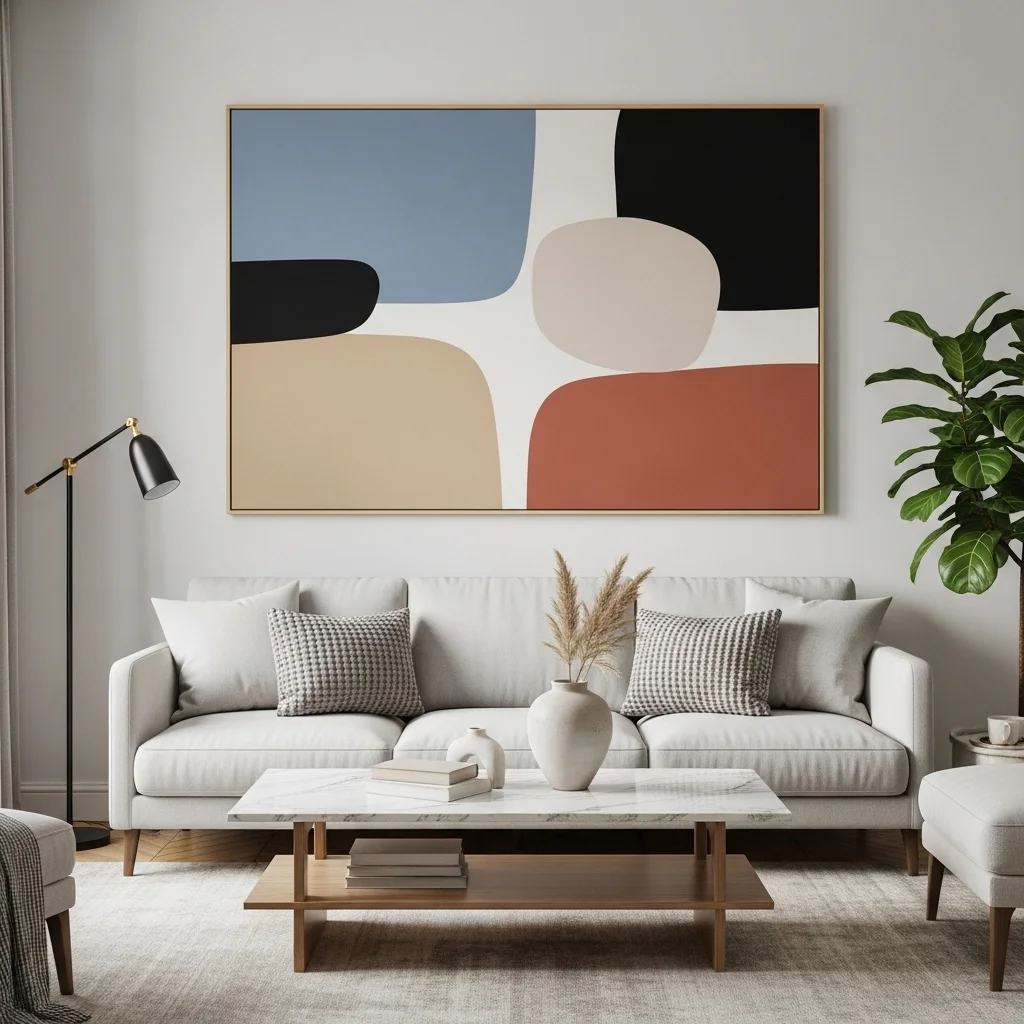
There’s something about a big piece of art on the wall that makes a space look intentional and finished. I’ve noticed that people often hesitate with wall art for two reasons: they think they can’t afford “real” art, or they’re worried about making the wrong choice.
Here’s the thing a large canvas print from a budget retailer will do more for your walls than a collection of small, random frames. The scale matters more than the price tag for visual impact. I have a massive abstract print above my sofa that cost about $80, and guests consistently ask about it because the size makes it a focal point.
If you’re nervous about choosing art, pick something with colors that echo what’s already in your room. Or go the opposite direction entirely: black and white photography works in virtually any space and never looks dated. I’ve seen people create gallery walls with family photos enlarged to 16×20 or bigger, and the effect is both personal and sophisticated.
One caveat: hanging big pieces can be intimidating. Use proper anchors (not just nails in drywall), and don’t hang things too high. A common rule is that the center of the artwork should be at eye level, roughly 57-60 inches from the floor. Though honestly, I sometimes eyeball it and adjust until it looks right.
3. Add Something Living
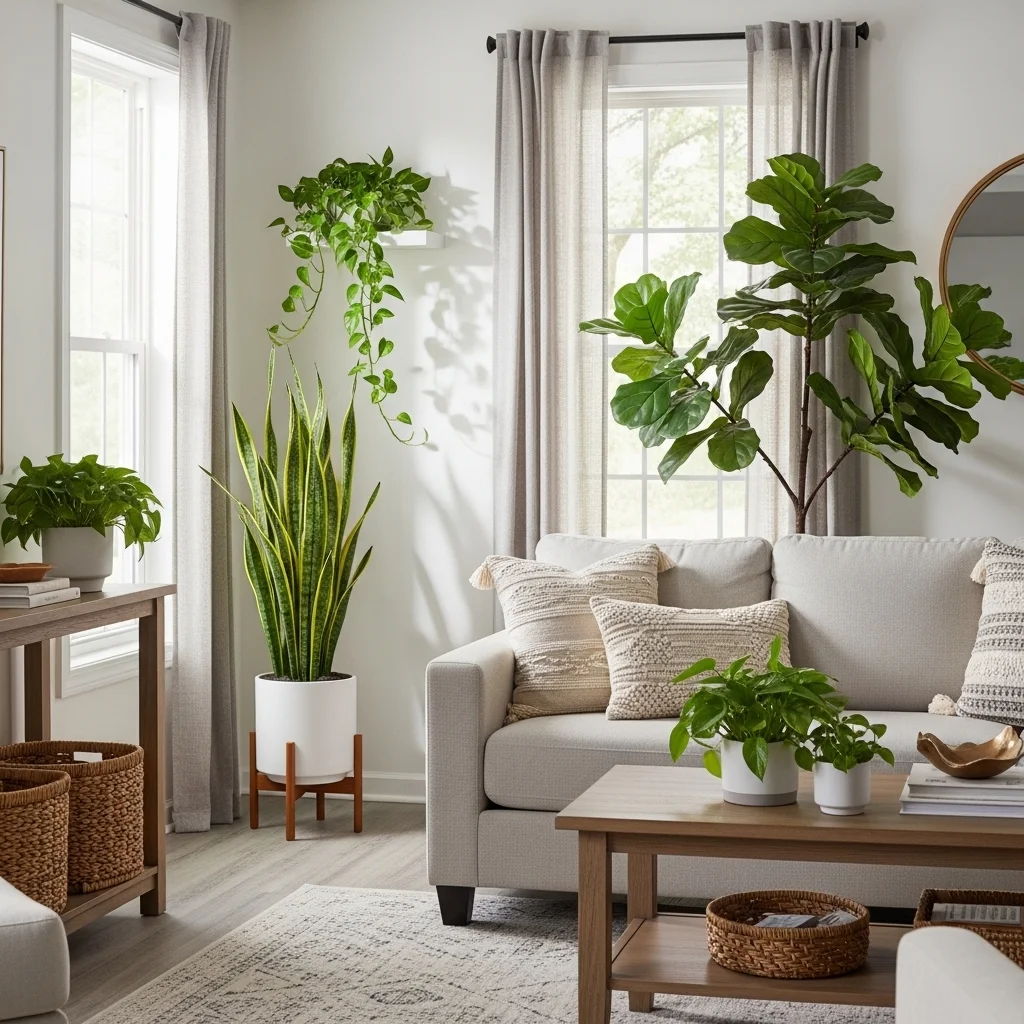
Plants have become trendy to the point of cliché, but that doesn’t make them less effective. A room with plants simply feels more alive than one without them. Even people who swear they have a black thumb can usually keep a pothos or snake plant going with minimal effort.
I killed approximately seven plants before figuring out that I overwater everything. Once I started treating my plants with benign neglect, watering only when the soil was dry an inch down, not on a schedule, they thrived. My snake plants have been alive for years now, with watering maybe every two or three weeks.
If you genuinely cannot keep plants alive, good-quality faux plants have come a long way. I’m usually skeptical of fake greenery, but I’ve seen realistic faux fiddle leaf figs and olive trees that fooled me from a few feet away. They cost more upfront but last indefinitely and need only occasional dusting.
The sweet spot for plant placement: near windows (obviously), but also on shelves, in empty corners, or flanking seating areas. A large floor plant can fill a dead space more effectively and cheaply than a piece of furniture.
4. Rugs That Are Big Enough
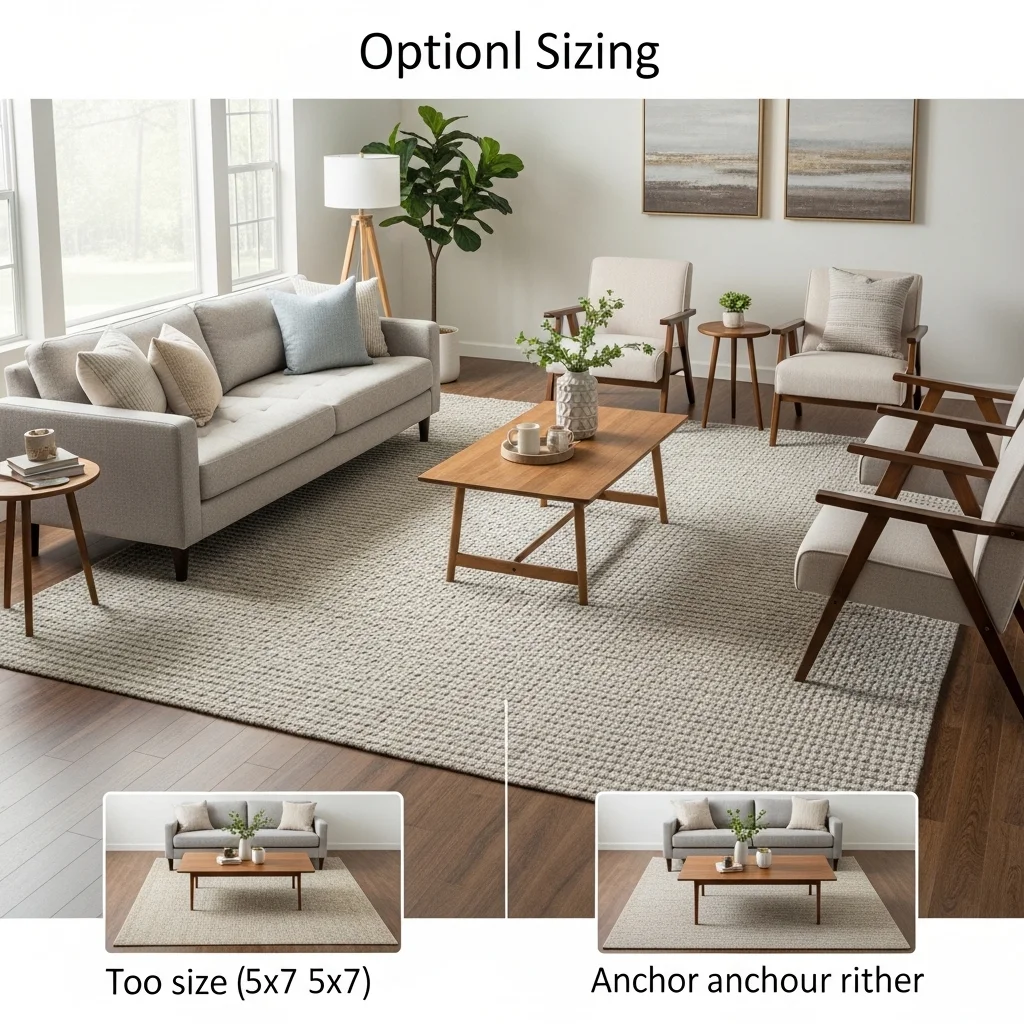
This is where I see people make the same mistake repeatedly: buying rugs that are too small for the space. A tiny rug floating in the middle of a room makes everything look disconnected and, frankly, cheap.
The general guideline is that your rug should be large enough to fit at least the front legs of your furniture on it. In a dining room, the rug needs to extend beyond the table so chairs remain on the rug even when pulled out. In a bedroom, you want to step onto the rug when you get out of bed, not land on cold floor and then reach a rug.
I measured wrong when I bought my first living room rug. Got an 5×7 when I needed an 8×10. The room felt choppy and small. When I finally upgraded to the right size, the entire space opened up visually. It’s counterintuitive a bigger rug actually makes a room feel larger, not more crowded.
Yes, properly sized rugs can be expensive. Retailers like Rugs USA, Wayfair, or even HomeGoods sometimes have decent options at better prices than traditional furniture stores. And if you’re in a rental or transitional phase, there’s no shame in a less expensive rug that you’ll upgrade later. The right size matters more than the perfect pattern.
5. Curtains Hung High and Wide
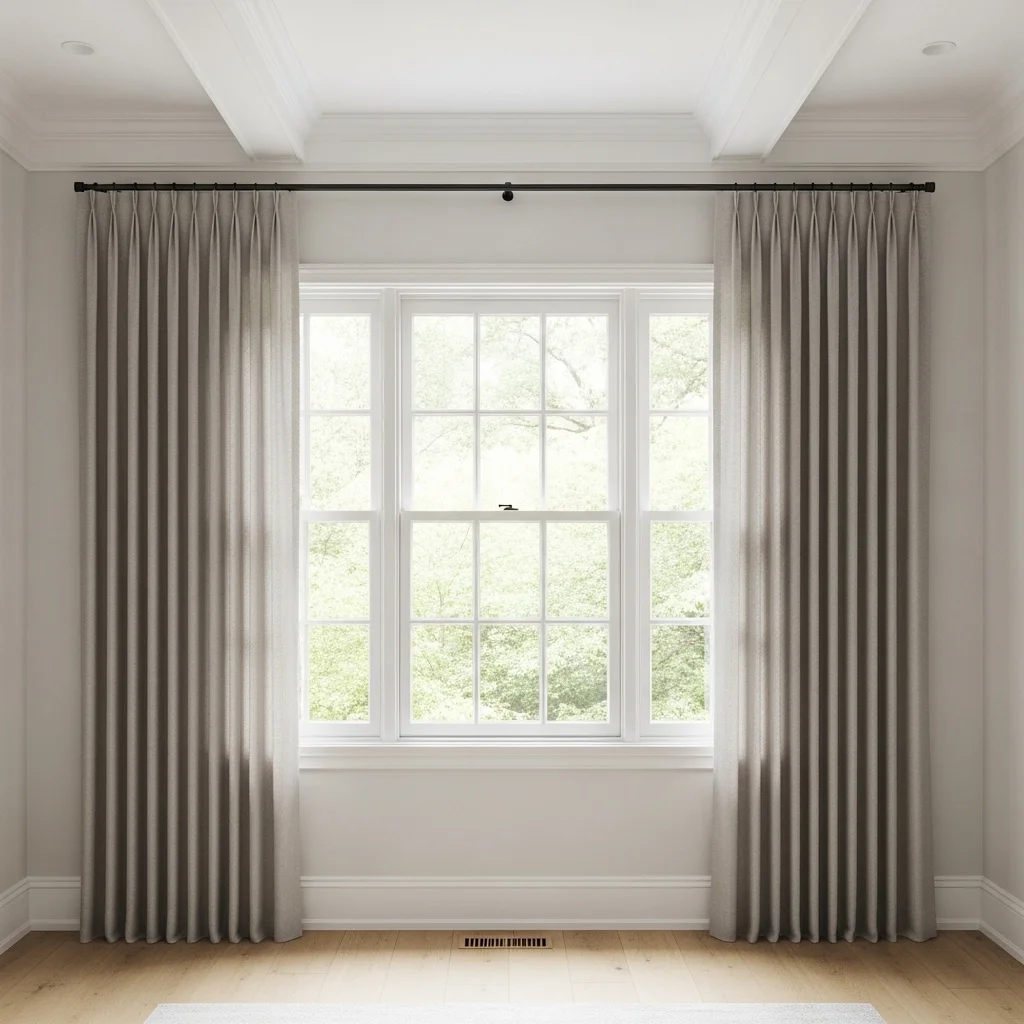
Here’s a trick that costs almost nothing but makes a huge visual difference: hang your curtain rods closer to the ceiling than to the top of the window frame, and extend the rods several inches beyond the window on each side.
This does two things. First, it draws the eye upward, making your ceilings look higher. Second, when the curtains are open, they frame the window rather than covering it, which allows more light in and makes the window appear larger.
I mount my rods about 4-6 inches below the ceiling (or crown molding if there is any) and extend them about 6-8 inches past the window frame on each side. The curtains themselves should just barely kiss the floor or puddle slightly definitely not hover awkwardly a few inches above it.
This approach works with inexpensive curtains too. I’ve gotten perfectly serviceable panels from Target and IKEA that, hung properly, look more expensive than they are. Color-wise, I tend toward neutrals because they’re versatile, but if your room needs a pop of color or pattern, curtains are a relatively low-commitment place to add it.
6. Create Defined Zones (Even in Small Spaces)
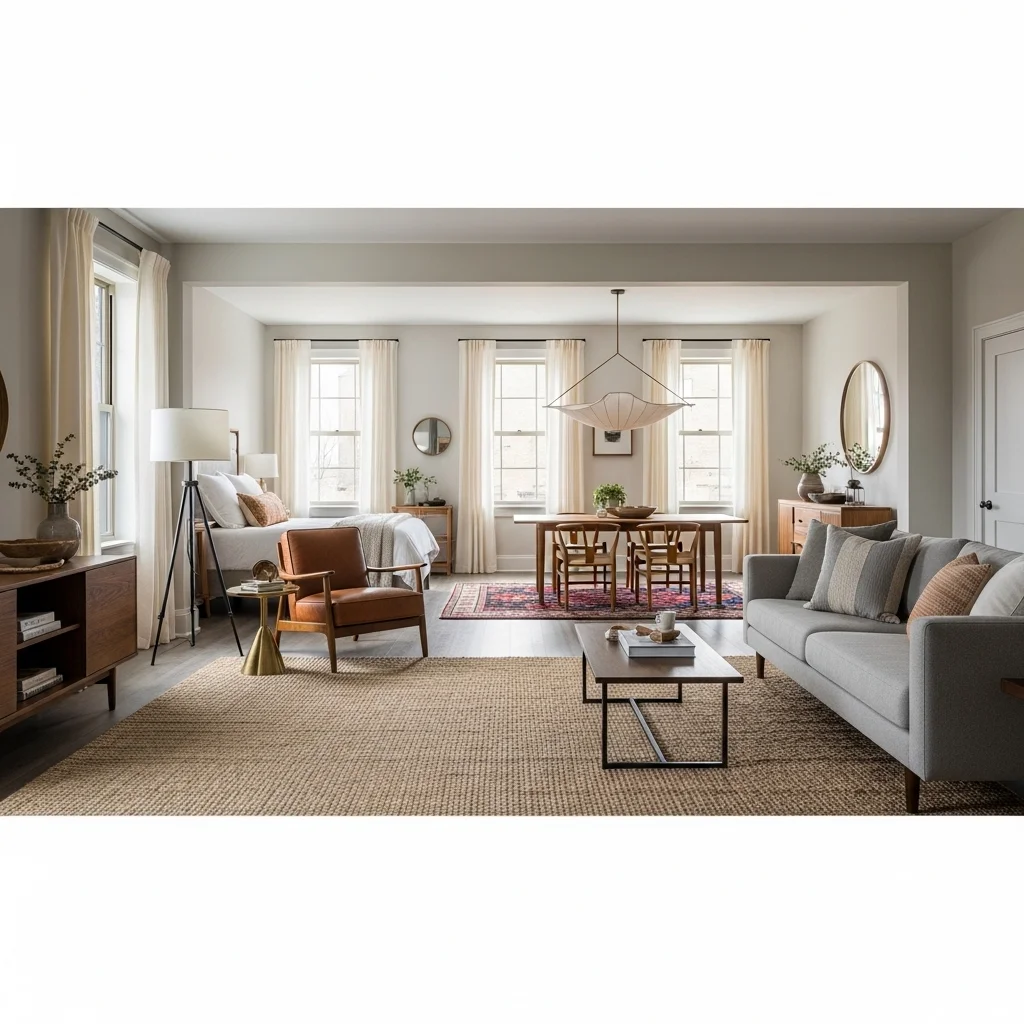
Open floor plans and studio apartments present the same challenge: how do you make one big space serve multiple purposes without everything blending together into chaos?
The answer is creating zones through furniture arrangement, rugs, and lighting. In my previous apartment, the “living room” and “dining area” were really just one long rectangle. I used the back of my sofa as a divider, positioned to face the TV but also to separate the seating area from the dining table behind it. A different rug under each zone reinforced the separation.
You can do this with bookcases, console tables, or even just thoughtful furniture placement. The goal is to give each area its own identity and purpose. In a bedroom that doubles as a home office, position your desk away from the bed if possible, preferably facing a wall or window rather than toward your sleeping space. Your brain will thank you for the mental separation.
I’ve also seen people use lighting brilliantly for this pendant lights over a dining table, a floor lamp defining a reading nook, and task lighting at a desk. Each light source signals, “this is a different area with a different function.”
7. Meaningful Collections Displayed Together
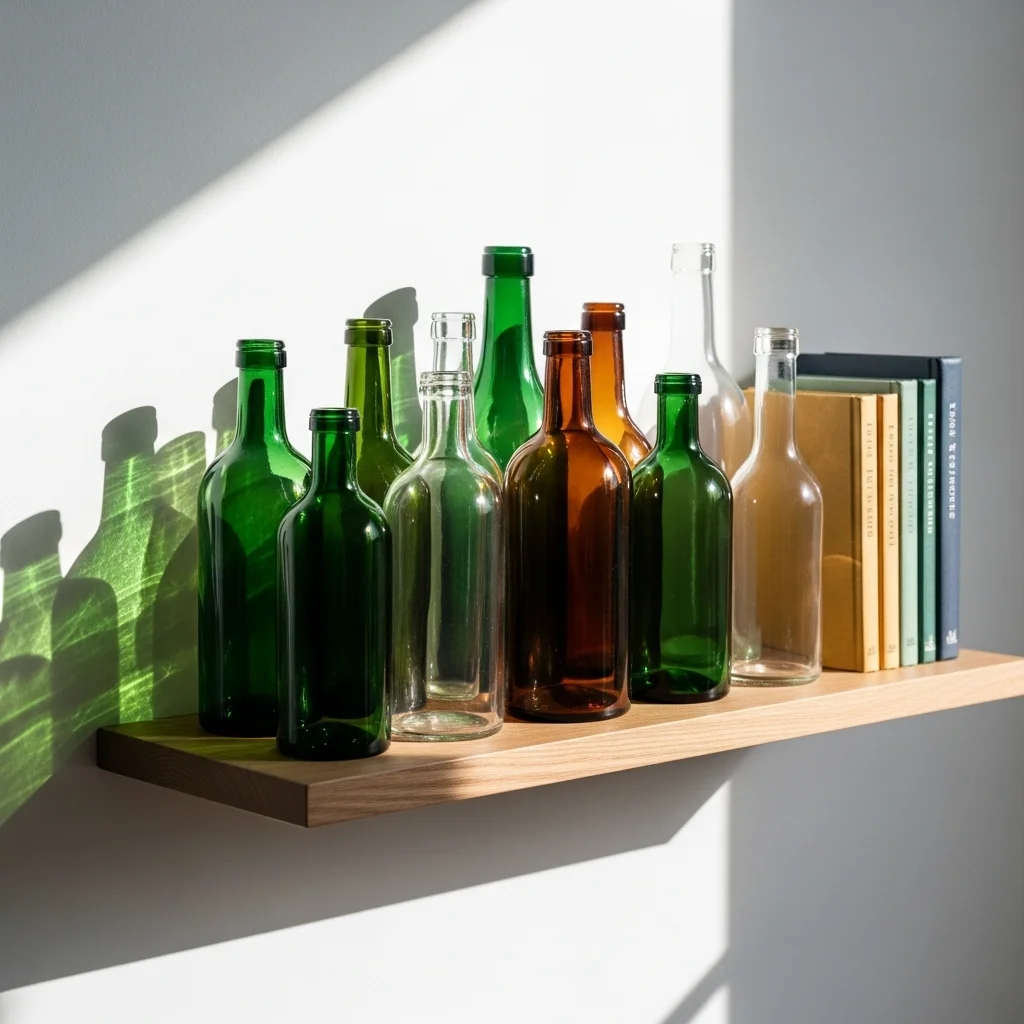
Scattered random objects on shelves usually look cluttered. But grouping similar items, whether by color, material, theme, or type, creates visual cohesion and can turn everyday stuff into intentional decor.
I collect vintage glass bottles, something that started accidentally when I kept a particularly pretty olive oil bottle instead of recycling it. Now I have maybe fifteen bottles in various shades of green, amber, and clear glass, all grouped together on open shelving in my kitchen. Separately, they’d be junk. Together, they look deliberate.
You probably already have things worth displaying. Books arranged by color can be striking (though I’ll admit this drives my more literary friends crazy, they want to organize by author or genre, which is valid but less visually impactful). Travel souvenirs from different trips create a collected-over-time vibe. Even practical items like ceramic dishes or wooden bowls look good when grouped.
The key is editing. Show your five favorite pieces, not all twenty. Restraint makes the difference between curated and cluttered.
8. Paint or Wallpaper (At Least Something)
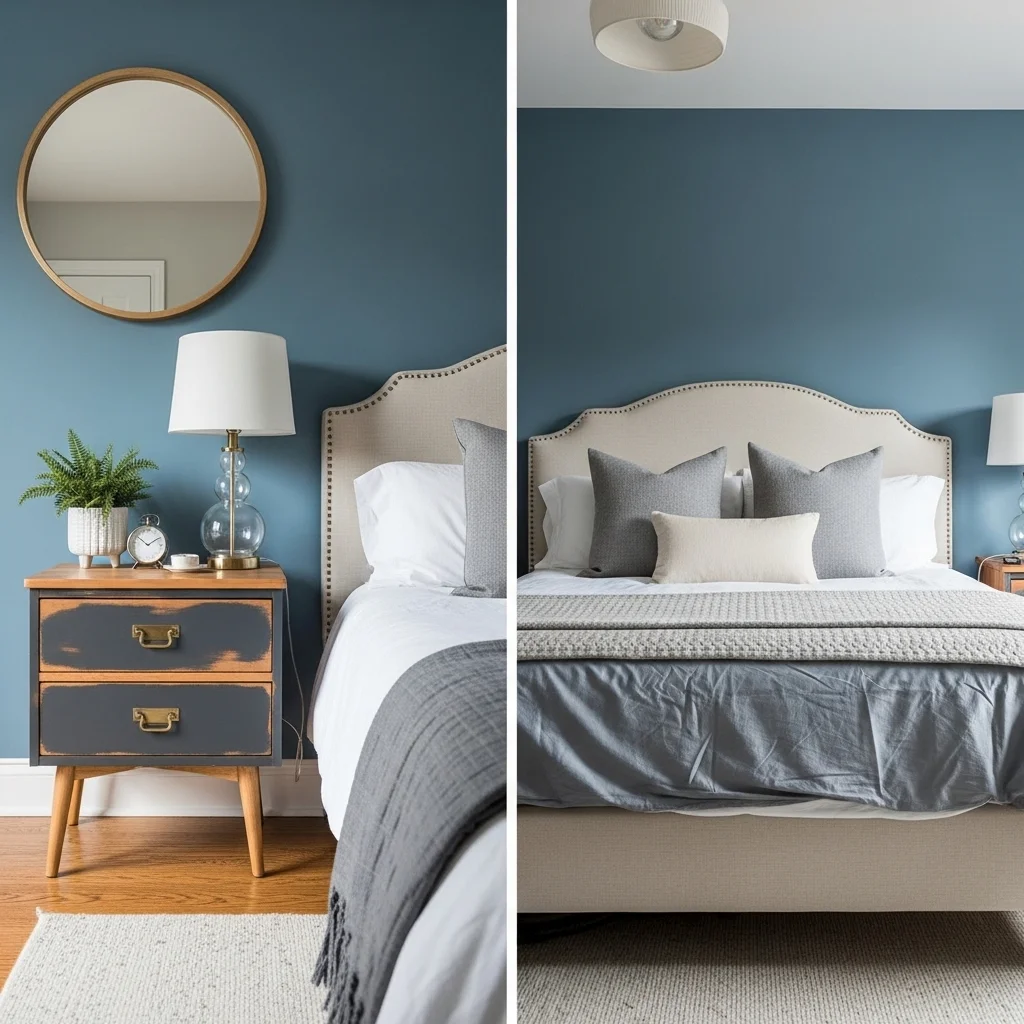
I know, I know many of you are in rentals and can’t paint. But if you own your place or have a flexible landlord, paint is the highest-impact, lowest-cost change you can make. One wall in a bold color, a painted ceiling, even just painting old furniture can transform a space.
I finally painted my bedroom a warm, dusty blue last year after staring at builder white for ages. It took a Saturday and about $80 in supplies. The room feels cozy now, like an actual retreat instead of just “the place where the bed is.”
If painting walls is genuinely not an option, consider peel-and-stick wallpaper for an accent wall. Quality varies wildly with these products, fair warning, but the better brands are genuinely removable without damage. I’ve used it in a bathroom with good results, just avoid heavily textured walls, which make adhesion tricky.
You could also paint furniture. A dated nightstand or bookshelf in a fresh color feels like a completely different piece. I’ve rescued several secondhand furniture items this way, and the transformation never stops being satisfying.
9. Texture, Texture, Texture
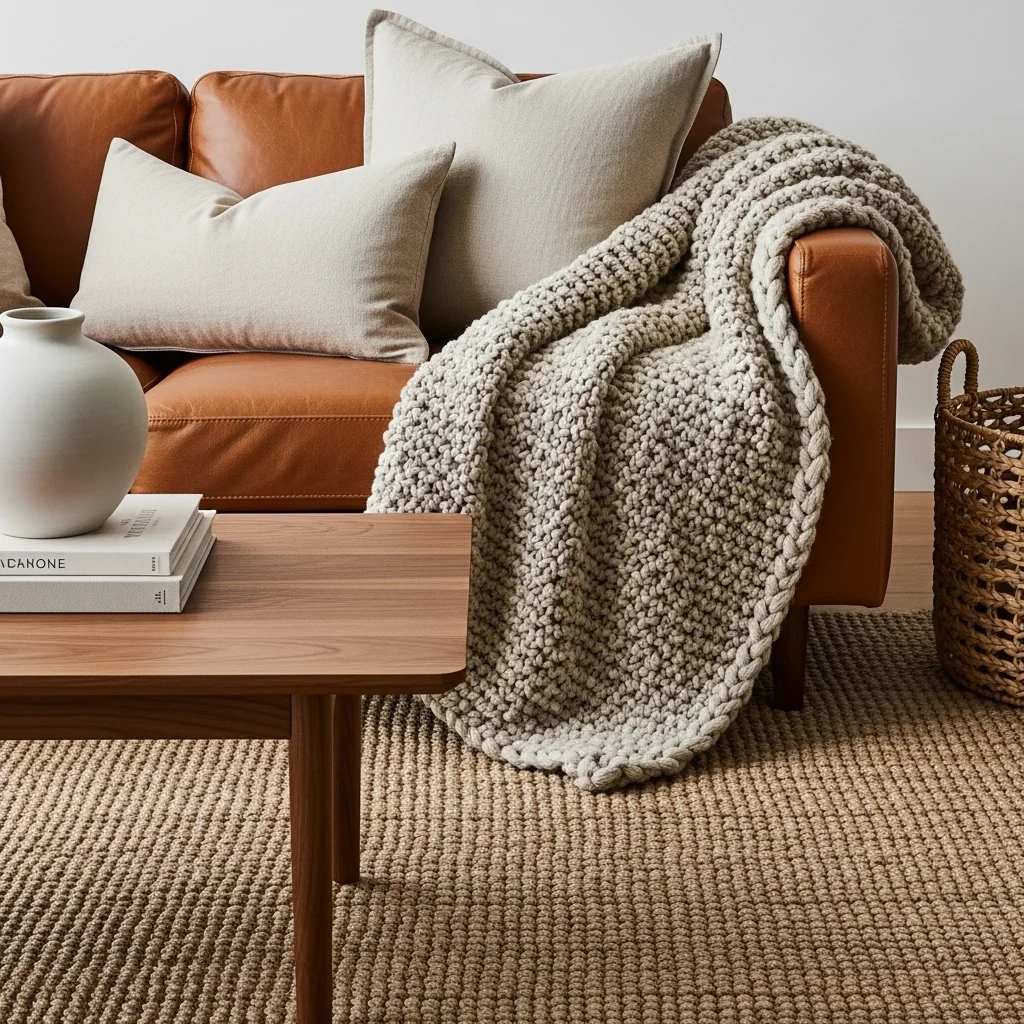
Flat, smooth surfaces in a single material make spaces feel cold and one-dimensional. Varying textures creates richness and interest, even when your color palette is simple.
Think about layering: a leather sofa with linen pillows and a chunky knit throw. A smooth wood coffee table on a jute rug. Velvet curtains against sheer white walls. Matte pottery next to glossy books.
I learned about texture from a designer friend who pointed out that my living room, while color-coordinated, was all smooth and hard leather, wood, metal, and glass. No soft elements, no contrast. I added some woven baskets, a couple of nubby pillows, and a faux sheepskin rug, and suddenly the room felt livable instead of showroom-sterile.
This applies to finishes too. All matte or all glossy can feel flat. Mix shiny with matte, rough with smooth, soft with hard. Your space will feel more dynamic without you necessarily being able to pinpoint why.
10. Declutter First, Decorate Second
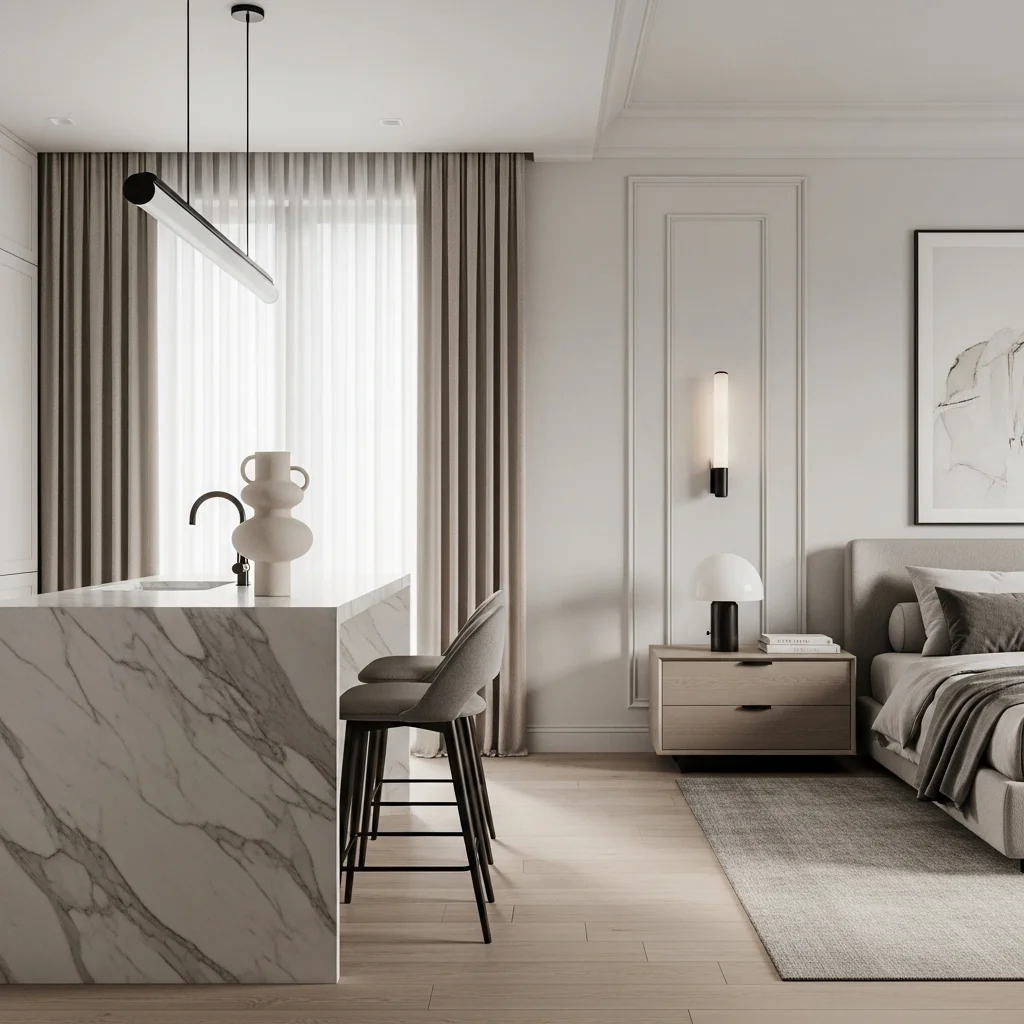
This might seem like it belongs in an organizing article rather than a decor piece, but hear me out: even the best decorating ideas fail in a cluttered, disorganized space. Visual noise overwhelms everything else.
I’ve wasted money on beautiful decor items that disappeared into the chaos of too much stuff. Conversely, I’ve seen sparse, minimal spaces look amazing with just a few well-chosen elements precisely because nothing is competing for attention.
You don’t need to become a minimalist. But editing down to what you actually use and love makes room for the decor that matters. Clear countertops in the kitchen, a nightstand with just a lamp and book, open floor space to show off that rug you invested in.
My approach is the “one in, one out” rule for most categories. New throw pillow means I donate an old one. New piece of art means evaluating what’s already on the walls. It keeps accumulation in check without requiring dramatic purges.
I also do a quarterly sweep where I walk through with fresh eyes and pull out anything that feels off, wrong color, wrong scale, not my style anymore, just there out of habit. Usually, a box or two of stuff leaves my house, and what remains looks more intentional.
The Real Secret (There Isn’t One)
After all this, the truth is that making a home feel good is less about following rules and more about paying attention to what works for you. I’ve broken every guideline I’ve mentioned here at some point. Sometimes rules about rug size or curtain height or whatever don’t apply to your specific situation.
The ideas I’ve shared work for me and in spaces I’ve been involved with, but your home might need something entirely different. Maybe you need more color, less minimalism. Maybe you love ornate traditional decor, and all my talk of clean lines is irrelevant to you. That’s completely fine.
What matters is creating a space that feels comfortable and reflects something about who you are. You can go with high, wide curtains all day long, or if you prefer blinds,get nice blinds and don’t worry about it.
Start small. Pick one idea that resonates and try it. See how it feels. Adjust. Maybe try another. Decorating isn’t a one-time project but an ongoing process of making small improvements and changes as your life, needs, and preferences evolve.
My home looks different than it did two years ago and will look different two years from now. Some experiments work brilliantly. Others fail, and I learn something for next time. That’s part of the enjoyment, honestly the tinkering, the gradual improvement, the satisfaction of getting a room to finally feel right.
Your home should be a place you look forward to being in, not a source of stress about whether you’re doing it “correctly.” These ten ideas are starting points, not commandments. Use what helps, ignore what doesn’t, and trust yourself more than you probably think you should. You know what feels good when you walk in the door, lean into that.