I’ve moved more times than I care to count, and each time, I’ve faced the same challenge: making a living room feel inviting without draining my bank account. Over the years, I’ve learned that creating a beautiful space has less to do with expensive furniture and more to do with understanding a few basic principles and getting creative with what you already have or can easily find.
The truth is, most of us don’t need another shopping spree at a high-end furniture store. What we need is a fresh perspective on the ordinary items sitting around our homes, plus a willingness to experiment a little.
Start With What You’ve Got
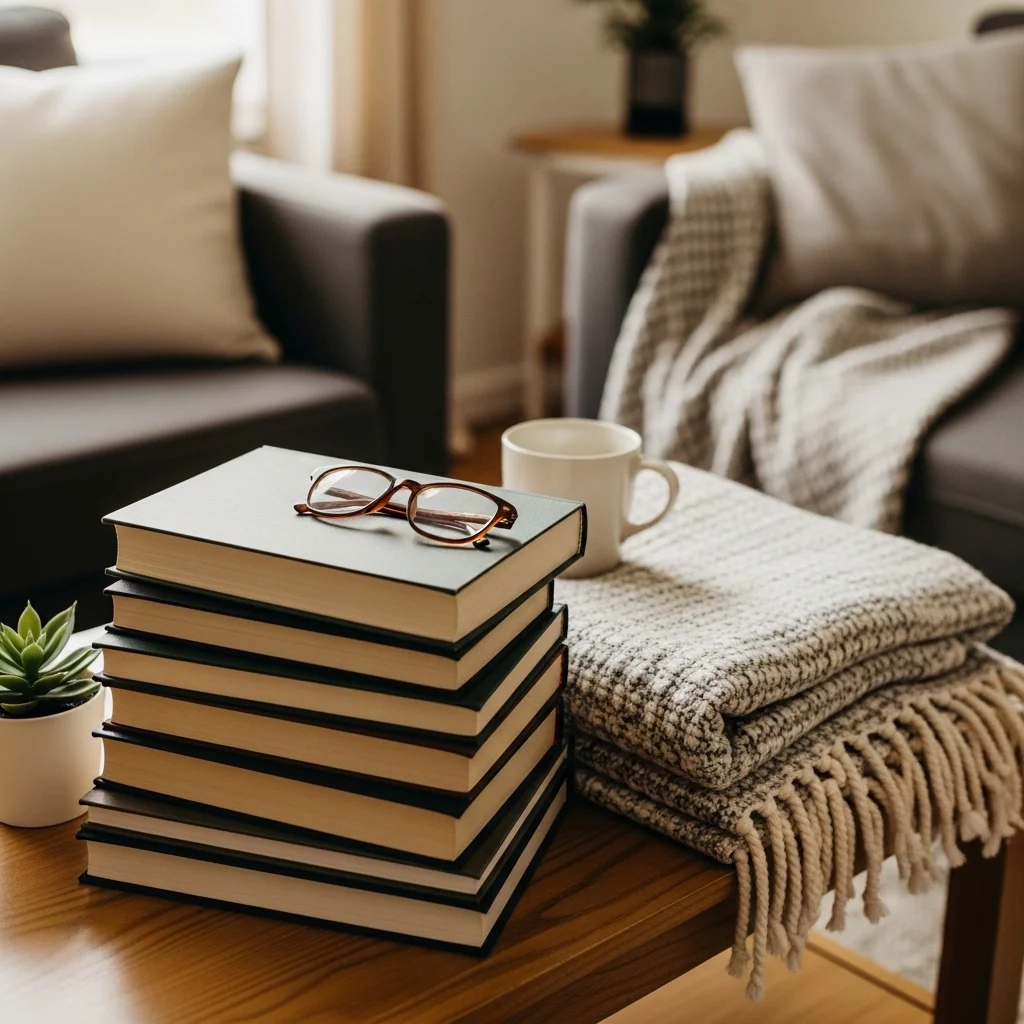
Before you buy anything new, take inventory. I mean, really look at what’s already in your living room. That stack of books you’ve been meaning to organize? They could become a design element. Those throws bunched up on your couch? Properly arranged, they add texture and warmth.
Last year, my neighbor complained that her living room felt sterile and uninviting. When I visited, I noticed she had plenty of stuff, but it just wasn’t working together. We spent an afternoon rearranging what she already owned, and the transformation was remarkable. No purchases required.
Start by clearing everything out mentally. If your living room were empty, what would you bring back in first? This exercise helps you identify what you actually love versus what’s just taking up space.
The Power of Rearrangement
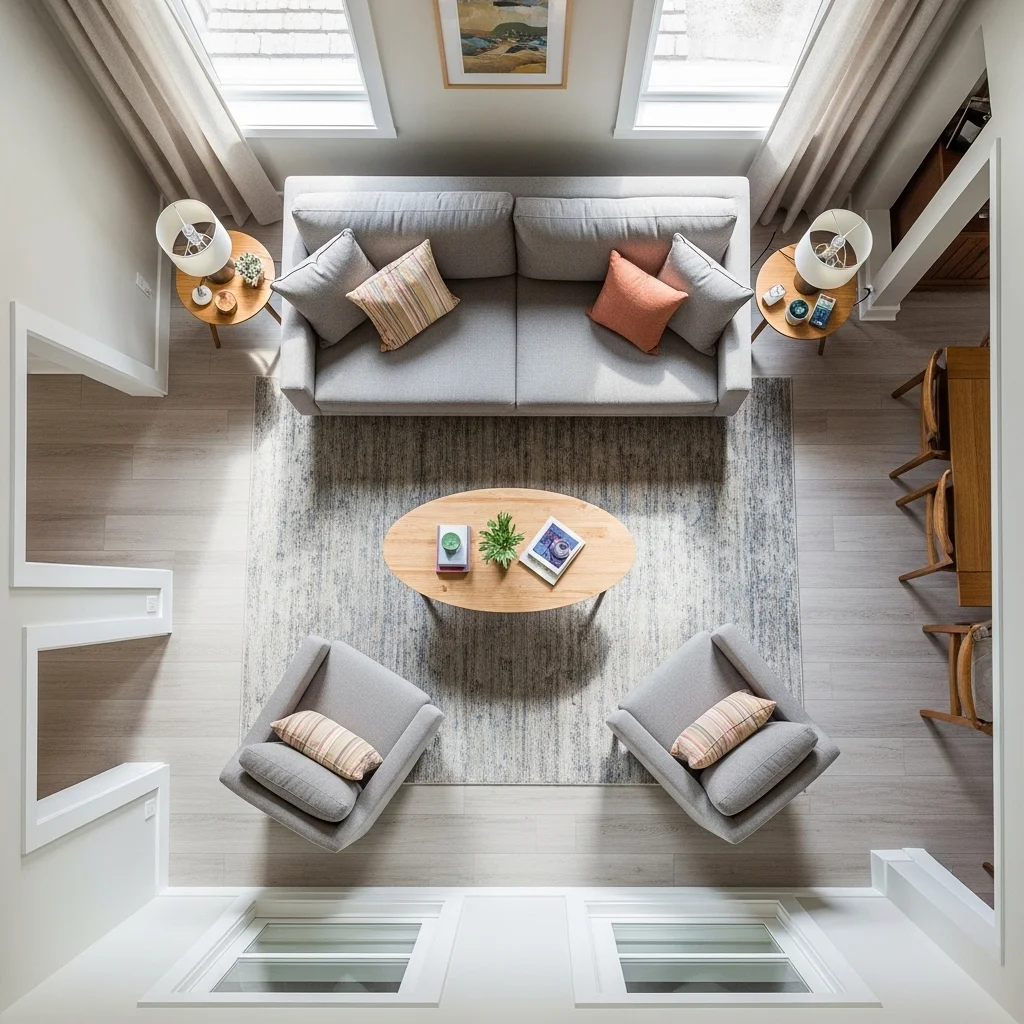
Never underestimate how much difference furniture placement makes. I’ve seen identical rooms feel completely different based solely on where the couch sits.
Try pulling your furniture away from the walls. I know this sounds counterintuitive, especially in smaller spaces, but floating your seating arrangement even just a few inches creates better flow and makes the room feel more intentional. Your living room shouldn’t look like all the furniture is trying to escape through the walls.
Create conversation areas. Angle chairs toward each other slightly. Make sure people sitting in different seats can comfortably see each other without craning their necks. These small adjustments make a space feel welcoming rather than like a doctor’s waiting room.
Let There Be (Better) Light
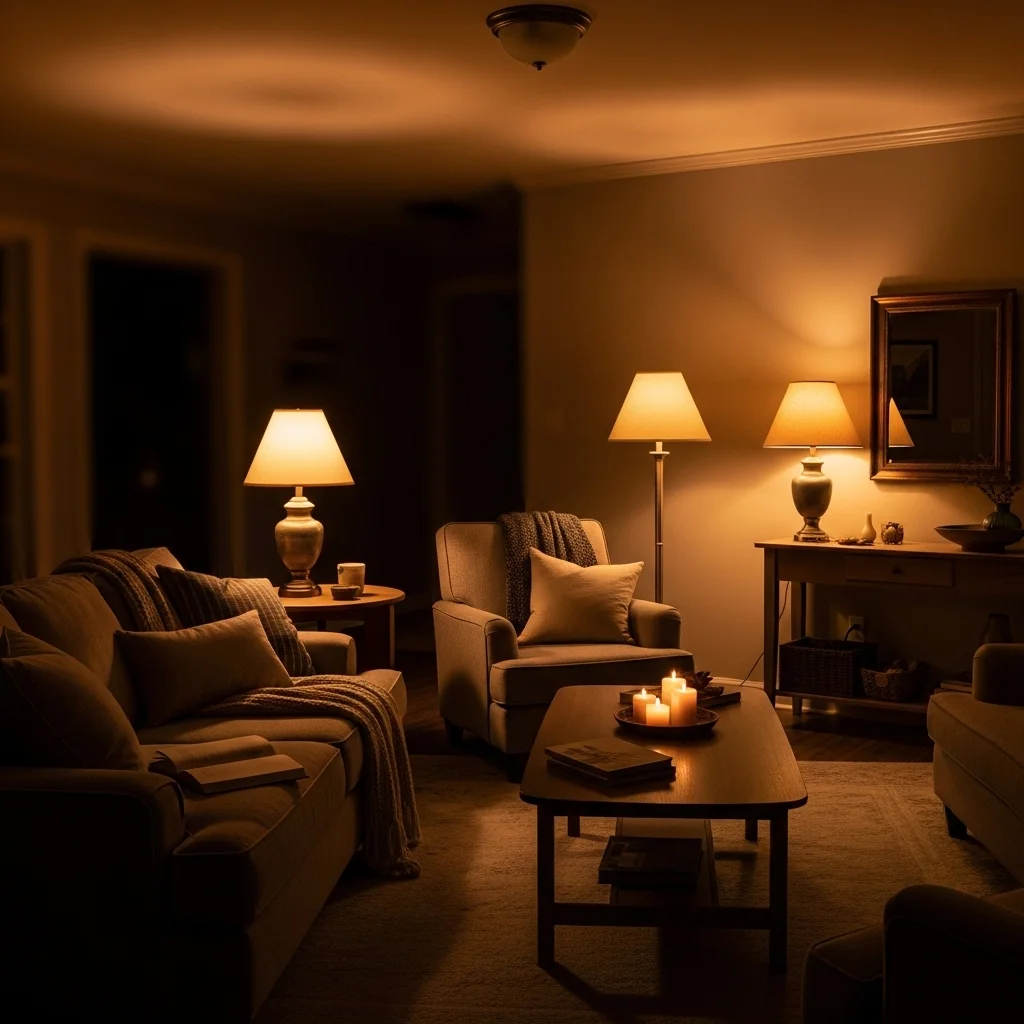
Lighting is probably the single most impactful, simple thing you can change, yet it’s often overlooked. Overhead lighting alone makes any room feel harsh and flat.
I learned this the hard way in my first apartment. I had one ceiling fixture, and I couldn’t figure out why the space felt so uncomfortable. Then my aunt visited and asked where my lamps were. I didn’t have any. She shook her head and took me to a thrift store, where we found two table lamps for under thirty dollars total. The difference that night was stunning.
You want lighting at different levels overhead, yes, but also table lamps, floor lamps, and even candles. This layered approach creates depth and ambiance. In the evening, I rarely use overhead lights at all. Instead, I click on three different lamps placed around the room, and suddenly everything feels cozy rather than clinical.
If you’re working with what you have, just move lamps from other rooms. That lamp on your bedroom dresser that you never use? Bring it to the living room. Swap things around. Lighting doesn’t have to match perfectly; in fact, I think collected, mismatched lamps add more character than a perfectly coordinated set.
Books as Decoration
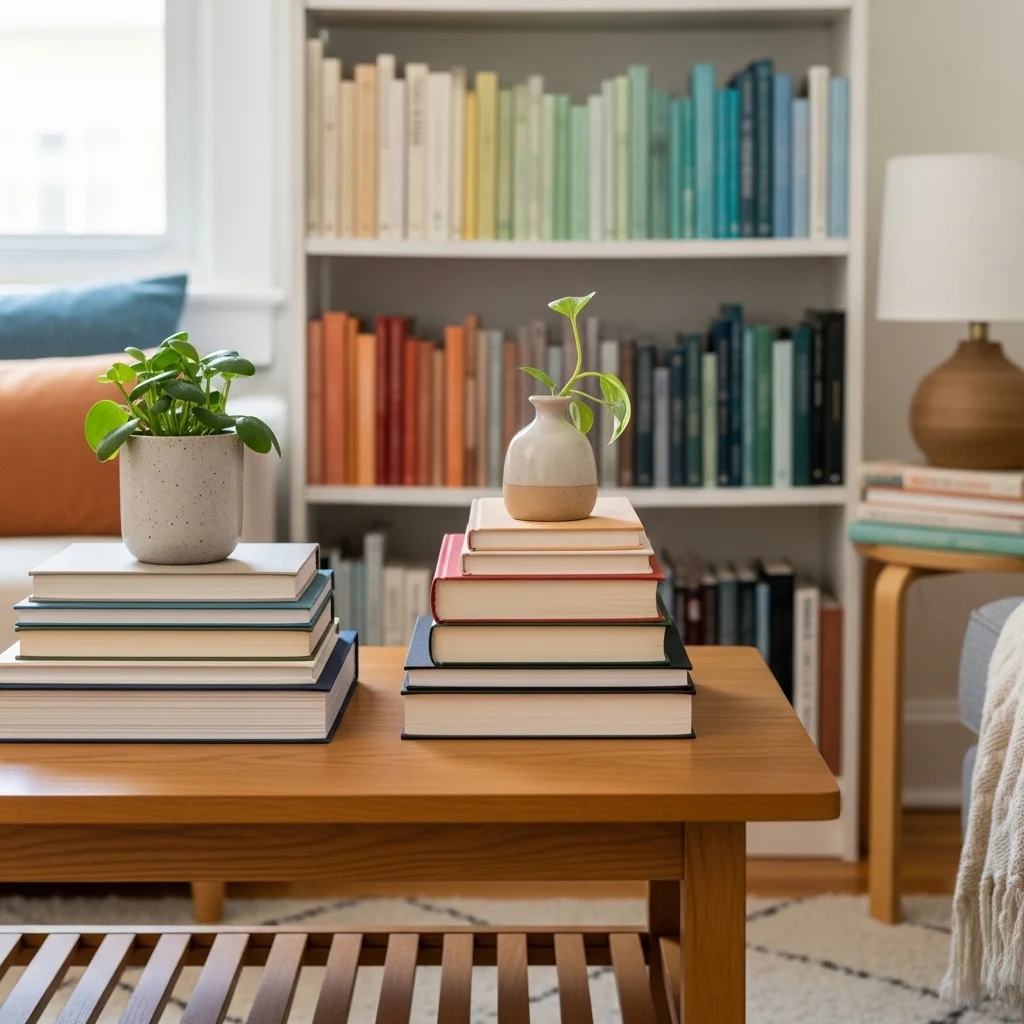
Books aren’t just for reading; they’re one of the most versatile decorating tools available. Stack them on coffee tables, use them to add height under plants or decorative objects, and arrange them on shelves by color for visual impact.
I’ve seen people arrange books with the spines facing inward for a minimalist look; all you see are the pages’ edges. I’m not that brave with my collection, but I appreciate the aesthetic. More practically, I group books by size and color, which creates a more organized feeling without requiring any purchases.
Don’t hide your books away. They tell your story and make your space feel lived-in and personal. Even if you’re not a big reader, you probably have some books lying around. Use them.
The Magic of Textiles
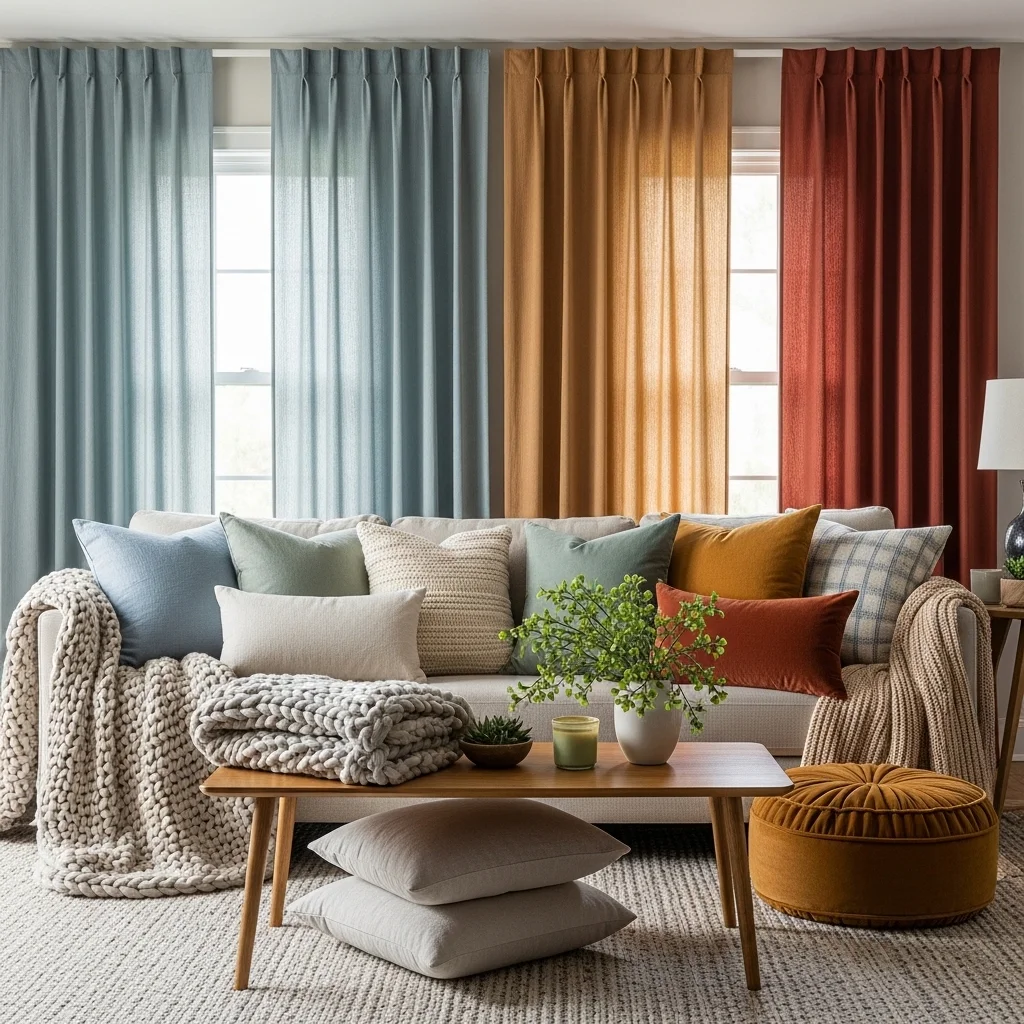
Throw pillows, blankets, curtains, and rugs transform a space faster than almost anything else. And you don’t need to buy new ones, you just need to use them intentionally.
I change out my throw pillows seasonally by rotating which ones I have on display. In summer, lighter fabrics and cooler colors come out. In the fall, I switch to warmer tones and heavier textures. I store the off-season pillows in a bin under my bed. Same pillows, different impact.
If you do want to add something new, start with throw pillow covers rather than whole new pillows. They’re inexpensive, easier to store, and you can change them on a whim. I’ve found great ones at discount stores, online, even at garage sales.
For curtains, longer is usually better. Hanging curtain rods closer to the ceiling and letting the fabric skim the floor makes your walls look taller. If your curtains are too short, you can add a border to the bottom or hang them higher and embrace the shorter length as intentional. There are no decoration police.
A rug anchors a space and defines the seating area. If you don’t have one and can’t afford a new one right now, that’s okay, but keep an eye out at discount stores and online marketplaces. I found my living room rug at a warehouse sale for a fraction of the retail price. It’s not fancy, but it does the job.
Greenery Brings Life
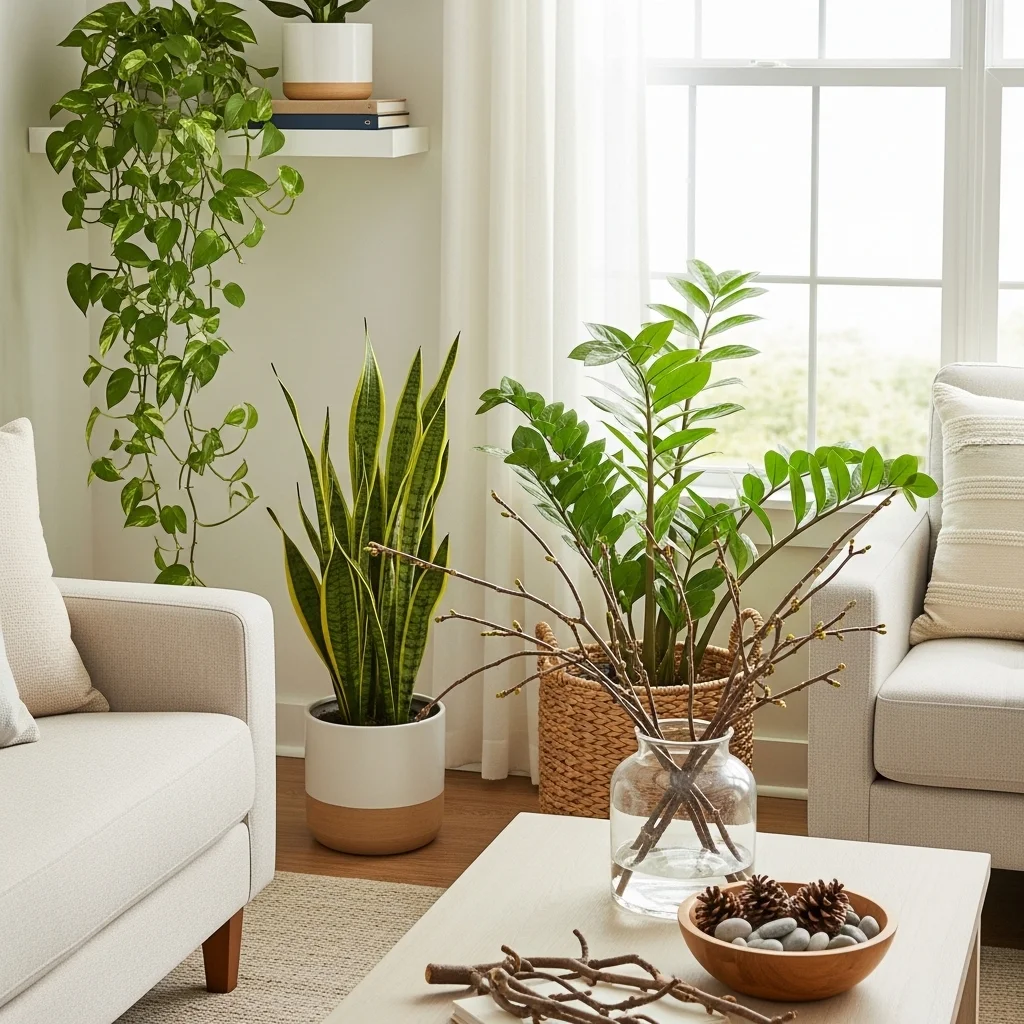
Plants are probably the single best decorating element for the money, assuming you can keep them alive. And before you say you have a black thumb, let me tell you: I’ve killed more plants than I’d like to admit. You learn.
Start with forgiving plants. Pothos, snake plants, and ZZ plants are nearly indestructible. They tolerate low light, inconsistent watering, and general neglect. I have a pothos that’s survived three moves and countless forgotten waterings. It’s still going strong.
If you genuinely can’t keep plants alive, high-quality artificial ones have come a long way. I’m not talking about the obviously fake dusty plastic ones from decades past. Modern artificial plants can look surprisingly realistic, especially from a conversational distance.
You can also bring in natural elements that don’t require care. Branches in a vase, pinecones in a bowl, smooth stones collected from a beach. These cost nothing and add organic texture to your space.
The Art Situation
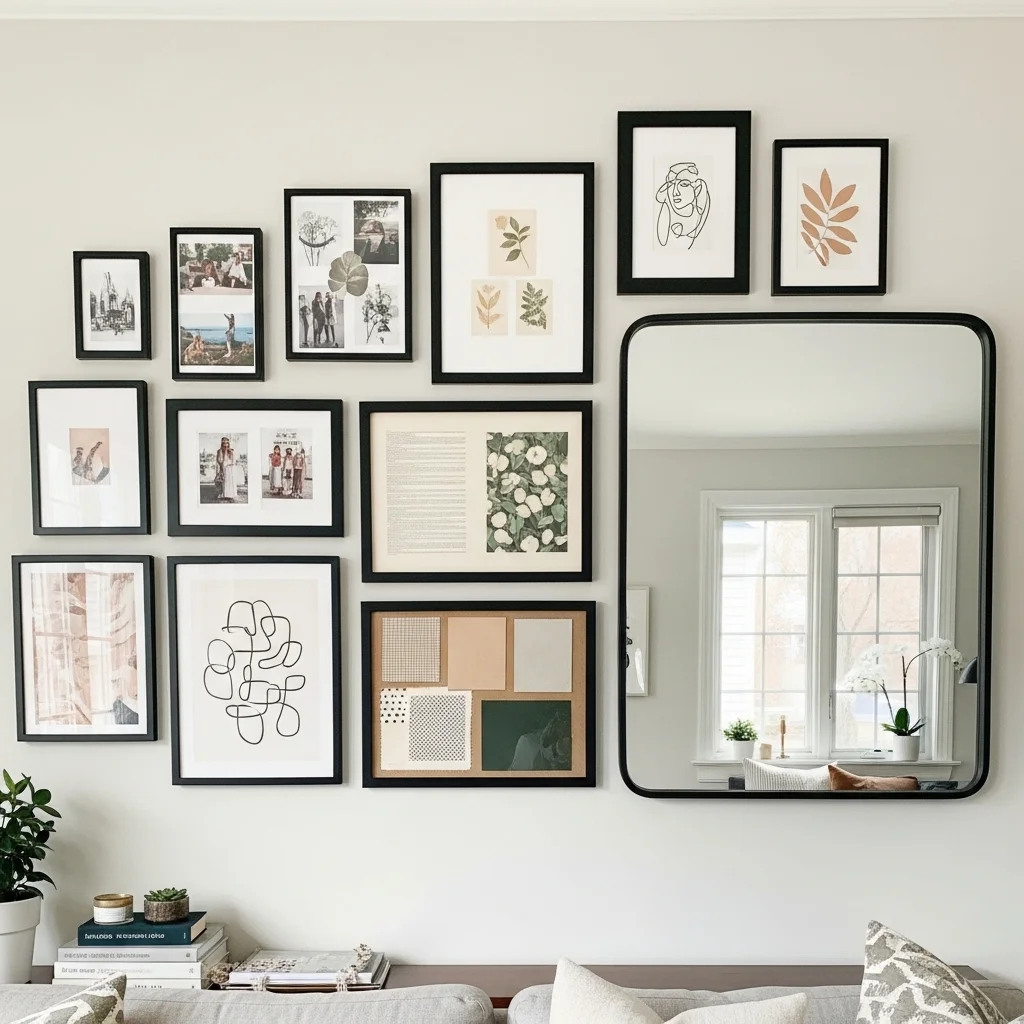
Blank walls make a room feel unfinished, but art doesn’t have to mean expensive gallery purchases.
Frame things you already have: postcards, pages from old books or calendars, fabric swatches, even interesting greeting cards. The frame often matters more than what’s inside. A cheap print in a nice frame looks better than an expensive print in a bad frame. This is just the truth.
Thrift stores are goldmines for frames. Buy frames you like and replace what’s inside. I’ve done this countless times. You can also paint frames to match your room’s color scheme. A few years ago, I spray-painted five mismatched frames the same matte black, and suddenly they looked like a coordinated gallery wall.
Your own photographs work wonderfully as wall art. Pick your favorite shots, get them printed at a local photo store or online service, and frame them. Personal images make your space uniquely yours in a way that mass-produced art never will.
Create a gallery wall, but don’t overthink it. I’ve seen people lay out their arrangement on the floor first, which is smart. Others trace the frames on paper and tape the paper to the wall to preview the arrangement. I’m usually more impulsive; I just start hanging things and adjust as I go. There’s no single right way.
Mirrors also count as wall art, and they have the bonus of reflecting light and making spaces feel larger. An oversized mirror can become a focal point all by itself.
Collections and Display
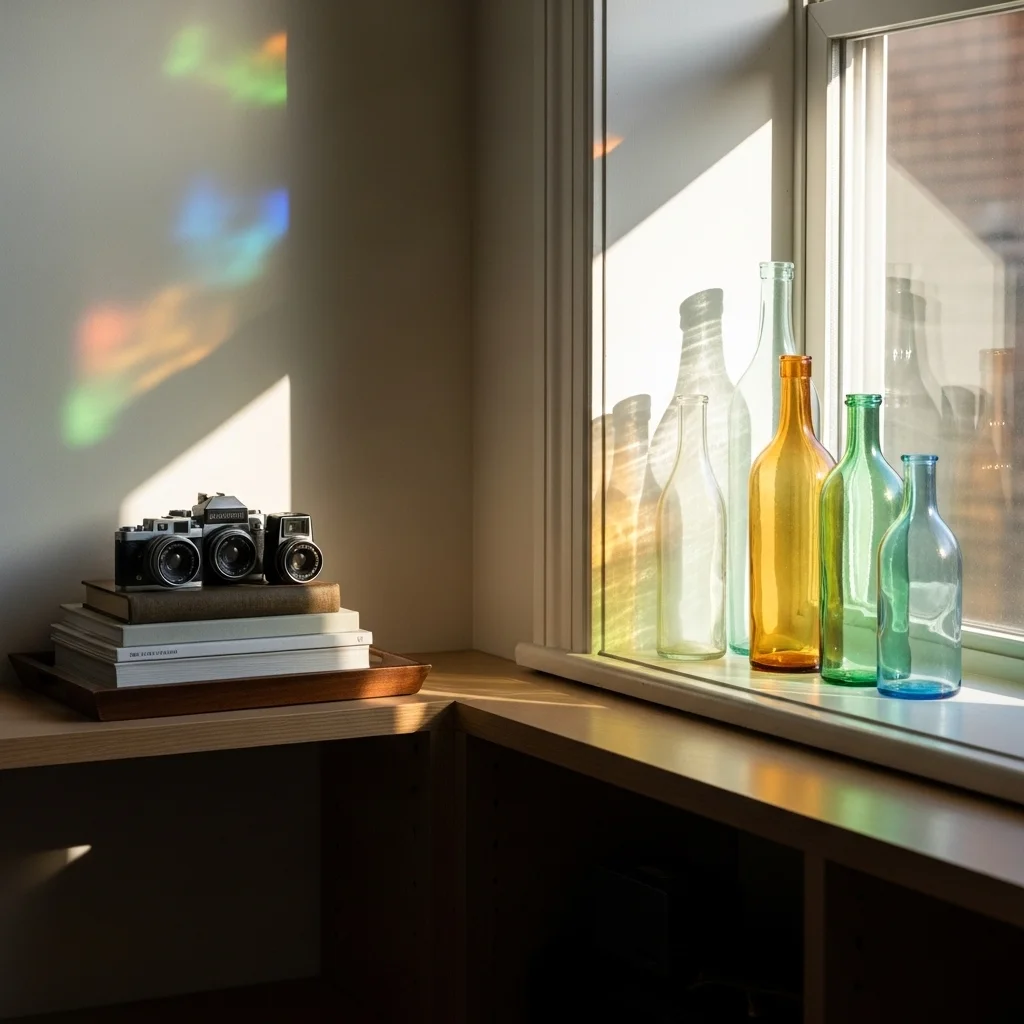
Whatever you collect, rocks, vintage cameras, teacups, concert tickets, shells, can become intentional decoration when displayed thoughtfully.
The key is curation and arrangement. A bunch of random stuff scattered around looks like clutter. The same items grouped on a shelf or tray become a collection, a statement about who you are.
I collect old bottles, nothing valuable, just bottles with interesting shapes and colors. Individually, they might look like trash I forgot to recycle. Grouped on a windowsill where light shines through them, they become a feature.
Use odd numbers. Three items grouped look more natural than two or four. I don’t know the design theory behind this, but it works. Five is good too. Seven might be pushing it unless you have a large surface.
Vary heights within your groupings. If everything is the same height, it reads as flat and boring. Stack books to elevate shorter items, or mix tall and short objects naturally.
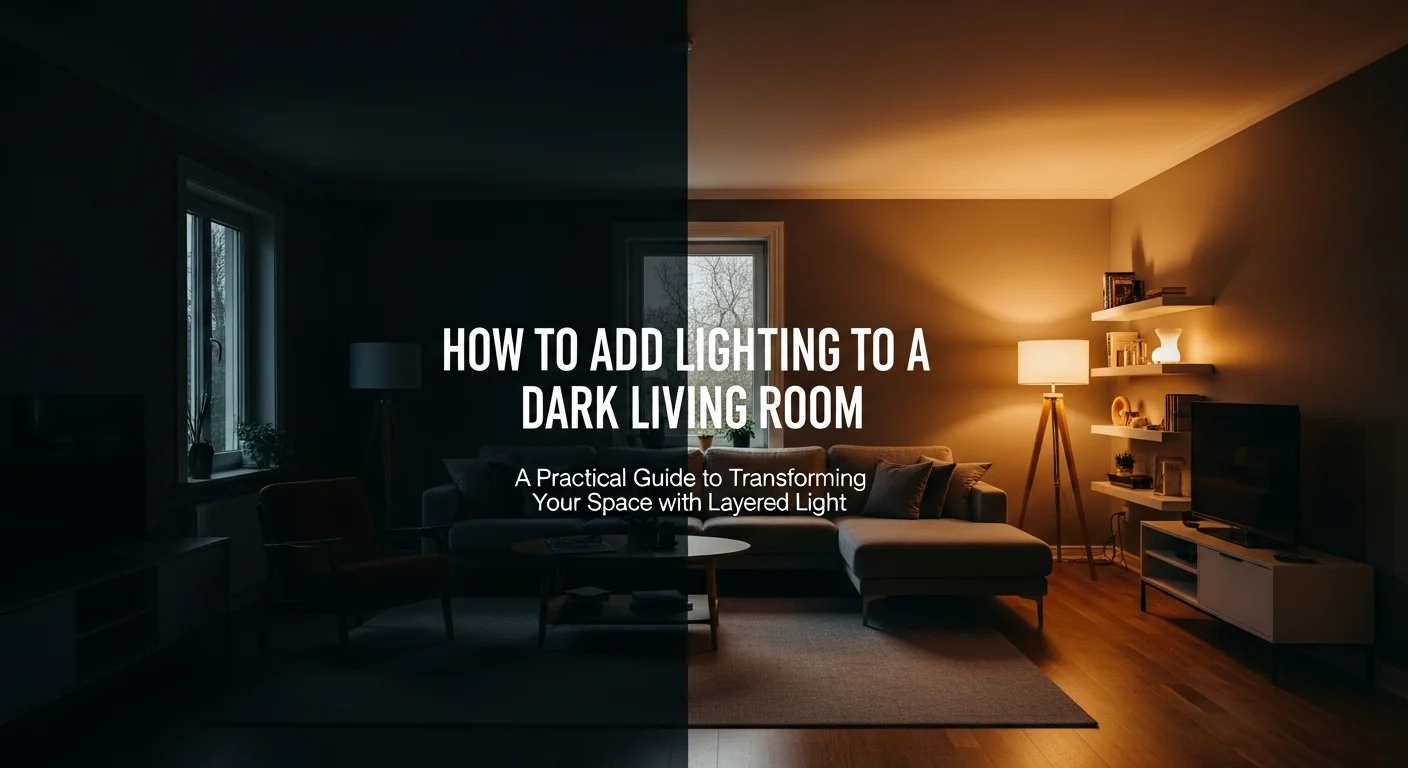
Read also: How to Add Lighting to a Dark Living Room: A Practical Guide from Years of Trial and Error
Color Coordination Without Repainting
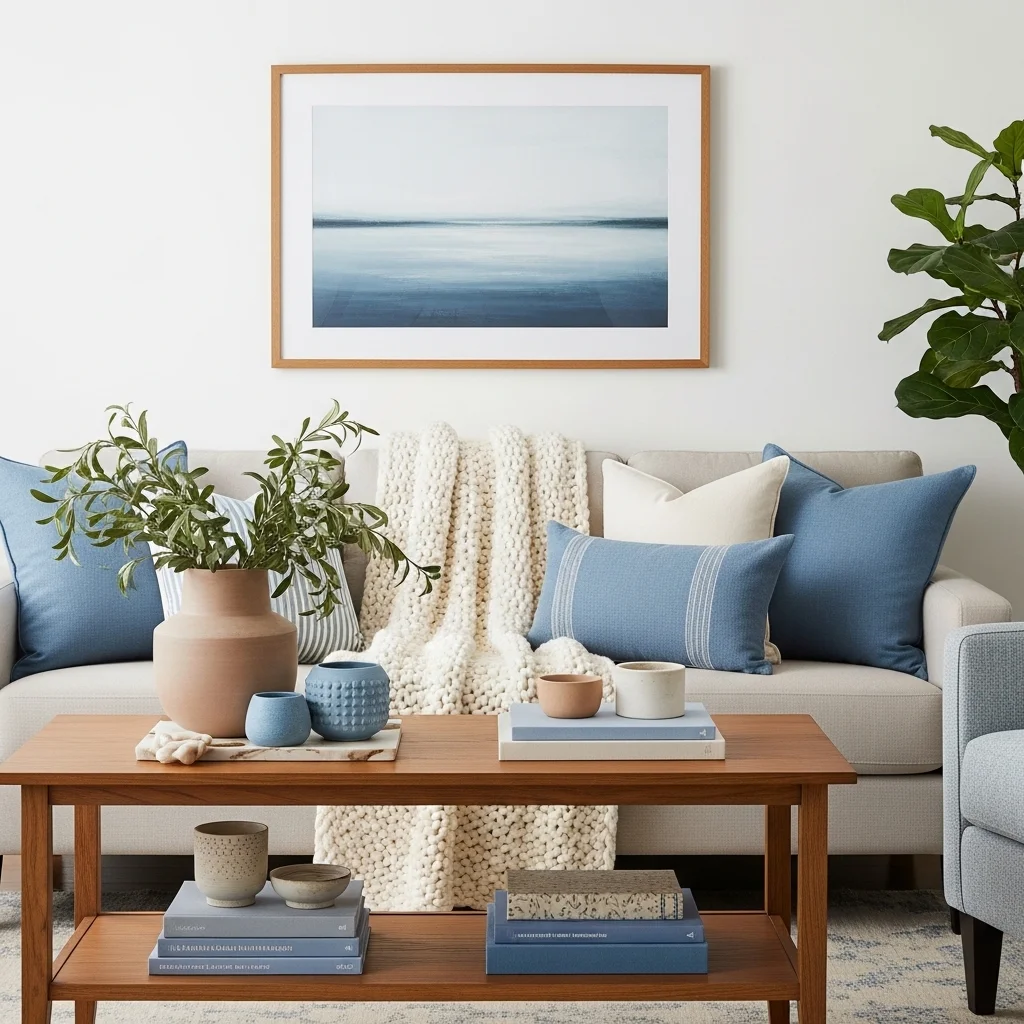
You might not be able to repaint if you’re renting, or maybe you just don’t want to undertake that project. You can still create color cohesion through your accessories and textiles.
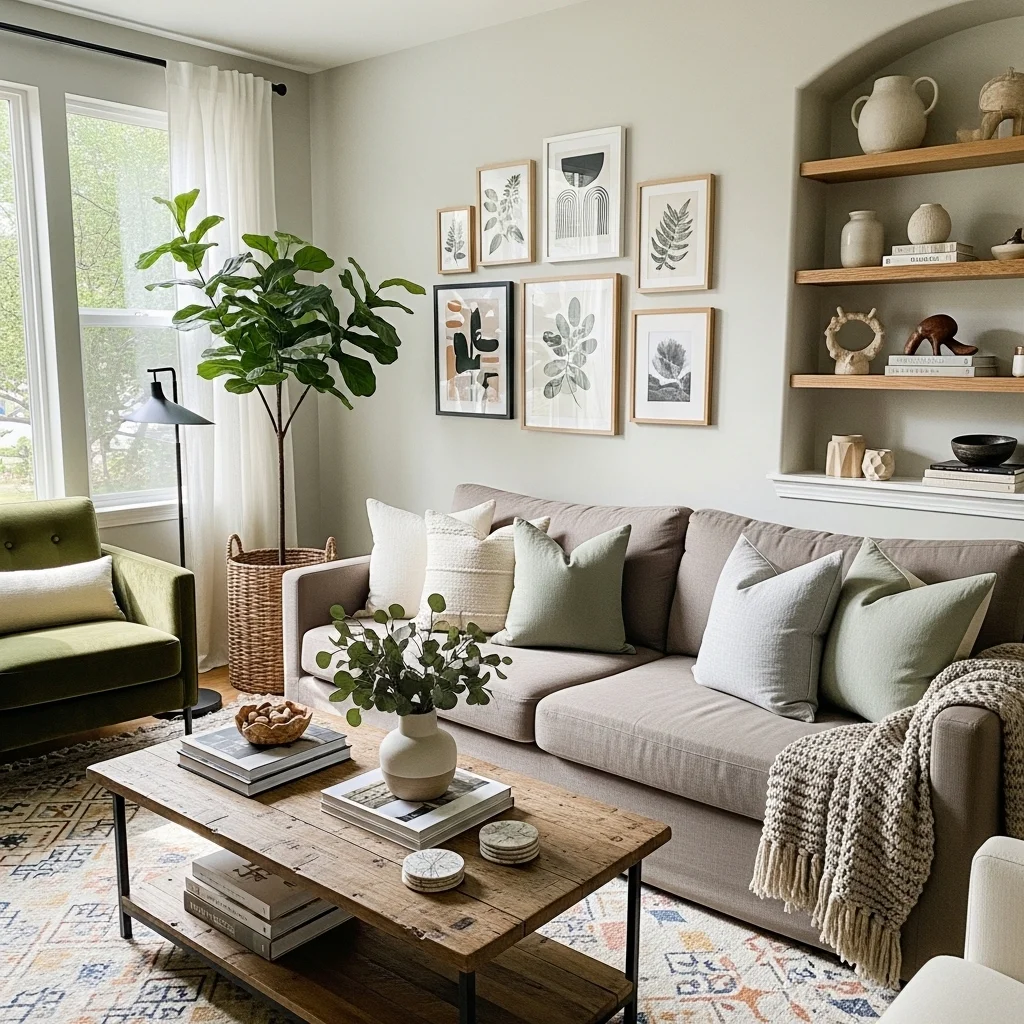
Choose a simple color palette; three colors usually work well. One dominant color, one secondary color, and one accent. Then make sure these colors appear throughout the room in your pillows, throws, artwork, books, plant pots, etc.
This doesn’t mean everything has to match perfectly. In fact, different shades and tones of your chosen colors create more interest than exact matches. Think of it like how nature uses color variations on a theme rather than identical repetition.
I once helped a friend whose living room felt chaotic even though nothing was technically “wrong.” The problem was too many competing colors without any cohesive thread. We pulled out everything that didn’t fit a blue, cream, and warm wood palette. Just removing the red pillow, the purple throw, and a few other random colored items made the whole space feel calmer and more pulled together. Most of those items found new homes in other rooms where they fit better.
The Coffee Table Situation
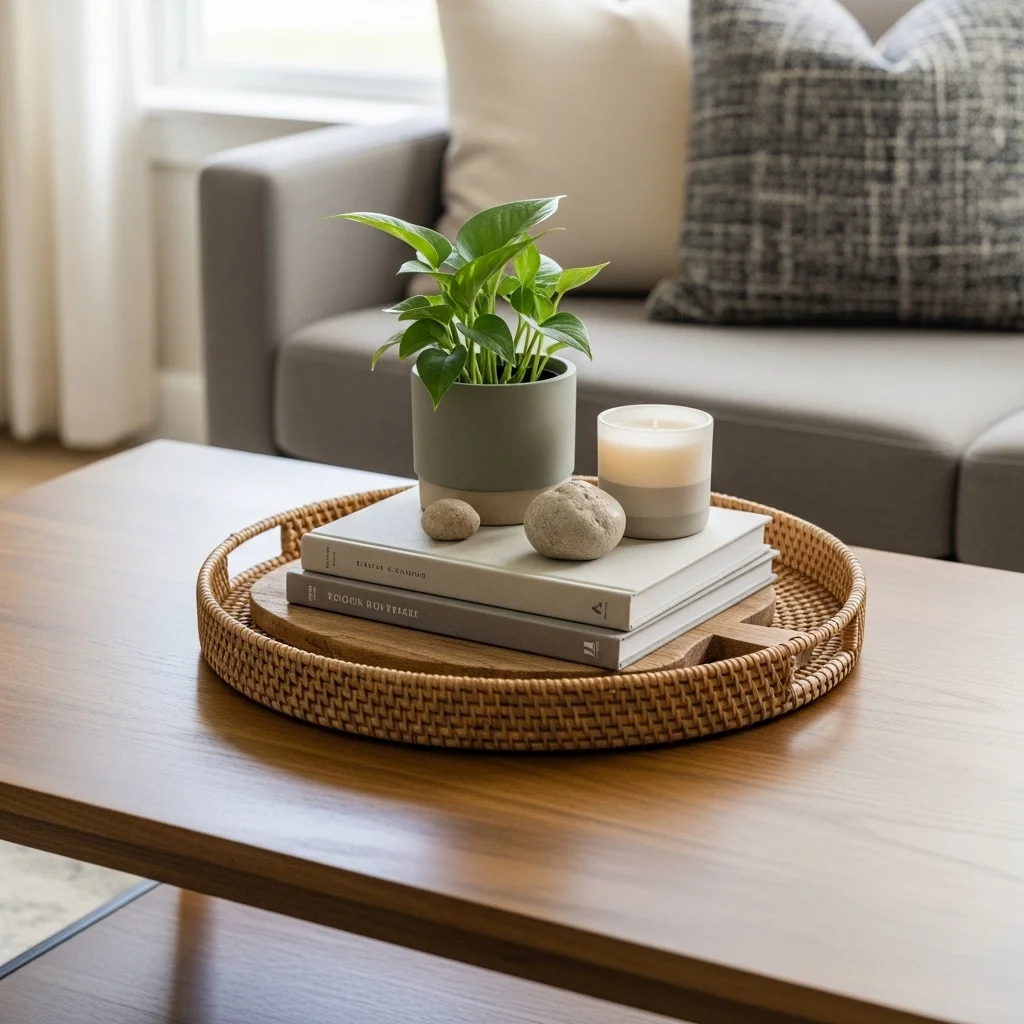
Your coffee table or whatever surface serves that function is prime real estate for creating a vignette, a small, styled arrangement that looks intentional.
Start with a tray. This might sound overly specific, but a tray corrals smaller items and makes them look collected rather than scattered. I use a wooden cutting board when I don’t have an actual tray. Works just as well.
On the tray, group a few items: maybe a small plant, a couple of books, a candle, and something personal like an interesting rock or small sculpture. Change this arrangement seasonally or whenever you get bored.
Leave space too. A coffee table shouldn’t be so crowded that you can’t actually use it for coffee.
Embrace Imperfection and Personal Style
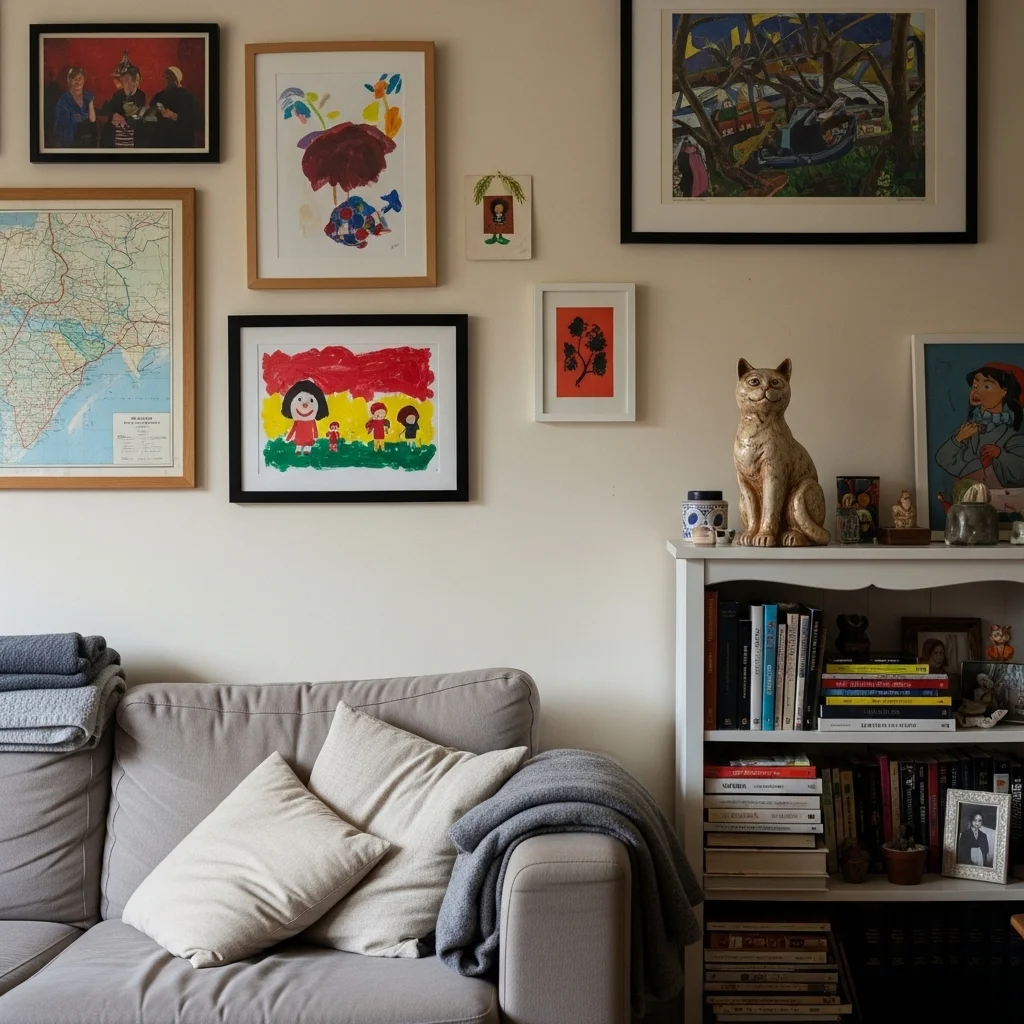
Here’s something I wish someone had told me earlier: your living room doesn’t need to look like it belongs in a magazine. In fact, it probably shouldn’t.
The most inviting spaces I’ve ever been in looked lived-in and personal. They reflected the people who lived there. Perfect showroom spaces can feel cold and uncomfortable, like you’re not allowed to actually sit on the furniture.
That weird thing you picked up at a flea market? The painting your niece made in third grade? The vintage map from your hometown? These imperfect, personal elements make your space yours. Don’t hide them in favor of generic decorator-approved items.
I have a truly ugly ceramic cat that my grandmother gave me. It’s awful. I love it. It sits on my bookshelf, and every time I see it, I think of her. That’s worth more than perfect aesthetics.
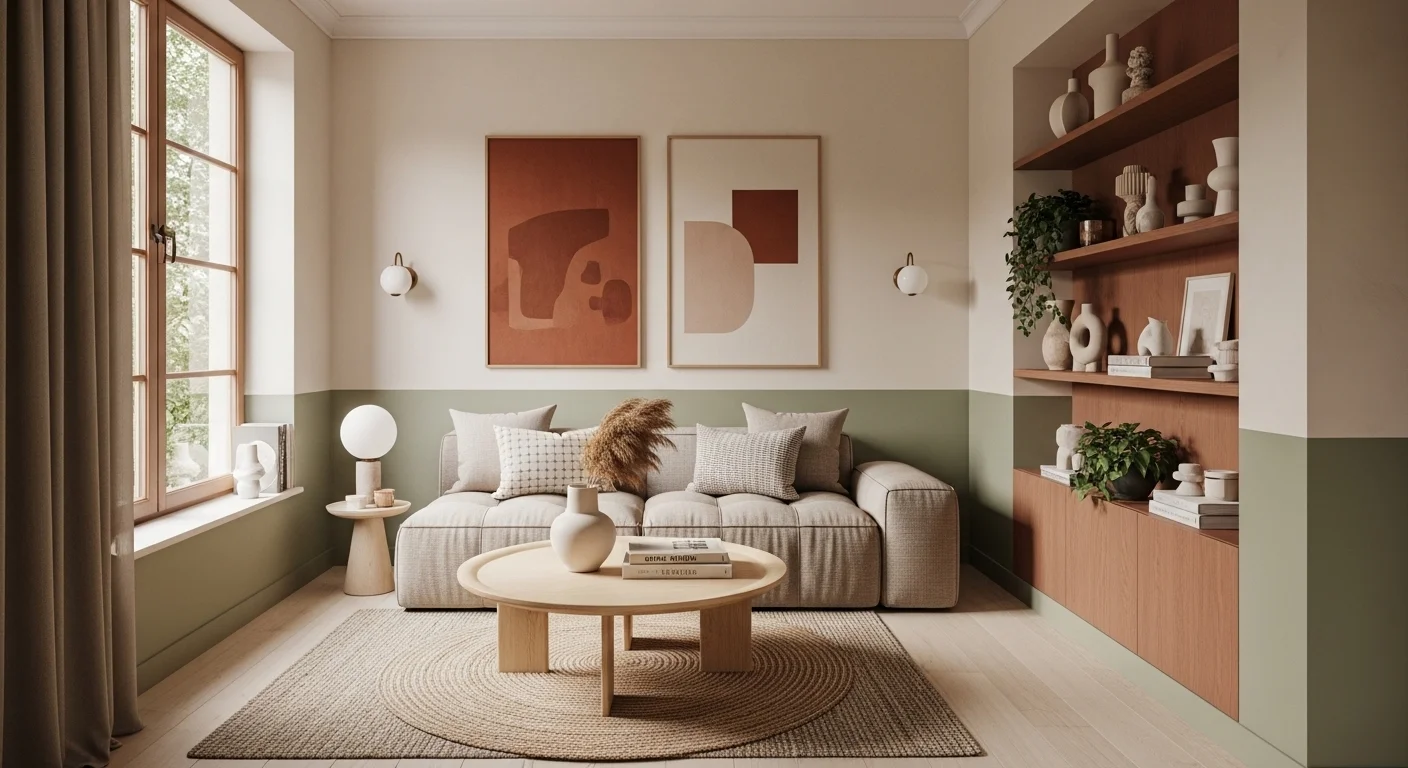
Read also: Top 10 Living Room Decor Ideas to Transform Your Home
Natural Elements and Seasonal Changes
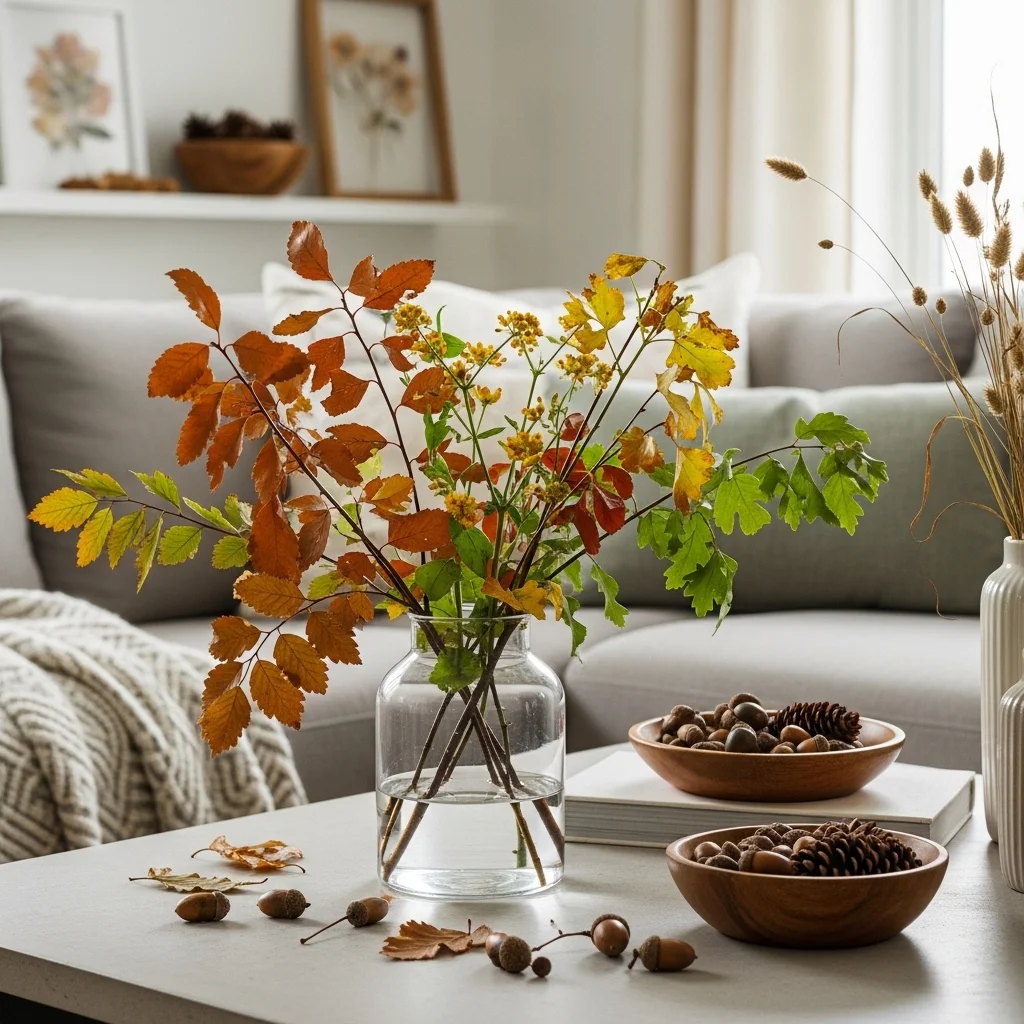
Bringing in elements from outside costs nothing and keeps your space feeling fresh and connected to the seasons.
In the fall, I collect interesting leaves, acorns, and small branches. In winter, pinecones and evergreen clippings. Spring brings flowers from my yard or the roadside. Summer means interesting grasses or wildflowers.
These natural elements last a few weeks, then you swap them out. The temporary nature is actually part of the appeal; your space never gets stale because it’s constantly evolving with the seasons.
The Edit
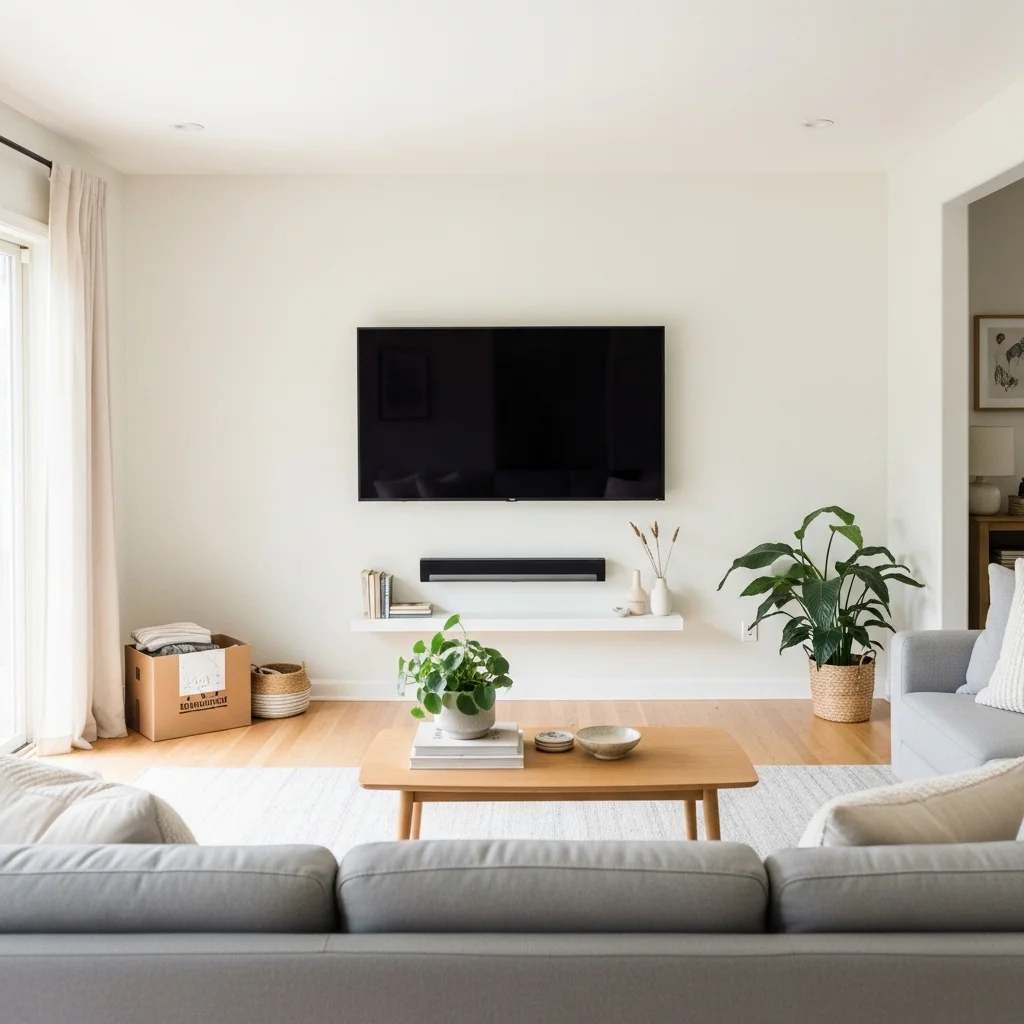
Sometimes the best decoration is removal rather than addition. We accumulate so much stuff over time, and not all of it serves us.
Walk through your living room and ask of each item: Do I love this? Do I use this? Does this fit with the feeling I want this room to have? If the answer is no to all three, consider removing it.
I’m not talking about hardcore minimalism unless that’s your thing, in which case, go for it. I just mean intentional curation. When you remove the things that don’t matter, the things that do matter get to shine.
A few years ago, I had a massive entertainment center that dominated my small living room. It was a hand-me-down, not something I’d chosen. It worked, so I kept it. But it made the whole room feel dark and crowded. When I finally got rid of it and mounted my TV on the wall instead, the room felt twice as large. Sometimes one big change makes all the difference.
Focal Points
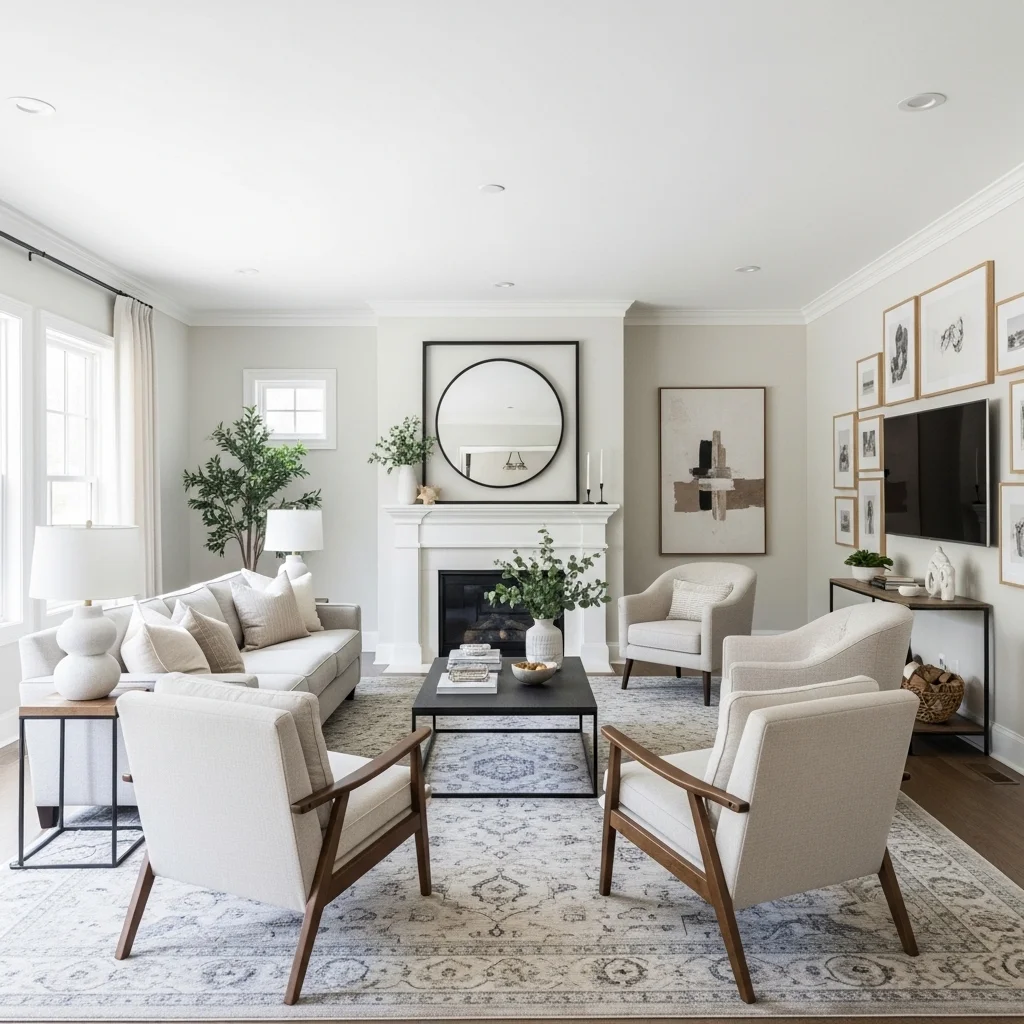
Every room needs a focal point, the thing your eye goes to when you enter. In many living rooms, this is the TV, whether we like it or not. In others, it’s a fireplace or a large window.
Work with your natural focal point rather than fighting it. Arrange furniture to face it. Style around it. If your focal point is a TV and you wish it weren’t, you can minimize its visual impact with a gallery wall around it, or by placing it in a cabinet with doors you can close.
If your room doesn’t have an obvious focal point, create one. An oversized piece of art, a styled bookshelf, a beautiful mirror, or even a large plant can anchor the room and give the eye somewhere to land.
Budget-Friendly Shopping Strategies
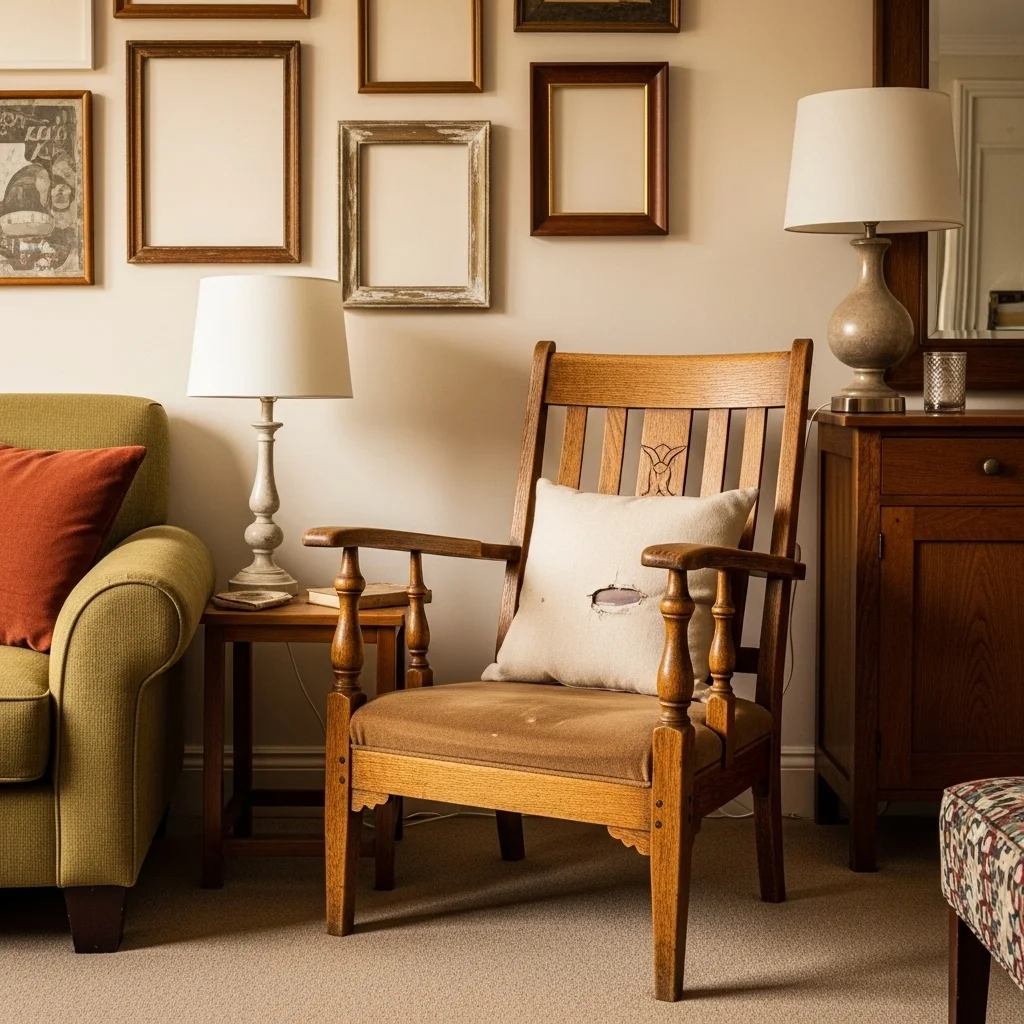
When you do need to buy something, shop smart.
Thrift stores, estate sales, garage sales, and online marketplaces are your friends. I’ve furnished entire rooms for the cost of one retail piece. It takes more time and patience than walking into a store and buying everything new, but the hunt is half the fun, and you’ll find unique pieces with actual character.
I found my favorite living room chair at an estate sale for twenty-five dollars. It needed a good cleaning and a new throw pillow to cover a small stain, but it’s solid wood, comfortable, and has more personality than anything I could have bought new for ten times the price.
Don’t be afraid to mix high and low. A nice piece from a furniture store can anchor a room filled with secondhand and DIY elements. Nobody needs to know where everything came from, and in fact, the mix creates more visual interest than a room where everything matches perfectly.
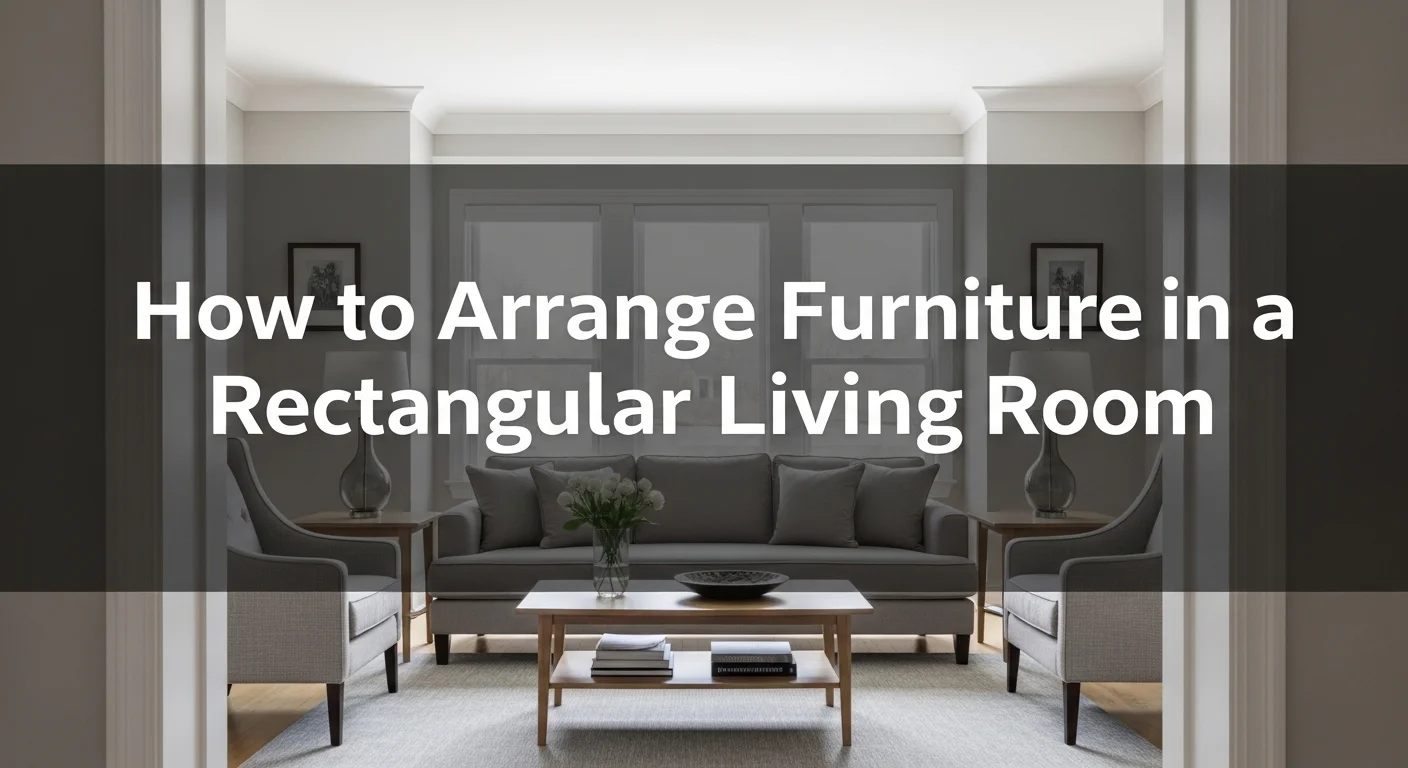
Read also: How to Arrange Furniture in a Rectangular Living Room
The Long Game
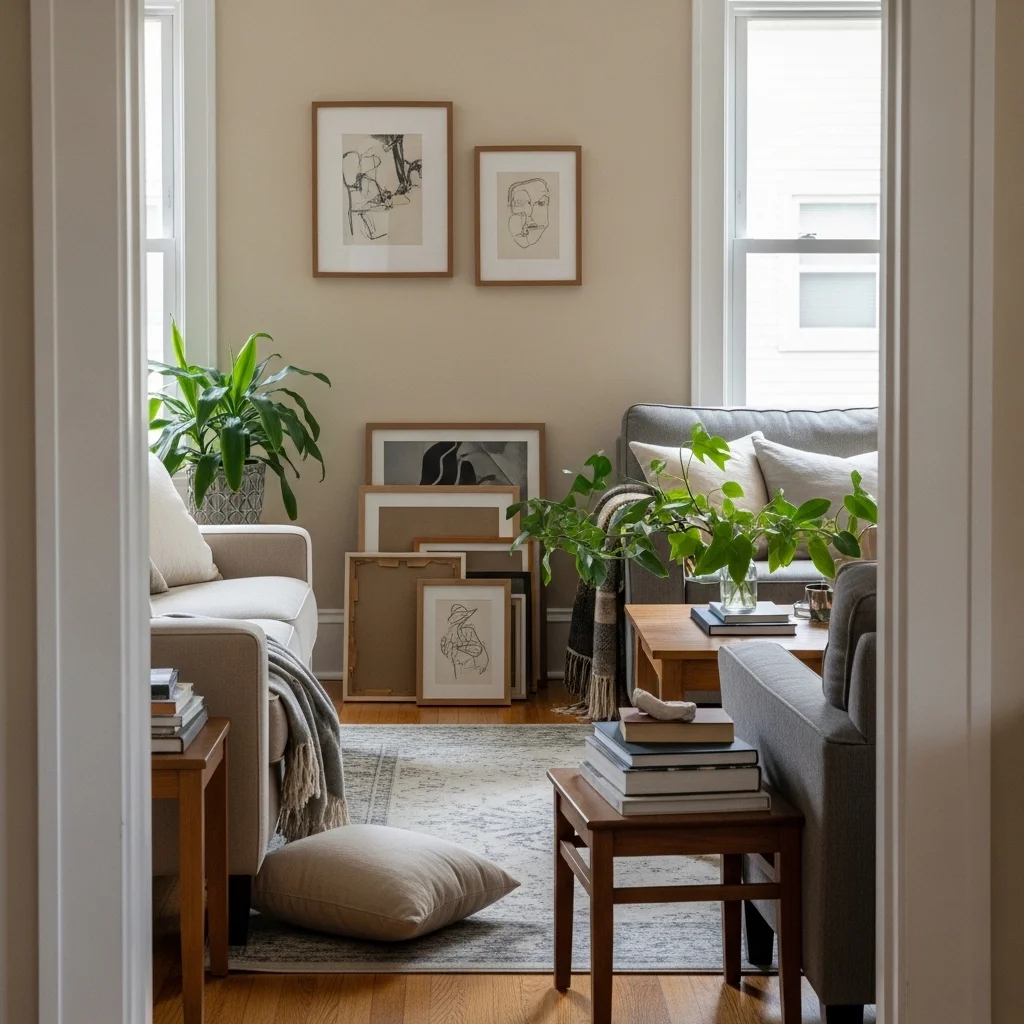
Decorating with simple things is often about patience and evolution rather than instant transformation. Your living room doesn’t need to be perfect today. In fact, it never needs to be perfect.
Add things slowly. Live in your space. Notice what’s working and what isn’t. Make small adjustments over time. This approach is not only easier on your budget but also allows your space to develop organically into something that truly reflects you.
I’ve been in my current place for three years, and my living room is still evolving. I move things around, swap items between rooms, add something here, remove something there. It’s a living space in both senses of the word.
Practical Limitations and Real Talk
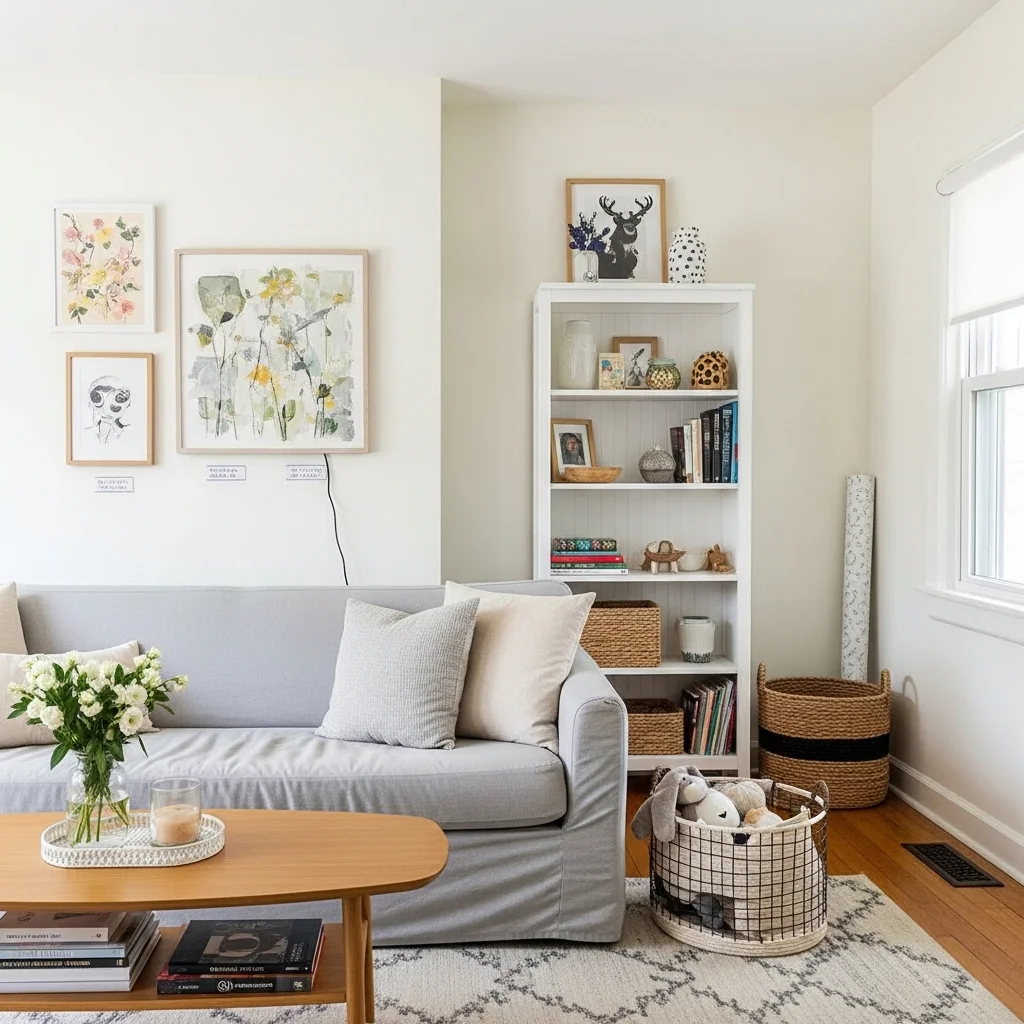
Let me be honest about a few things. First, if you’re renting, there are real limitations. You might not be able to paint, install shelves, or make permanent changes. Work within those constraints, temporary solutions like removable wallpaper, command strips for hanging art, and freestanding furniture become your tools.
Second, if you have young children or messy pets, Pinterest-perfect styling might not be realistic right now. And that’s fine. Your living room needs to function for your actual life. Washable slipcovers, sturdy furniture, and decorative elements placed out of reach might be your reality. You can still create a space you love; it just might look different than the child-free version would.
Third, some “simple” decorating advice isn’t actually simple if you have mobility issues, limited time, or energy constraints. Rearranging heavy furniture might not be feasible. Projects that require a lot of standing, reaching, or physical effort might not work for everyone. Adapt the ideas to your actual capabilities rather than pushing yourself to do something that’s genuinely difficult for you.
Trust Your Own Taste
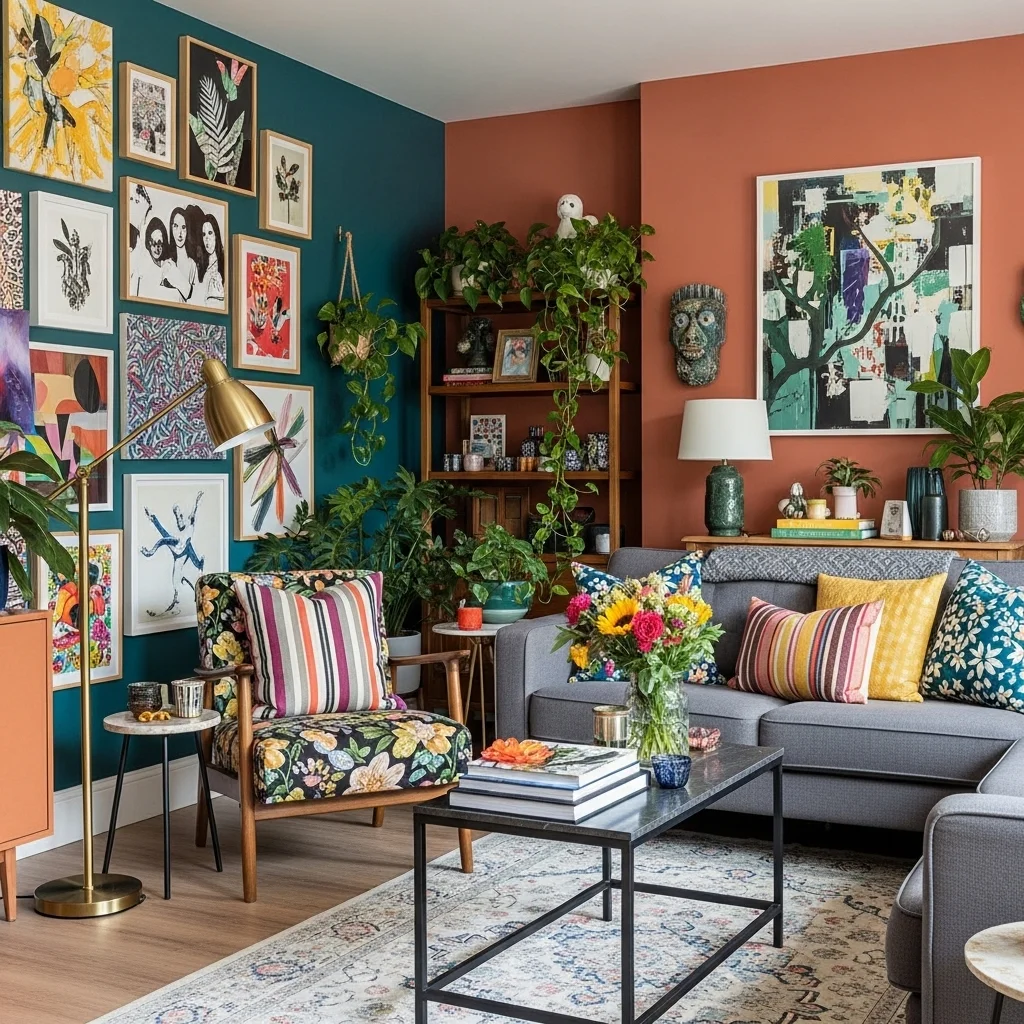
The decorating advice industrial complex wants you to believe you need an expert to tell you what looks good. You don’t. You’re the one living in your space. You get to decide what works.
If you love something, find a place for it. If a room full of plants makes you happy, fill it with plants. If you prefer clean, minimal surfaces, embrace that. If you want to cover every wall with art, do it.
I’ve broken countless “rules” over the years. I’ve mixed metals (apparently a no-no). I’ve paired patterns that shouldn’t work together (but do, in my opinion). I’ve painted a room a color that raised eyebrows. And you know what? I’ve been happy with my choices.
Get inspiration from magazines, blogs, and other people’s homes, but filter everything through your own preferences. Take what works for you and leave the rest.
The Bottom Line
Decorating your living room with simple things comes down to a few core principles: work with what you have, add intentionally, create cohesion through color and arrangement, bring in natural elements, and make it personal.
You don’t need a big budget or professional help. You need a willingness to experiment, some patience, and the confidence to trust your own taste. The most beautiful living rooms I’ve been in weren’t decorated; they were lived in, loved, and evolved.
Start small. Move your furniture around this weekend. Bring in some plants. Hang something on that blank wall. See how it feels. Adjust. Try again. This is how you create a space that’s not just decorated but truly yours.
Your living room should make you feel good when you walk into it. If it does that, whether it’s filled with expensive designer pieces or thrifted finds and DIY projects, you’ve succeeded.