I still remember the first apartment I rented after college, a classic railroad-style living room that was probably 11 feet wide and stretched back about 20 feet. Standing there with my hand-me-down couch and mismatched chairs, I had absolutely no idea where anything should go. I tried pushing everything against the walls (huge mistake), then clustered it all at one end (equally awkward), and finally stumbled onto arrangements that actually worked through pure experimentation.
Rectangular living rooms are incredibly common, but they’re trickier to furnish than you’d think. The proportions create natural challenges: how do you avoid that bowling alley effect? Where should the TV go without making everyone crane their necks? How do you create conversation areas that don’t feel disconnected from the rest of the space?
After arranging dozens of rectangular living rooms for myself, friends, and eventually clients, I’ve learned that there’s no one-size-fits-all solution. But there are principles and strategies that consistently work, regardless of whether your room is narrow and deep, moderately rectangular, or just slightly off-square.
Understanding Your Rectangle: Proportions Matter More Than You Think
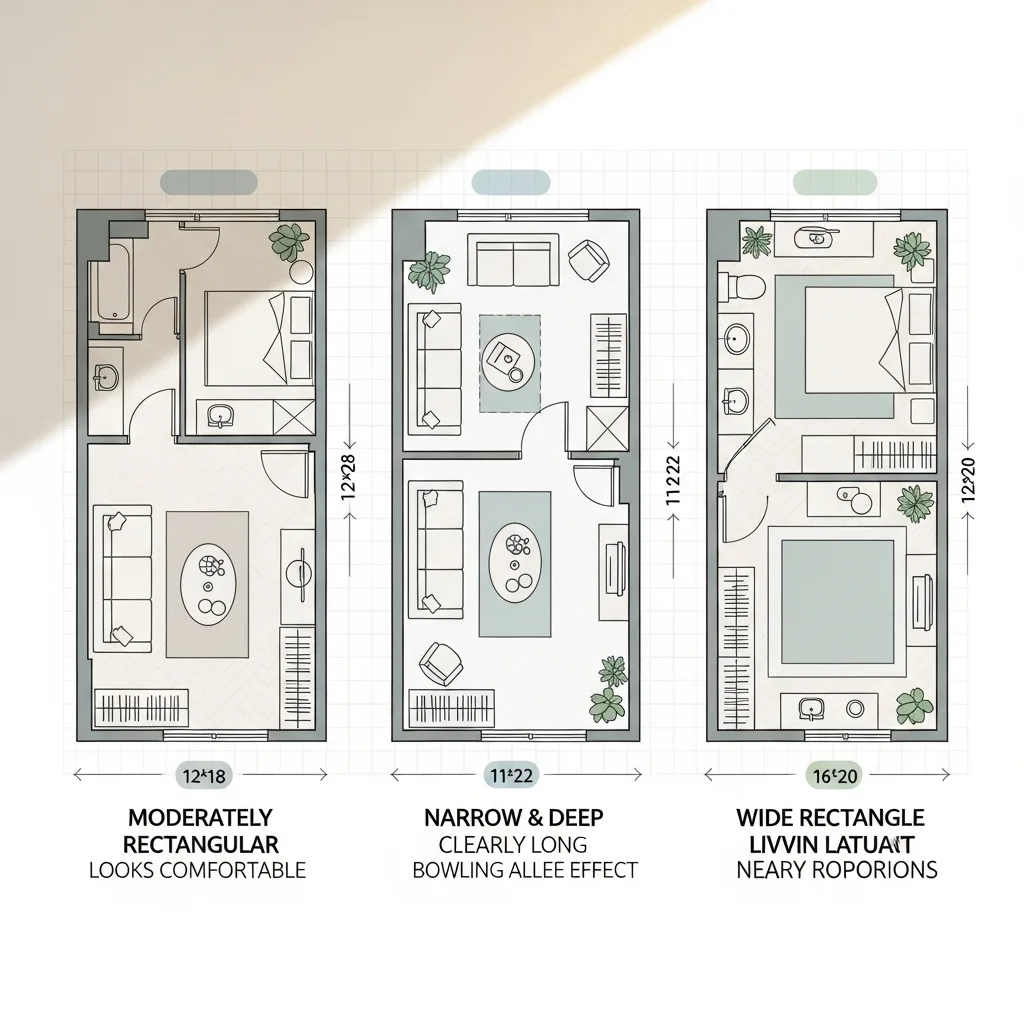
Not all rectangular living rooms are created equal. The specific proportions of your space dramatically affect which furniture arrangements will work.
A room that’s 12×18 feet presents completely different challenges than one that’s 15×25 feet, even though both are rectangular. I usually categorize them into three types:
Moderately rectangular rooms (roughly 1.5:1 ratio, like 12×18 or 14×20) are the easiest to work with. You have enough width to create proper conversation areas without everything feeling squeezed, but the length isn’t so extreme that the room feels disconnected.
Narrow and deep rooms (2:1 ratio or more, like 11×22 or 12×24) require more thoughtful planning. These are the true bowling alley rooms that can feel like hallways if you’re not careful. I once worked with a room that was 10 feet wide and 24 feet long definitely the most challenging proportion I’ve encountered.
Wide rectangles (closer to square but still rectangular, like 16×20) give you the most flexibility. You can often use arrangements that work in square rooms, with minor adjustments.
Before you move a single piece of furniture, measure your room carefully. I mean actually measure it don’t eyeball it. Then sketch it out on graph paper (I still do this the old-fashioned way) or use a room planner app. Knowing that your room is 13×19 versus 14×20 actually matters when you’re trying to figure out if a sectional will fit.
The Foundation: Start with Your Focal Point
Every living room needs an anchor, something that draws the eye and gives you a starting point for arranging everything else. In most modern living rooms, this is the TV, whether we like it or not. Sometimes it’s a fireplace. Occasionally, it’s a beautiful window with a view.
In rectangular rooms, the focal point placement is crucial because it determines your furniture orientation, which in turn either emphasizes or counteracts the rectangular proportions.
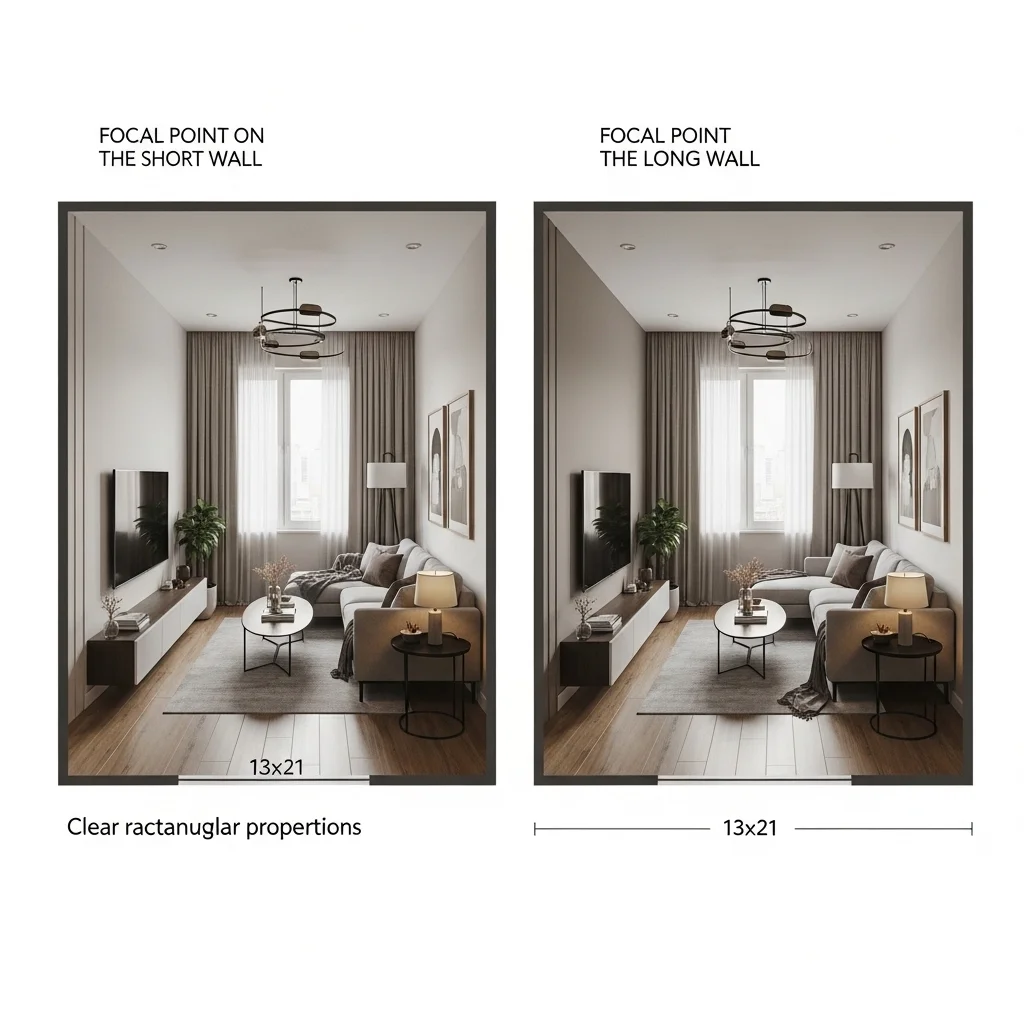
I’ve seen people place their TV on the short wall (perpendicular to the length of the room) and others put it on the long wall (parallel to the length). Both can work, but they create entirely different room dynamics.
When you place the focal point on the short wall, you’re essentially working with the room’s natural proportions. Your seating faces the short wall, and the arrangement extends into the length of the room. This works well for moderately rectangular rooms but can exaggerate the bowling alley feeling in very narrow spaces.
Placing the focal point on the long wall is what I call “working against the grain.” You’re creating a viewing area that’s oriented perpendicular to the room’s length. This can actually help break up a long, narrow room and make it feel more balanced. I used this approach in my own living room, which is 13×21, and it completely transformed how the space felt.
Layout Strategy #1: The Classic Conversation Arrangement
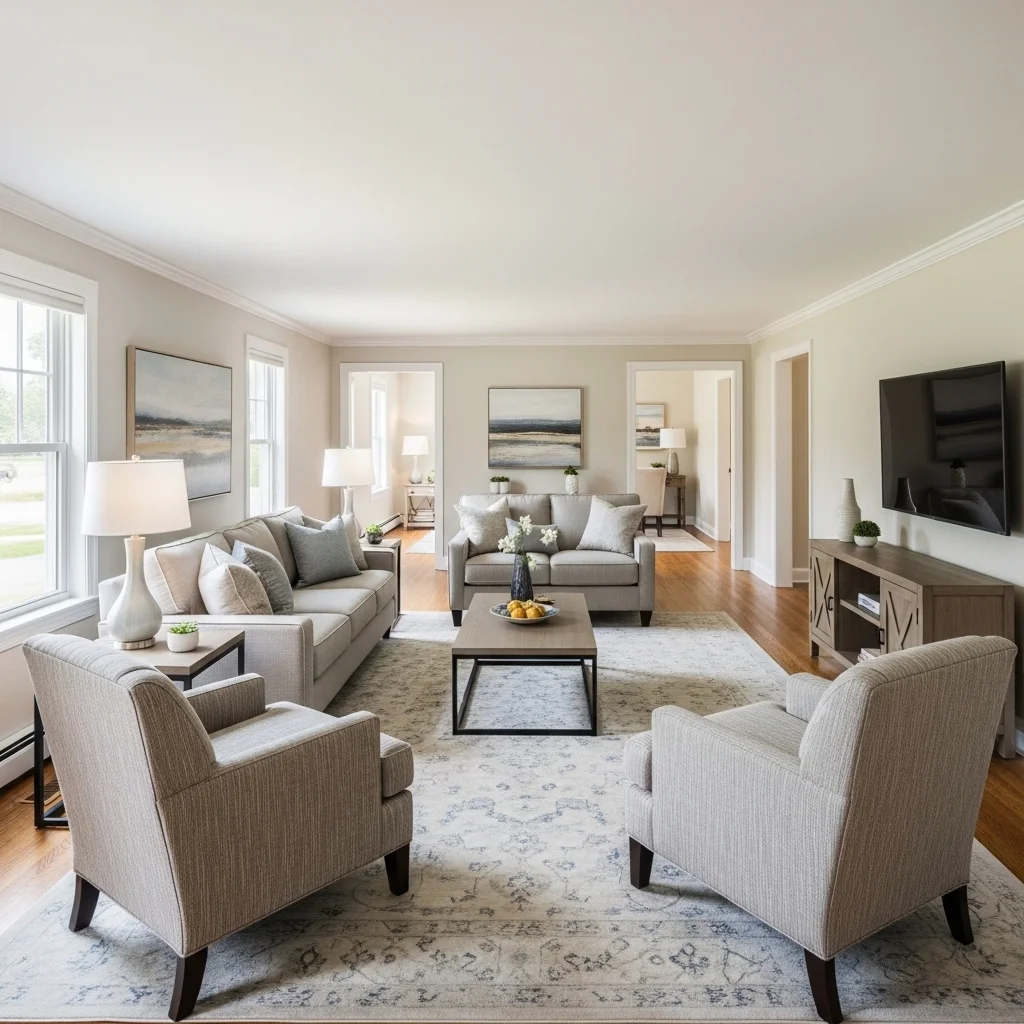
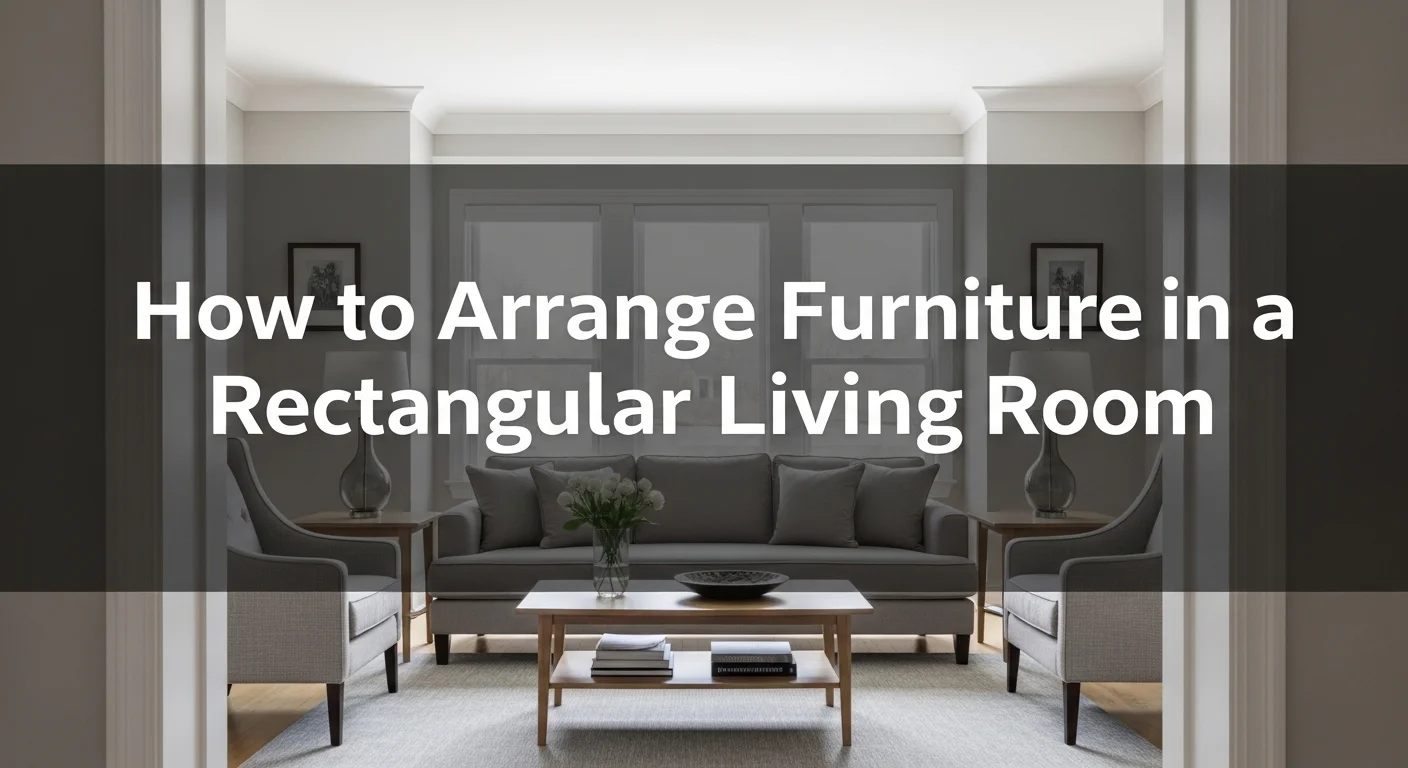
This is the tried-and-true approach that works beautifully in moderately rectangular rooms. You create a primary seating area focused around the main focal point, typically with:
- A sofa facing the focal point (usually placed 8-10 feet away from the TV for optimal viewing)
- Two chairs or a loveseat perpendicular to the sofa
- A coffee table in the center
- End tables flanking the seating
The key is creating what designers call a “conversation square” or “conversation zone,” an area where people can comfortably talk without shouting across vast distances. Ideally, seating should be roughly 8-10 feet apart at maximum. Anything more than that and conversations start to feel strained.
In a 14×20 room, I’d typically place a 7-8 foot sofa on one long wall, with the TV mounted on the opposite long wall. Two accent chairs would go perpendicular to the sofa, creating a U-shape. This leaves you with about 6-8 feet of leftover space at one or both ends of the room.
Here’s where people often go wrong: they see that extra space and panic, thinking they need to fill it with something. Sometimes that empty space is actually beneficial. It creates breathing room and prevents the furniture-store-showroom look where every surface is packed.
That said, if you do want to use the extra space, consider a small desk area, a reading nook with a chair and bookshelf, or a console table behind the sofa with lamps and decorative items.
Layout Strategy #2: The Floating Furniture Approach
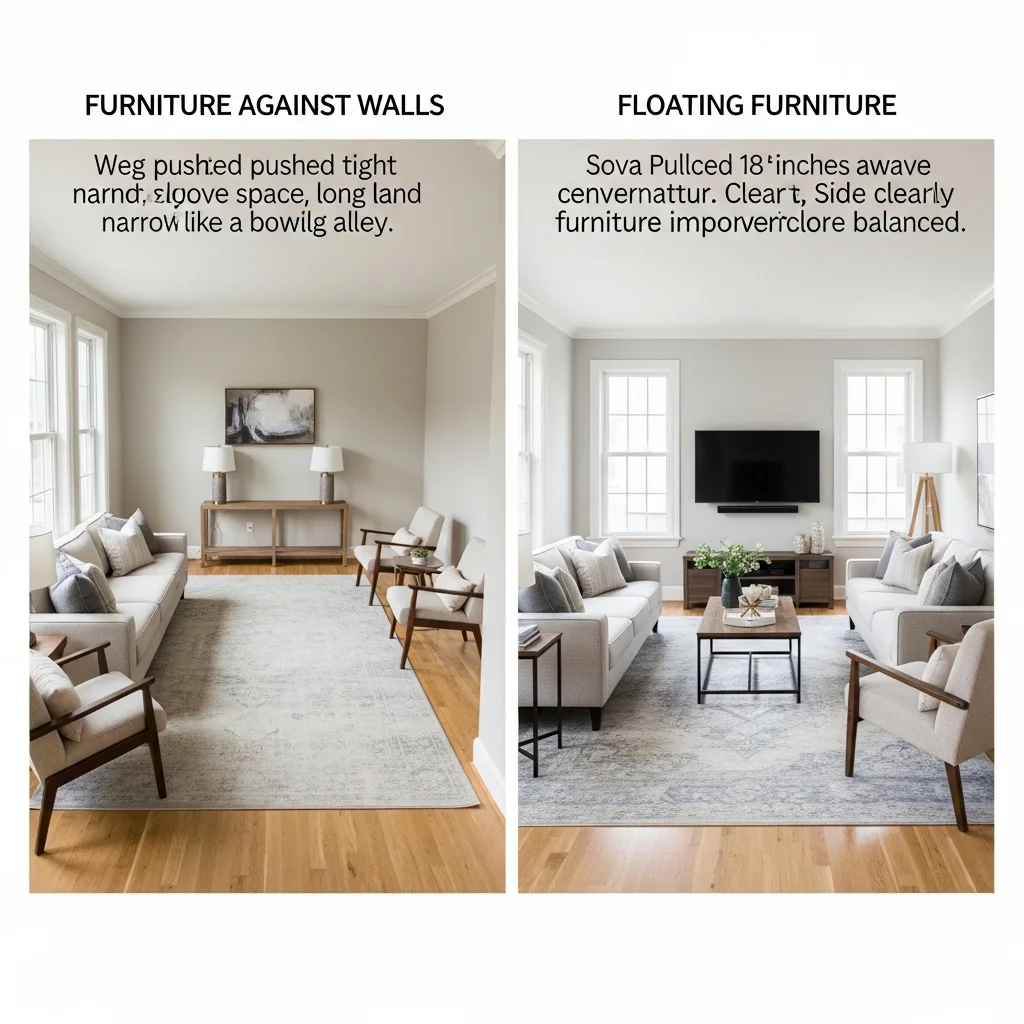
This is probably the single most impactful change you can make in a rectangular living room: pull your furniture away from the walls.
I know this feels counterintuitive, especially if you’ve been taught that pushing furniture against walls makes a room look bigger. In rectangular rooms, though, the opposite is often true. When you float furniture, particularly your sofa, you create definition and actually make better use of your space.
In my current living room, the sofa sits about 18 inches away from the wall behind it. Those 18 inches serve multiple purposes: they create a walking path behind the sofa (eliminating the need to squeeze between the coffee table and side chairs), provide space for a console table with lamps and storage, and most importantly, make the room feel intentionally designed rather than haphazardly furnished.
The floating approach works especially well in narrow, deep rectangles. Instead of lining the long walls with furniture (which emphasizes the narrowness), you create a centered seating arrangement that leaves space on the sides. This actually makes the room feel wider because you’re not drawing attention to how close the walls are.
A practical example: In a 12×22 room, instead of pushing a sofa against one long wall, place it about 12-14 feet from the short wall where your TV is mounted. Float it in the space, with 12-24 inches behind it. Add a pair of chairs flanking the other side of the coffee table. You’ve now created a distinct living area in about 12 feet of the room’s length, with the remaining space available for other functions.
Layout Strategy #3: Creating Zones in Longer Rectangles
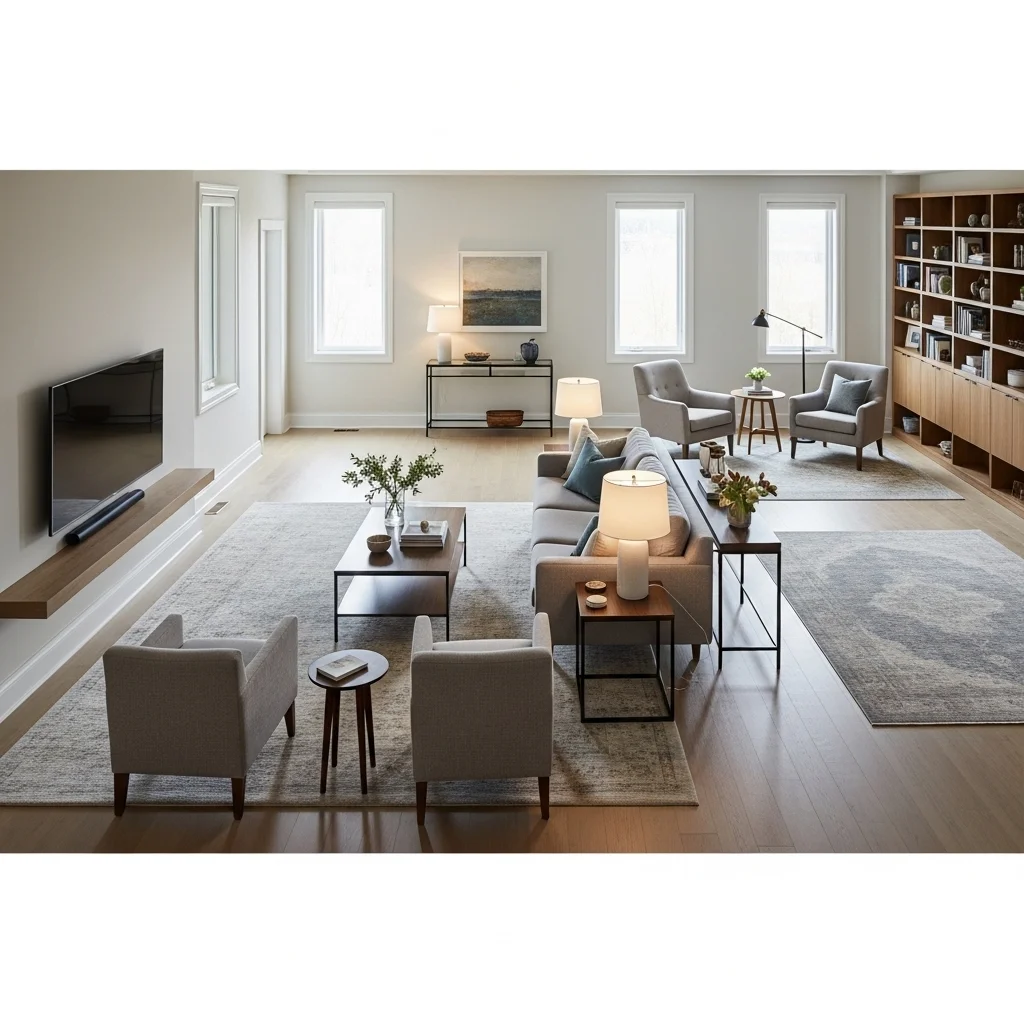
When your room is particularly long, fighting against the proportions by creating multiple zones often makes more sense than trying to design one cohesive living area.
I helped a friend arrange his 13×24 living room a few years back, and we broke it into two distinct zones: a media watching area at one end and a reading/conversation area at the other. Each zone had its own purpose and furniture grouping, but we used a few tricks to make them feel connected rather than disjointed.
The secret to successful zoning is creating clear but subtle divisions. You don’t want harsh barriers that chop the room into separate boxes, but you need enough definition that each area feels purposeful.
Area rugs are my favorite zoning tool. Place one rug under the main seating area and another under the secondary zone. Make sure they’re large enough. This is critical. A rug should fit under at least the front legs of all furniture in that zone. Tiny rugs floating in space are a common mistake that actually makes rooms look smaller and more chaotic.
Furniture placement can also create divisions. A sofa floating in the room with a console table behind it naturally separates the space behind it from the space in front. A bookshelf placed perpendicular to the wall can define the edge of one zone while providing storage.
Lighting reinforces your zones beautifully. Each area should have its own lighting a floor lamp in the reading nook, table lamps flanking the sofa, perhaps pendant lights or a different ceiling fixture defining the secondary space.
In that 13×24 room, we placed the TV on one short wall with a sofa facing it about 9 feet away, two small chairs perpendicular, and a coffee table. That created a cozy 12×13 media zone. In the remaining space, we positioned two comfortable armchairs at an angle with a small round table between them, a bookshelf along one long wall, and a floor lamp. The areas felt distinct but harmonious.
The Sectional Question: When It Works and When It Doesn’t’
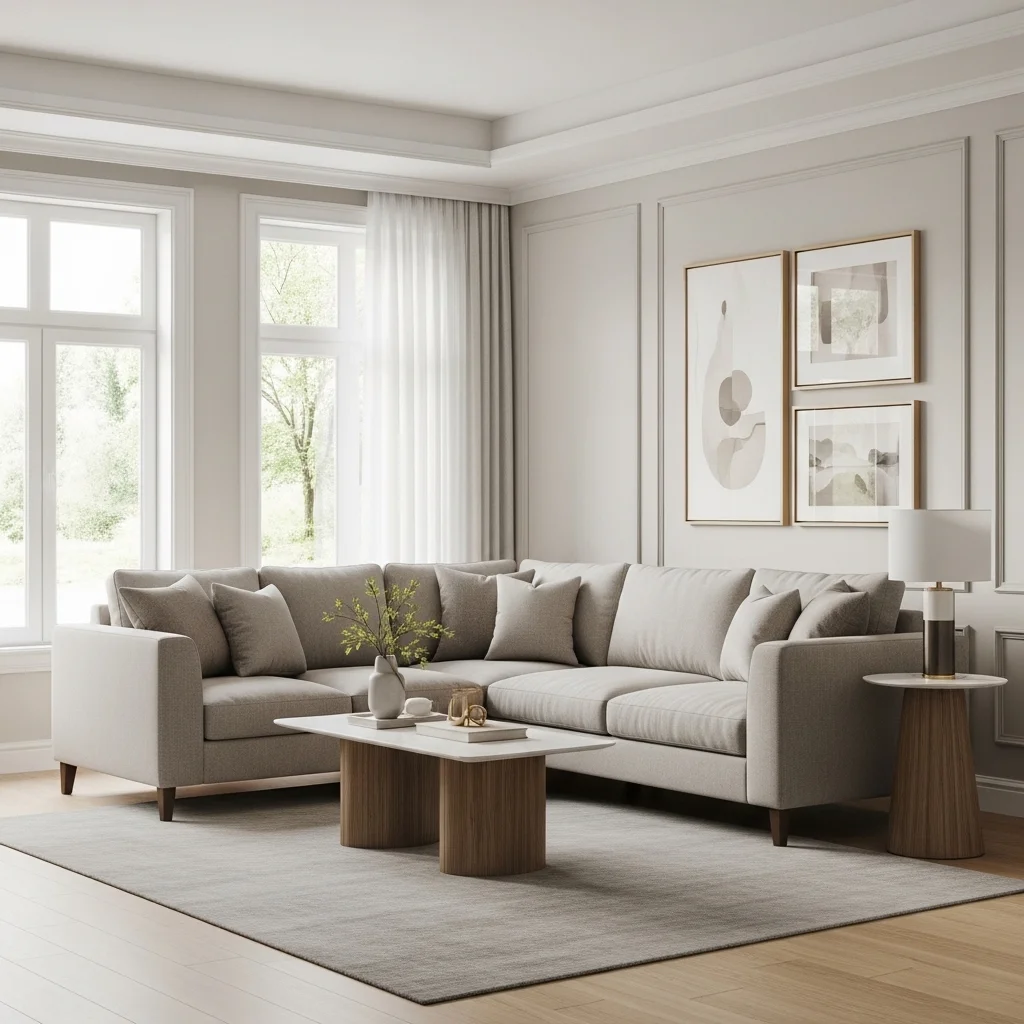
Sectionals seem like the obvious choice for many living rooms you get tons of seating in one piece, and they look substantial and modern. But in rectangular rooms, sectionals can be surprisingly problematic.
I’ve seen sectionals work beautifully in some rectangular spaces and completely overwhelm others. The determining factors are usually room size, sectional configuration, and what else you need the room to do.
In moderately rectangular rooms (14×20 or larger), an L-shaped sectional can actually work well. Place it in one corner, oriented so the longer section runs along the longer wall. This creates a defined seating area while leaving the opposite corner or end of the room open for other functions. Just make sure you have enough space you need at least 3 feet of walking space around the sectional, and more if possible.
In narrow, deep rectangles, sectionals are much trickier. An L-shaped sectional in a 12-foot-wide room often leaves inadequate pathway space. You end up with a chunky piece of furniture that emphasizes the narrowness rather than counteracting it.
I generally steer people toward smaller-scale sectionals (under 100 inches on the long side) or suggest breaking up the seating with a sofa plus chairs instead. The visual variety of different furniture pieces often works better than one massive sectional in challenging rectangular spaces.
That said, if you adore sectionals and have a narrow room, consider a small L-shaped sectional positioned in a corner on the short end of the room, with the longer section extending into the room. This can create a cozy media-watching zone without overwhelming the space.
Traffic Flow: The Overlooked Essential
You can create the most aesthetically beautiful furniture arrangement in the world, but if people have to do an obstacle course to get through the room, it’s not a good arrangement.
Traffic flow is especially important in rectangular rooms because they often serve as passageways to other parts of the home. I can’t tell you how many times I’ve seen a perfectly styled living room that’s completely impractical because there’s no clear path through it.
The basic rule: maintain at least 30 inches of pathway space, though 36 inches is more comfortable. Major walkways should be even wider if possible 42-48 inches for paths that see heavy use.
In rectangular rooms, you typically have a few traffic patterns to consider:
Through-traffic moves from one entrance to another, passing through the living room. Don’t block these paths with furniture. In many rectangular living rooms, the main through-traffic runs along one long wall or straight down the center of the room.
Internal traffic moves within the room from the sofa to the TV, from the seating area to the bookshelf, from the doorway to a seat. These paths can be narrower but still need to be clear and intuitive.
I learned this lesson the hard way in my second apartment. I arranged my narrow living room with a sofa on one long wall and the TV on the other, with side tables flanking the sofa. The only path from the entrance to the bedroom passed right in front of the TV. Every time my roommate walked through while I was watching something, it completely disrupted the experience. I eventually reconfigured so the traffic path ran behind the sofa instead.
When you’re planning furniture placement, physically walk through your intended traffic paths. Can you move comfortably without turning sideways? Do you have to step over anything? Does the path feel natural or forced? These simple checks will save you from arrangements that look good on paper but fail in practice.
Scale and Proportion: Size Really Does Matter
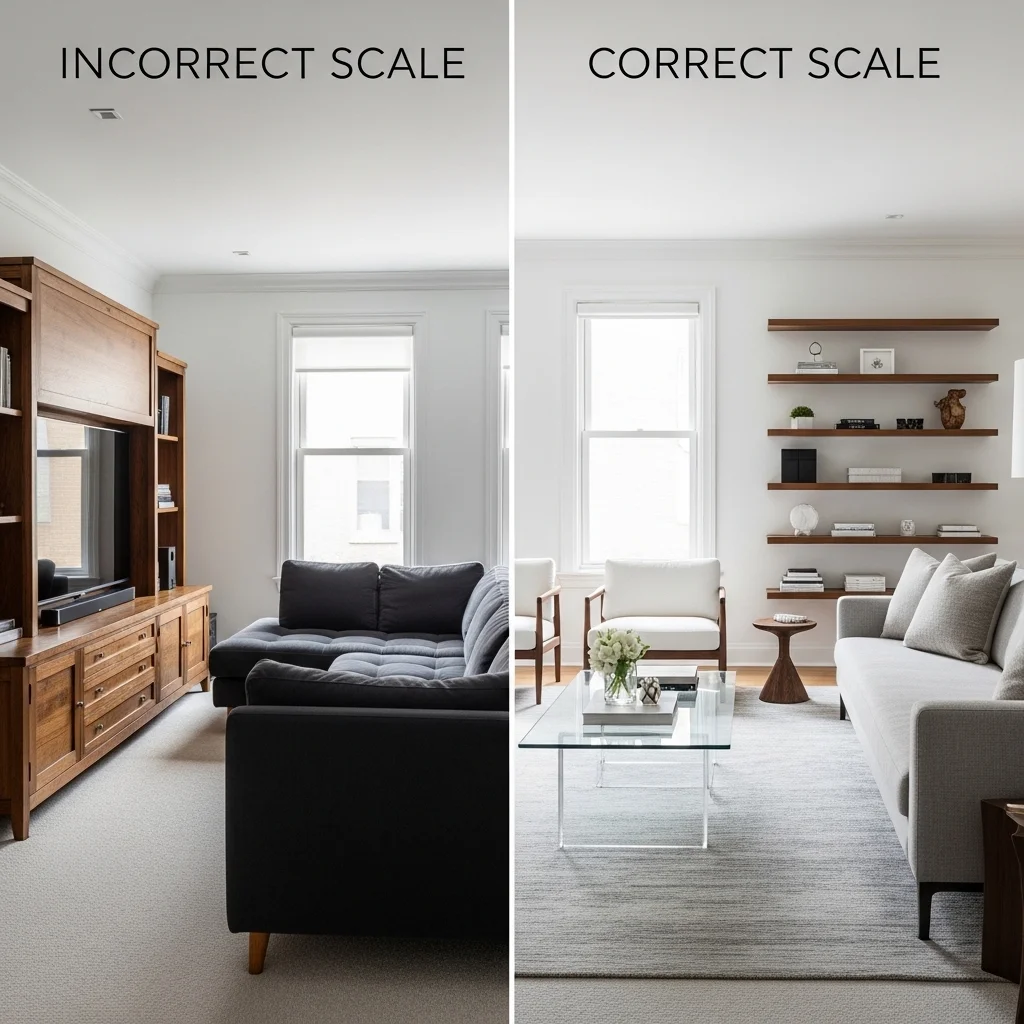
The single biggest mistake I see in rectangular living rooms is furniture that’s the wrong scale for the space. Usually, it’s too large, though occasionally I see the opposite tiny furniture floating in a big room like toys in a shoebox.
In smaller rectangular rooms (under 200 square feet), you need furniture that’s appropriately scaled down. A massive 90-inch sectional in a 12×16 room doesn’t make the room look more luxurious; it makes it look cramped and poorly planned.
For these smaller spaces, look for:
- Sofas in the 72-84 inch range rather than 90+ inches
- Armless chairs or chairs with exposed legs (they take up less visual space)
- Glass or acrylic coffee tables (you can see through them, making the room feel less cluttered)
- Wall-mounted TV and shelving instead of bulky entertainment centers
- Furniture with exposed legs that show floor space beneath
In larger rectangular rooms (250+ square feet), the problem flips. I’ve walked into spacious 15×22 rooms furnished with apartment-sized furniture, and it looks like someone shrunk all the furnishings by 30%. The pieces don’t command the space appropriately.
For larger spaces:
- You can handle bigger sofas (87-96 inches)
- Deeper seating (36-40 inches deep vs. standard 34-36 inches)
- Larger coffee tables and side tables
- More substantial table lamps and floor lamps
- Bigger artwork and mirrors
A quick test: your coffee table should be about two-thirds the length of your sofa. If those proportions are way off, you likely have a scale issue.
The Window Wall Problem
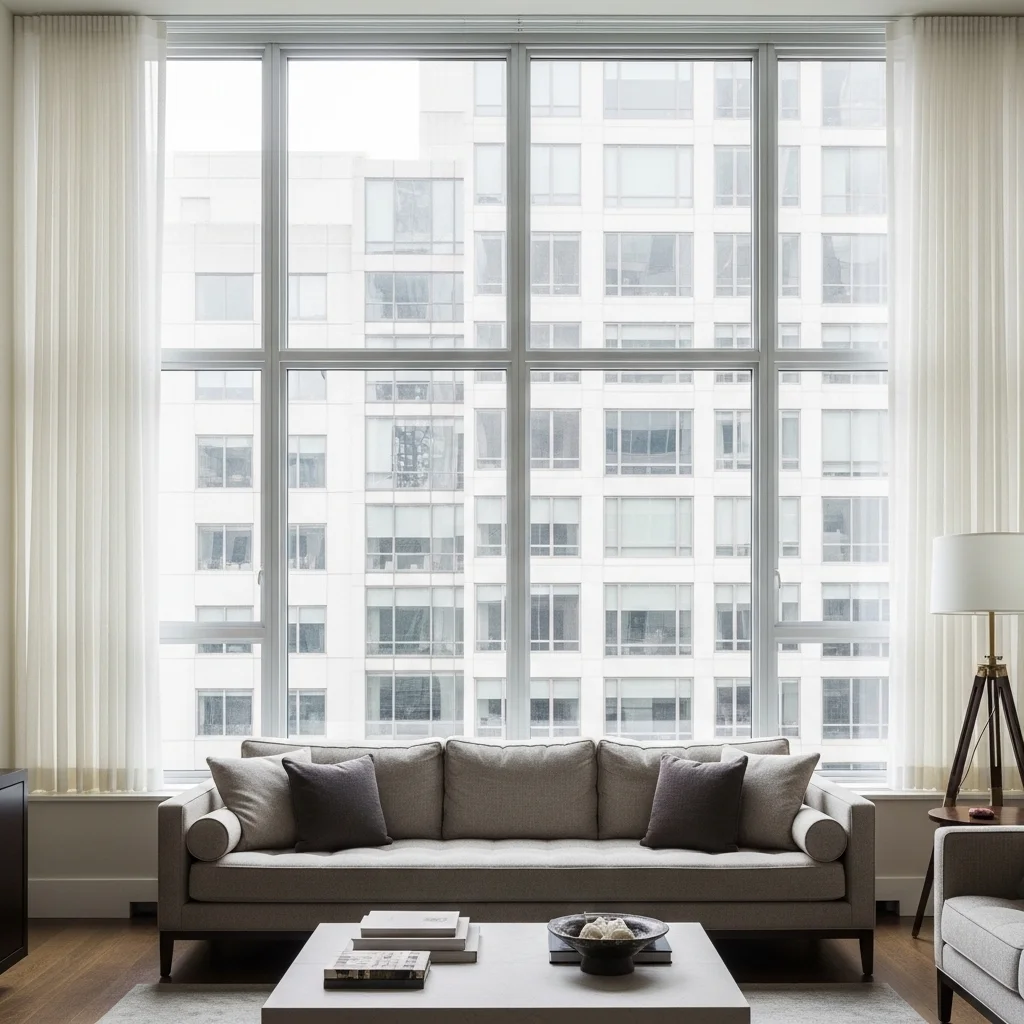
Here’s a scenario that comes up constantly: your rectangular living room has windows along one of the long walls, and you’re not sure whether to place furniture in front of them or work around them.
The traditional design rule says never block windows with furniture. In practice, though, sometimes you have to make compromises, especially in urban apartments or homes where the room configuration doesn’t give you many options.
I’ve placed sofas in front of windows many times, and it can actually work quite well if you do it thoughtfully. The key considerations:
Window height matters. If your windows are standard height (sills at 24-30 inches) and you have a low-back sofa (32-36 inches), the sofa won’t block much of the window at all. I did this in my last apartment, and from most angles, you couldn’t even tell there was furniture in front of the windows.
Leave breathing room. Pull the sofa at least 6-12 inches away from the wall so you can still access the windows for opening, cleaning, and adjusting treatments. This also prevents the back of the sofa from getting sun-damaged.
Window treatments adapt. You might need to adjust your curtain or blind approach. Side panels that frame the windows often work better than treatments that need to be adjusted frequently.
If you absolutely can’t put furniture in front of windows, you’ll need to arrange your focal point and seating on the opposite walls. This might mean placing your TV on the window wall (which requires dealing with glare, blackout shades, or curtains help) or creating a conversation arrangement that doesn’t rely on a TV at all.
Read also: Top 10 Living Room Decor Ideas to Transform Your Home
Balancing Act: Symmetry vs. Asymmetry
There’s an ongoing debate in interior design about symmetrical versus asymmetrical arrangements, and rectangular rooms really highlight this tension.
Symmetrical arrangements matching chairs flanking a sofa, identical table lamps on either side, centered artwork create a formal, balanced, calm feeling. They work especially well in traditional or transitional design styles.
Asymmetrical arrangements feel more casual, modern, and dynamic. You might have a sofa on one side, a chaise or sectional piece on the other, different lamps, varied artwork.
In my experience, most successful rectangular living rooms use a hybrid approach: symmetry in the main furniture grouping (which creates stability and anchors the space) with asymmetrical elements throughout (which adds visual interest and prevents stuffiness).
For example, you might have a sofa centered on one wall with matching side tables and lamps on either end (symmetrical), but then place a single accent chair on one side and a floor lamp with a small table on the other (asymmetrical). Or create a symmetrical seating area but use different-sized artwork or decorative objects to break up the formality.
Very narrow rectangles often benefit from more symmetry because it reinforces the room’s natural geometry and creates a sense of intentional design. Wider rectangles can handle more asymmetry without feeling chaotic.
Common Mistakes I’ve Seen (and Made)
After years of arranging rectangular living rooms, certain mistakes come up over and over. Here are the ones I encounter most frequently:
The furniture perimeter: Everything pushed against the walls with a vast empty center. This makes the room feel like a waiting room and wastes your most valuable space the middle of the room.
The TV-too-high syndrome: Mounting a TV above a fireplace mantel or too high on the wall forces everyone to crane their necks. Ideally, the center of your TV should be at eye level when you’re seated usually about 42-48 inches from the floor.
Mismatched viewing distances: Placing seating at dramatically different distances from the TV creates an awkward dynamic where some people are squinting while others are too close. Try to keep all primary seating within a similar distance range.
Ignoring the room’s natural light: Placing seating so that sunlight creates glare on the TV or directly in people’s eyes during peak room usage. Consider what time of day you use the room most and how the light enters.
Furniture that’s too deep: In a narrow room, a 40-inch-deep sectional steals precious space. Standard 34-36 inch depths work better.
Blocking electrical outlets and cable jacks: Then scrambling to hide extension cords and power strips. I always map out where outlets are before planning furniture placement.
No focal point hierarchy: Creating multiple competing focal points TV on one wall, fireplace on another, huge piece of art on a third so the eye doesn’t know where to land. Pick your primary focal point and let others be secondary.
The Finishing Touches That Pull It Together
Once you’ve got the major furniture placed, you’re about 70% done. The remaining 30% comes from the details that make the arrangement feel complete and livable.
Layer your lighting. Overhead lighting alone makes any room feel flat and cold. Add table lamps on side tables, a floor lamp in a reading nook, maybe picture lights or sconces. Aim for at least three light sources in different areas of the room.
Define zones with rugs. I mentioned this earlier, but it bears repeating: the right rug in the right size transforms a furniture arrangement. For a seating area, the rug should be large enough to fit at least the front legs of all furniture pieces. An 8×10 rug is often the minimum for a standard seating group; 9×12 is better for larger rooms.
Add vertical elements. In rectangular rooms, especially narrow ones, drawing the eye upward helps counteract the horizontal emphasis. Tall bookshelves, floor-to-ceiling curtains, vertical artwork, and tall plants all add height and visual balance.
Create vignettes. Small, thoughtful arrangements of objects, books, a plant, a decorative box on a coffee table; a lamp, photo frame, and small plant on a side table make the space feel curated and lived-in.
Don’t forget function. All the aesthetics in the world won’t help if you have nowhere to set down a coffee cup. Make sure you have a surface within arm’s reach of every seat. Add a basket for throw blankets, a tray to corral remotes, hooks or a coat rack near the entrance if the living room is close to your front door.
When to Break the Rules
Everything I’ve written here reflects approaches that work most of the time in most rectangular living rooms. But sometimes the right solution breaks the conventional wisdom.
I once worked with a very narrow, very long living room, about 11×26 feet, in an old brownstone. Every standard arrangement looked terrible. We finally tried something unconventional: instead of creating one or two zones along the length of the room, we arranged the furniture diagonally. An angled sectional in one corner, the TV on a swiveling mount, chairs at angles rather than straight lines. It shouldn’t have worked, but it completely transformed the space, making it feel wider and more dynamic.
Another time, in a room with beautiful windows along both long walls, we abandoned the idea of a TV-centered arrangement entirely. We created a conversational grouping focused on a central coffee table with no particular wall serving as the focal point. The homeowners ended up projecting movies onto a blank short wall when they wanted to watch something, but most of the time, the room functioned as a social space. It worked perfectly for their lifestyle.
The point is: learn the principles, understand why they usually work, but stay open to creative solutions when your specific space, needs, or circumstances call for something different.
Read also: Top 10 Modern Living Room Decor Ideas for Small Spaces
Pulling It All Together: A Step-by-Step Approach
If you’re standing in your rectangular living room right now, feeling overwhelmed, here’s a practical process to work through:
1. Measure everything. Room dimensions, furniture pieces you already own or plan to buy, windows, doorways, and the locations of outlets and jacks.
2. Identify your focal point and decide whether it makes more sense on a short wall or long wall based on your room’s proportions.
3. Determine your primary activity. Is this mainly a TV-watching room? A conversation space? A multi-purpose area? Your main use case drives the arrangement.
4. Place your largest piece first usually the sofa. Position it at an appropriate viewing distance from your focal point, and decide whether to float it or place it against a wall.
5. Add secondary seating to create your conversation zone, keeping pieces 8-10 feet apart at most.
6. Check your traffic flow. Walk through the room. Make adjustments as needed.
7. Add functional pieces: coffee table, end table, side tables, media console, ensuring you maintain adequate pathway space (30-36 inches).:
8. Consider what to do with extra space in longer rooms. Another zone? Purposeful emptiness? Storage furniture?
9. Layer in your finishing elements rugs, lighting, accessories, plants, artwork.
10. Live with it for a week before you commit to the arrangement. You’ll quickly discover what works and what doesn’t in actual daily use.