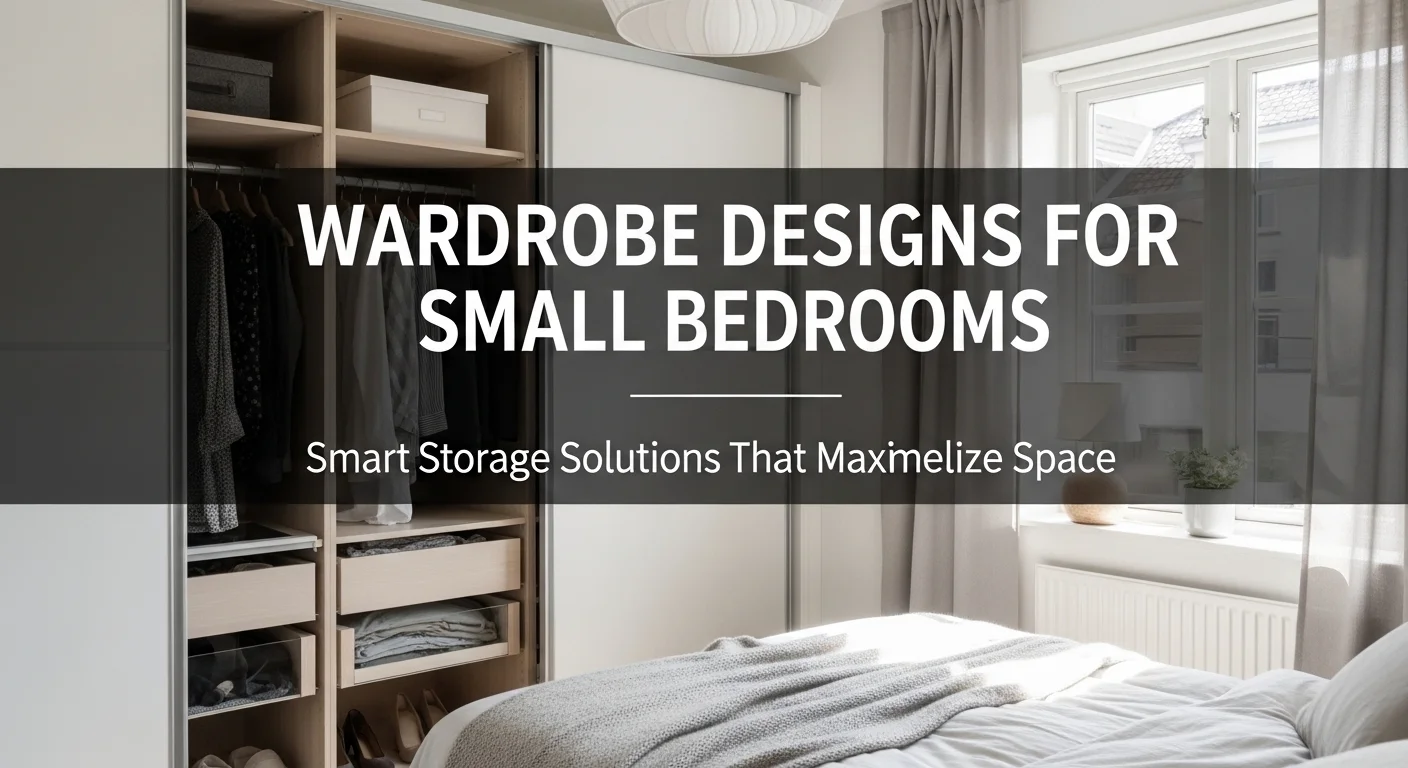
I’ve lost count of how many times I’ve stood in a cramped bedroom, staring at a pile of clothes on a chair, wondering where on earth everything is supposed to go. Small bedrooms are common in city apartments, older homes, and modern micro-living spaces, yet we still need to store the same amount of clothing, shoes, and accessories as anyone else. Over the years, I’ve learned that the right wardrobe design can completely transform a tight space from cluttered chaos into something surprisingly functional and even elegant.
The challenge isn’t just about fitting storage into a small room; it’s about making that storage work efficiently without overwhelming the space. A bulky wardrobe in a small bedroom can make you feel like you’re sleeping in a storage unit. But a well-designed one? It practically disappears while holding twice as much as you’d expect.
Why Standard Wardrobes Often Fail in Small Spaces
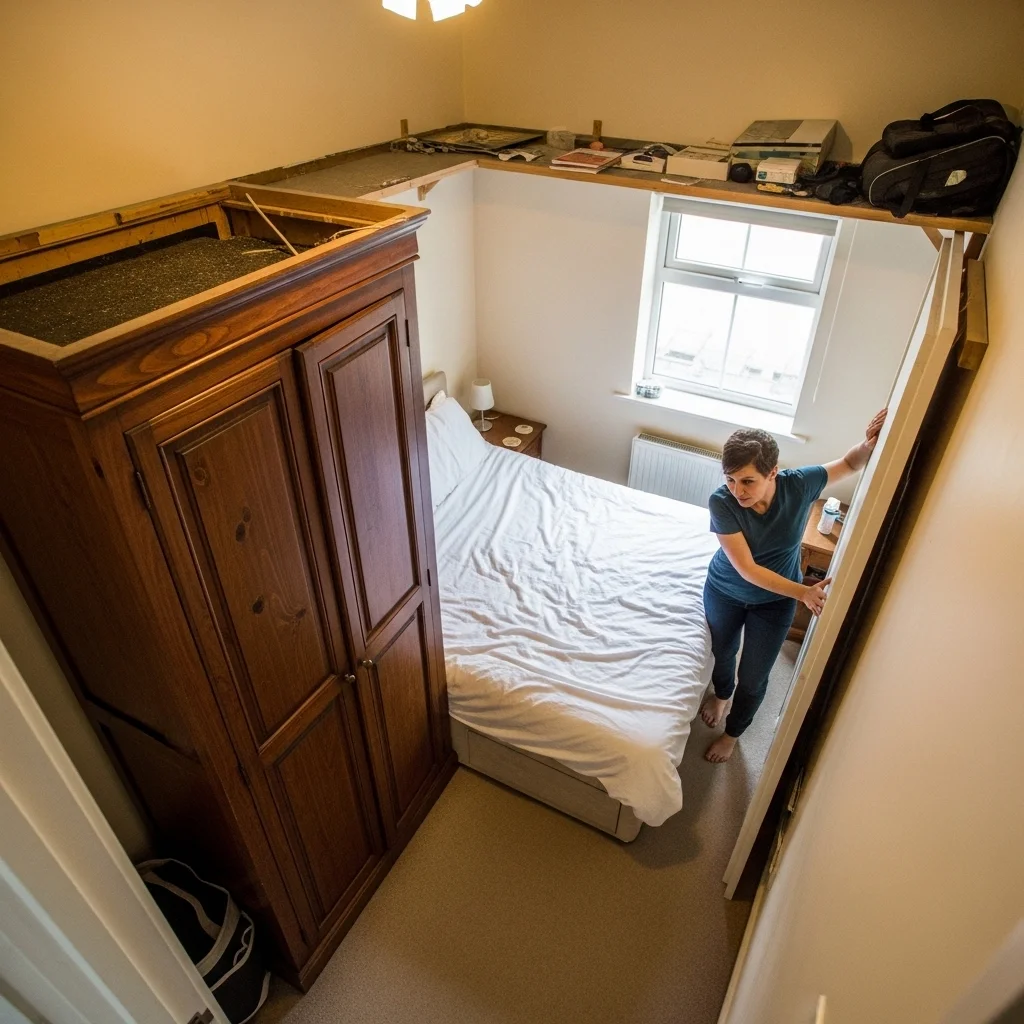
Most ready-made wardrobes are designed for average-sized bedrooms, which means they’re often too deep, too wide, or configured in ways that waste precious space in smaller rooms. I’ve seen 24-inch-deep wardrobes in 10×10 bedrooms that make it impossible to walk around the bed comfortably. The standard hanging rail and shelf setup might work fine in spacious master suites, but in compact rooms, you need something smarter.
The other problem is wasted vertical space. Many people buy wardrobes that stop well below ceiling height, leaving a gap that’s too small to be useful but large enough to collect dust and make the room feel choppy. In small bedrooms, every single inch counts.
Sliding Door Wardrobes: The Space-Saver That Started It All
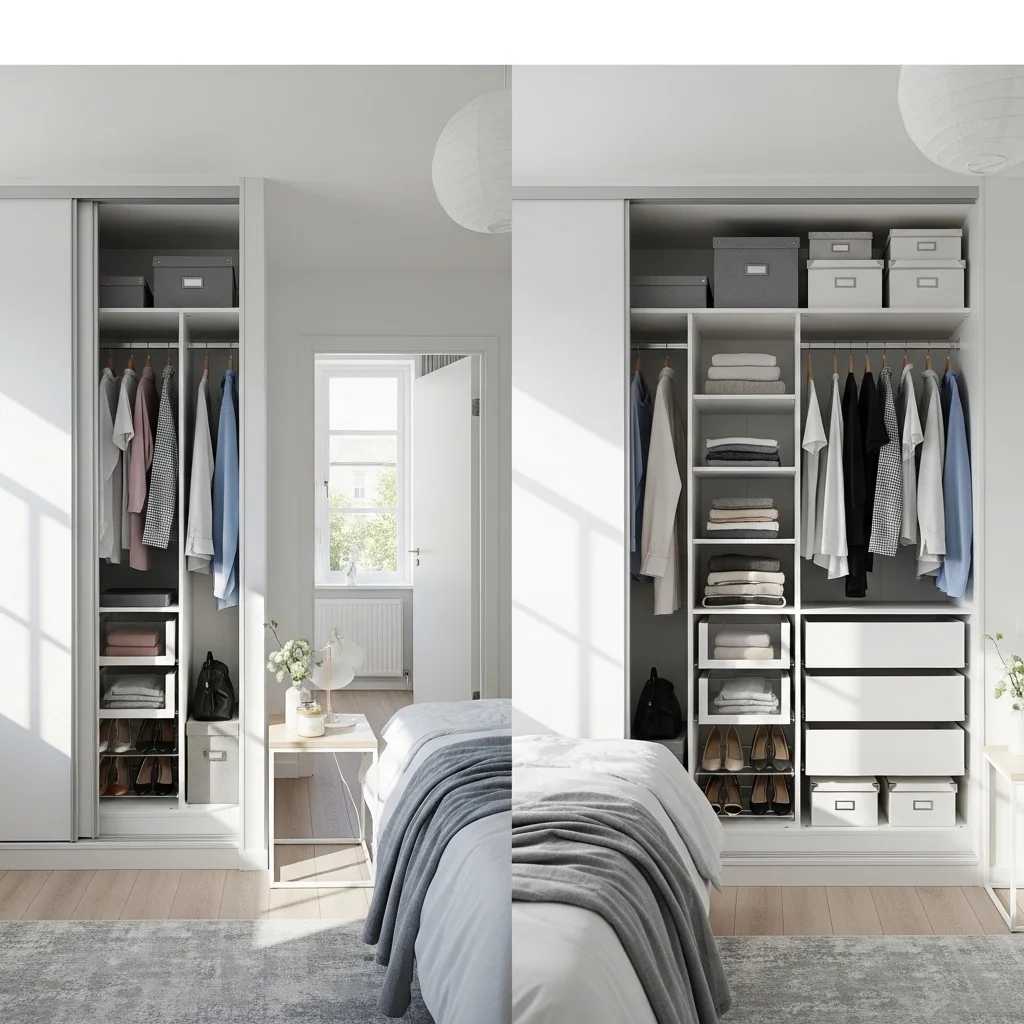
If I had to recommend one wardrobe style for small bedrooms, sliding door designs would be near the top of the list. The reason is simple: they don’t require clearance space to open. A traditional hinged door needs at least two feet of floor space to swing open, which in a small bedroom might mean you can’t open your wardrobe and your bedroom door at the same time.
Sliding wardrobes sit flush against the wall and glide open sideways. I’ve installed these in bedrooms where a regular wardrobe would have been impossible, and the difference is immediately noticeable. You can position furniture closer to the wardrobe, and the room flows better.
The downside? You can only access half the wardrobe at a time since one door always covers part of the interior. This means internal organization becomes even more important. You’ll want to think carefully about what goes where, keeping frequently used items on both sides rather than clustering everything you need daily on one side.
Built-In Wardrobes: Custom Solutions for Awkward Spaces
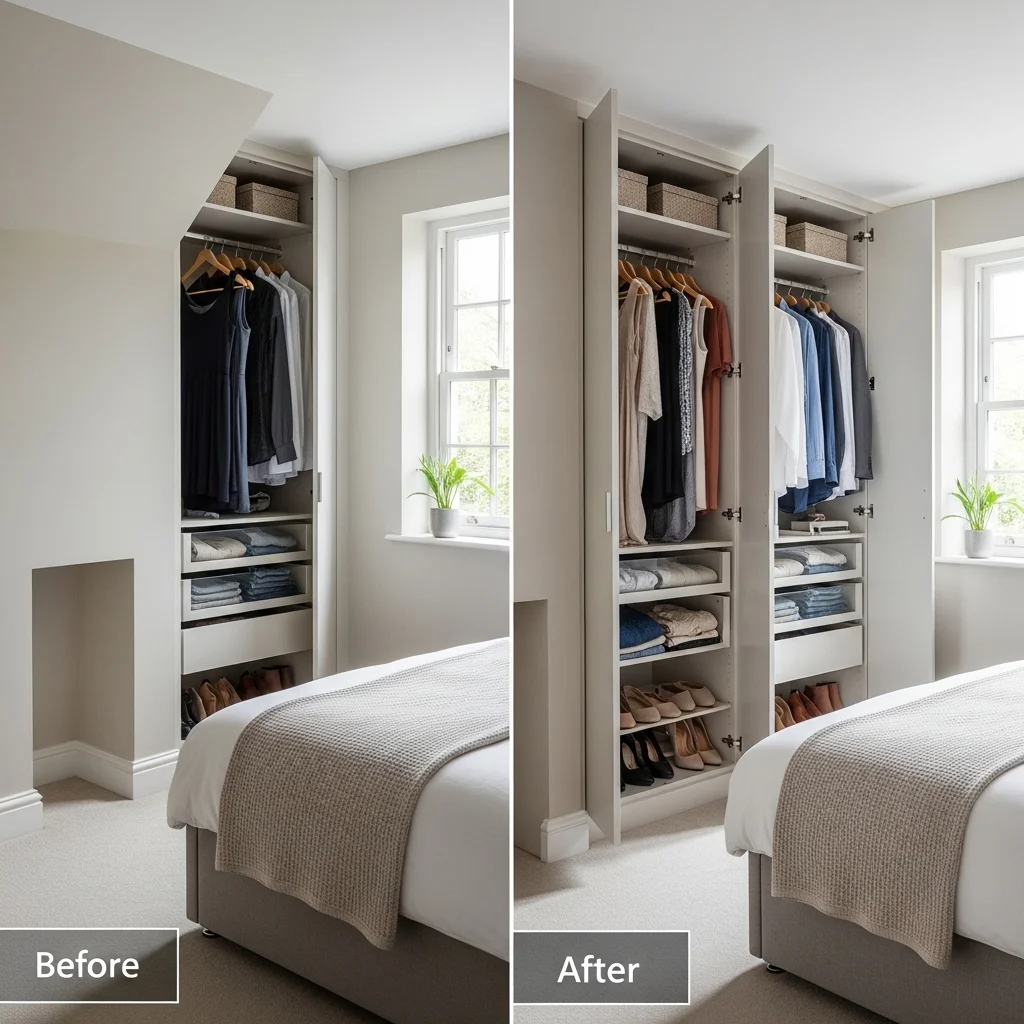
Built-in wardrobes are worth every penny in small bedrooms, especially those with odd layouts. I’m thinking of rooms with sloped ceilings, chimney breasts, alcoves, or awkward corners that make freestanding furniture a nightmare to position.
A few years back, I worked with a bedroom that had a weird recess next to the window, too narrow for a standard wardrobe but too large to ignore. A carpenter built a floor-to-ceiling wardrobe that fit perfectly into that space, using every inch from floor to ceiling. The result held more than a bulky freestanding unit would have, looked seamless, and didn’t intrude into the main bedroom area.
Built-ins can be designed to exact measurements, which means no wasted gaps between the wardrobe and walls or ceiling. This custom approach also lets you incorporate specific storage solutions for your actual wardrobe, more hanging space if you wear mostly dresses and shirts, more shelving if you’re into folded knitwear and jeans, or specialized shoe racks if you’re a sneaker collector.
The investment is higher than buying flat-pack furniture, but built-ins add value to your property and, frankly, they last. I’ve seen cheap freestanding wardrobes sag and warp within five years, while properly installed built-ins remain solid for decades.
Floor-to-Ceiling Designs: Using Every Inch of Height
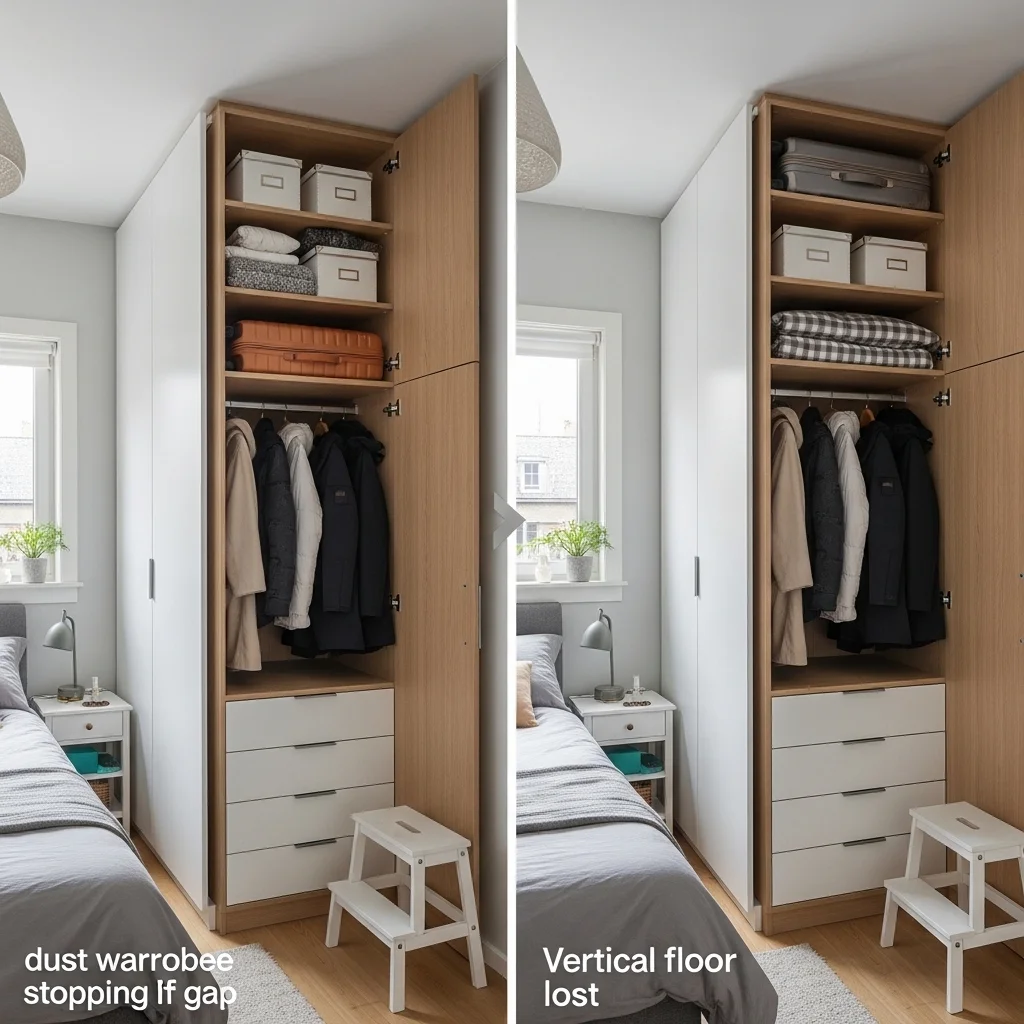
One of the biggest mistakes in small bedroom storage is ignoring vertical space. Floor-to-ceiling wardrobes maximize storage capacity without eating up additional floor space. They also create a cleaner visual line that makes rooms feel larger rather than smaller.
When a wardrobe reaches the ceiling, it eliminates that awkward gap where dust accumulates, and the space feels fragmented. The room reads as more cohesive. I’ve noticed that people initially worry a tall wardrobe will make their small bedroom feel cave-like, but the opposite tends to be true. The unbroken vertical line actually draws the eye upward, creating an impression of height.
The upper sections of floor-to-ceiling wardrobes work brilliantly for seasonal storage. Winter coats in summer, summer dresses in winter, luggage, extra bedding, all the things you need but not every day. You might need a small step stool to access the top shelves, but that’s a minor inconvenience compared to the storage you gain.
Corner Wardrobes: Making Dead Space Work Hard
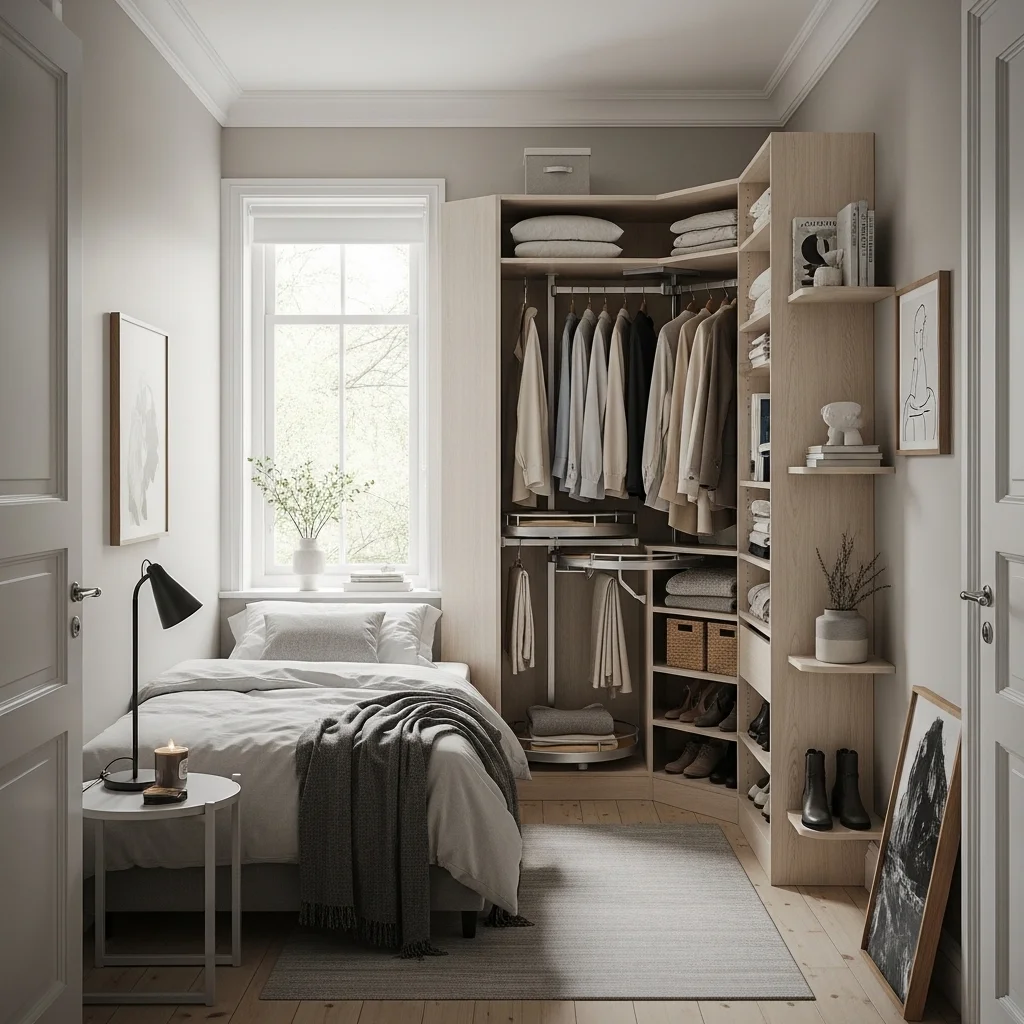
Corner spaces in small bedrooms are often wasted. You can’t easily fit a bed there, and pushing a dresser into a corner makes half the drawers hard to access. Corner wardrobes, however, are specifically designed to make these awkward spots useful.
L-shaped corner wardrobes wrap around two walls, providing surprising amounts of hanging and shelf space while keeping the rest of the room open. I’ve used these in tiny box bedrooms where wall space is limited. Instead of lining one wall with storage and sacrificing all that length, the corner unit tucks away and leaves more flexible space for the bed and movement.
There are also diagonal corner wardrobes that fit across the corner itself, creating a softer look than sharp right angles. These work particularly well in period homes or rooms where you want to maintain a less boxy feel.
The interior of corner wardrobes requires careful planning, though. The corner itself can become a dark void where things disappear forever. Carousel hanging rails or corner shelving units that rotate can help, making everything accessible rather than creating a Bermuda Triangle for your clothes.
Mirrored Wardrobes: The Optical Illusion That Works
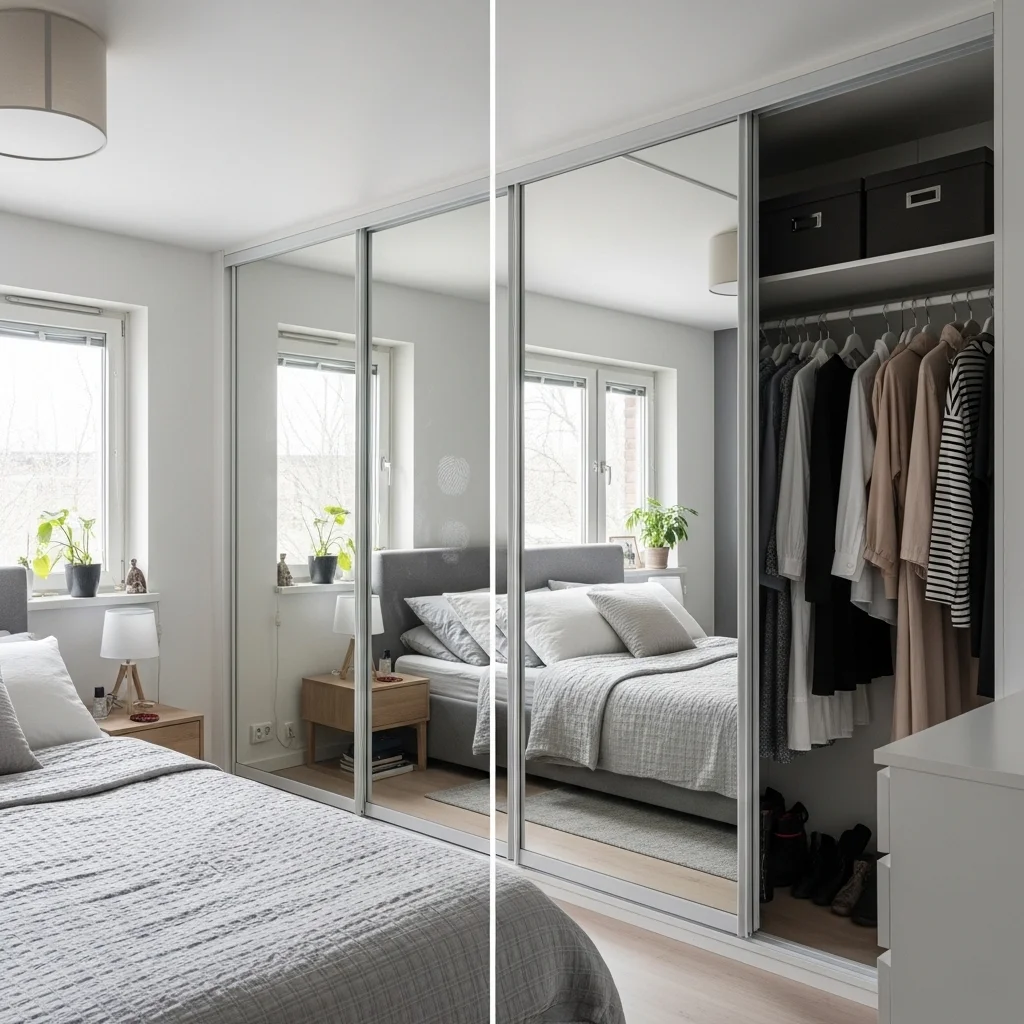
I’ll be honest, I was skeptical about mirrored wardrobes for years. They felt a bit dated, a bit 1980s hotel room. But in genuinely small bedrooms, mirrors change the game.
A full-length mirrored wardrobe effectively doubles the visual space in a room. When you walk into a small bedroom with a mirrored wardrobe on one wall, your brain registers the reflection, and the room feels significantly larger. It’s an optical trick, sure, but it genuinely improves how the space feels to live in.
The practical side is that you need a full-length mirror anyway. If it’s on your wardrobe doors, you’re not sacrificing additional wall or floor space for a standing mirror. You can check your outfit, make the room feel bigger, and keep your storage discreet all in one piece of furniture.
The challenge with mirrors is keeping them clean; fingerprints, dust, and smudges show up immediately. If you have young children or pets, you’ll be cleaning those doors constantly. Some people also find sleeping in a room surrounded by mirrors unsettling, so it’s worth considering whether this suits your personal comfort.
Shallow Depth Wardrobes: When Width Matters More
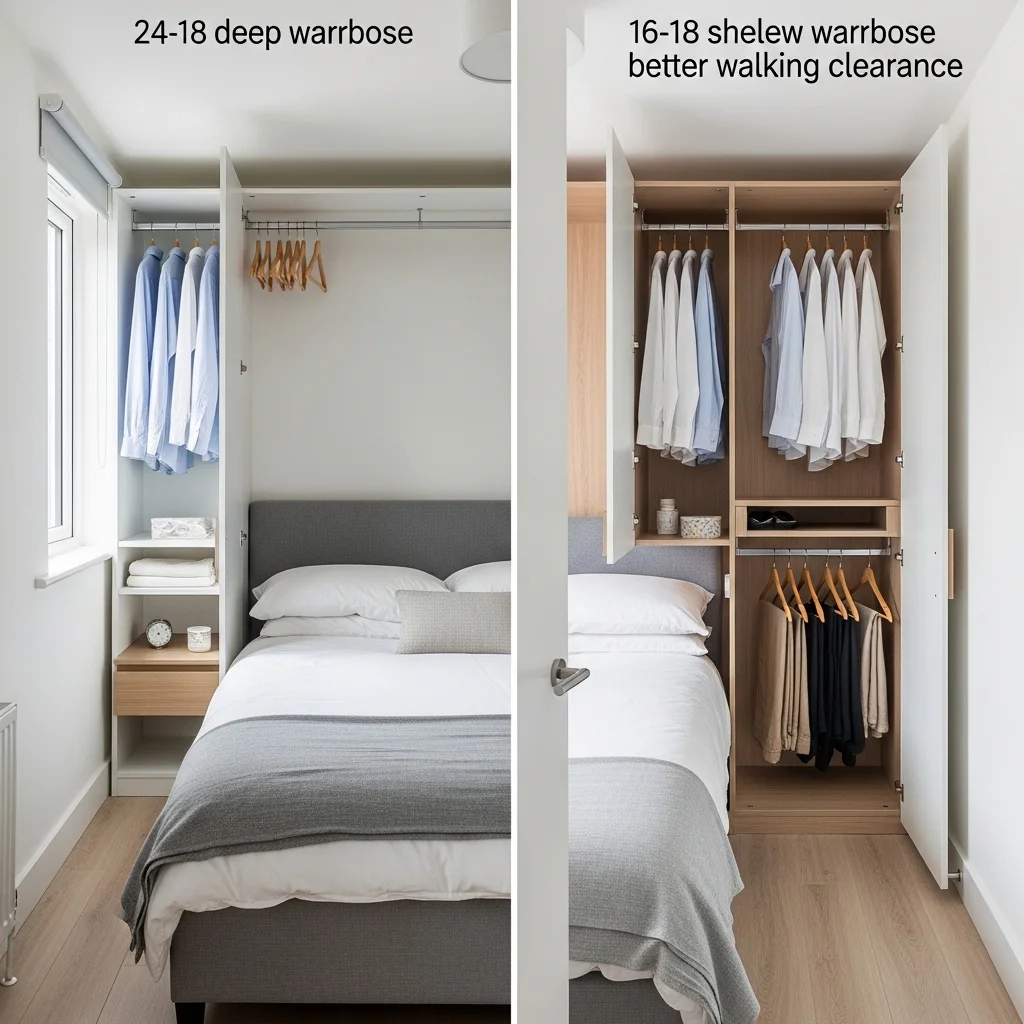
Standard wardrobes are usually around 22-24 inches deep, which is fine for most spaces but can overwhelm a genuinely small bedroom. Shallow wardrobes, at around 16-18 inches deep, sacrifice some interior space but give back valuable floor space.
The trick here is using the internal space wisely. Regular hangers on a standard rail won’t work; you’ll need slimline hangers or rails mounted front-to-back rather than side-to-side. I’ve seen clever designs with double hanging rails where clothes hang facing different directions, maximizing the narrow depth.
Shallow wardrobes work especially well in narrow bedrooms where the bed takes up most of the width. By reducing the wardrobe depth by even six inches, you might gain enough room to walk comfortably or fit a bedside table without the space feeling crammed.
Open Wardrobe Systems: The Minimalist Approach
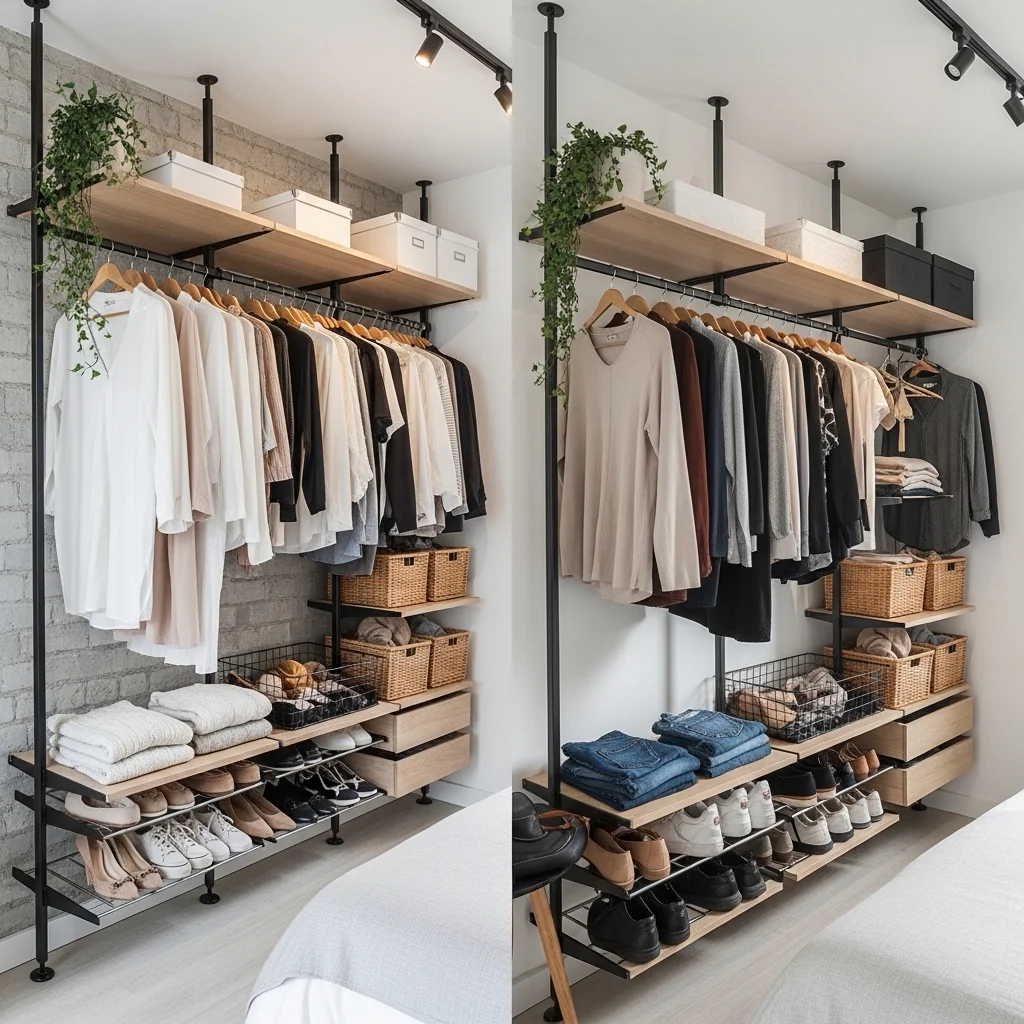
Now, this one isn’t for everyone, but in certain small bedrooms, particularly those with a modern or industrial aesthetic, open wardrobe systems can work beautifully. I’m talking about exposed rails, open shelving, and modular units without doors.
The advantage is flexibility and space efficiency. Without door clearance to worry about, you can fit open storage into incredibly tight spots. The systems are usually modular, so you can configure them exactly how you need, more hanging here, more shelves there, baskets for smaller items.
The visual lightness helps too. In a small bedroom, a solid wardrobe can feel heavy and imposing, but an open system maintains sightlines across the room, making it feel more spacious.
The obvious downside is that everything is on display. If you’re naturally tidy and enjoy having your wardrobe as a design feature, this works. If your clothes are usually a jumbled mess, an open system will broadcast that chaos to anyone who enters your room. Dust is also more of an issue without doors protecting your clothes.
I’ve found open systems work best for people who genuinely edit their wardrobes regularly and keep only what they love and wear. It’s much harder to hide clutter in an open system, which for some people is exactly the discipline they need.
Modular and Freestanding Options: Flexibility for Renters
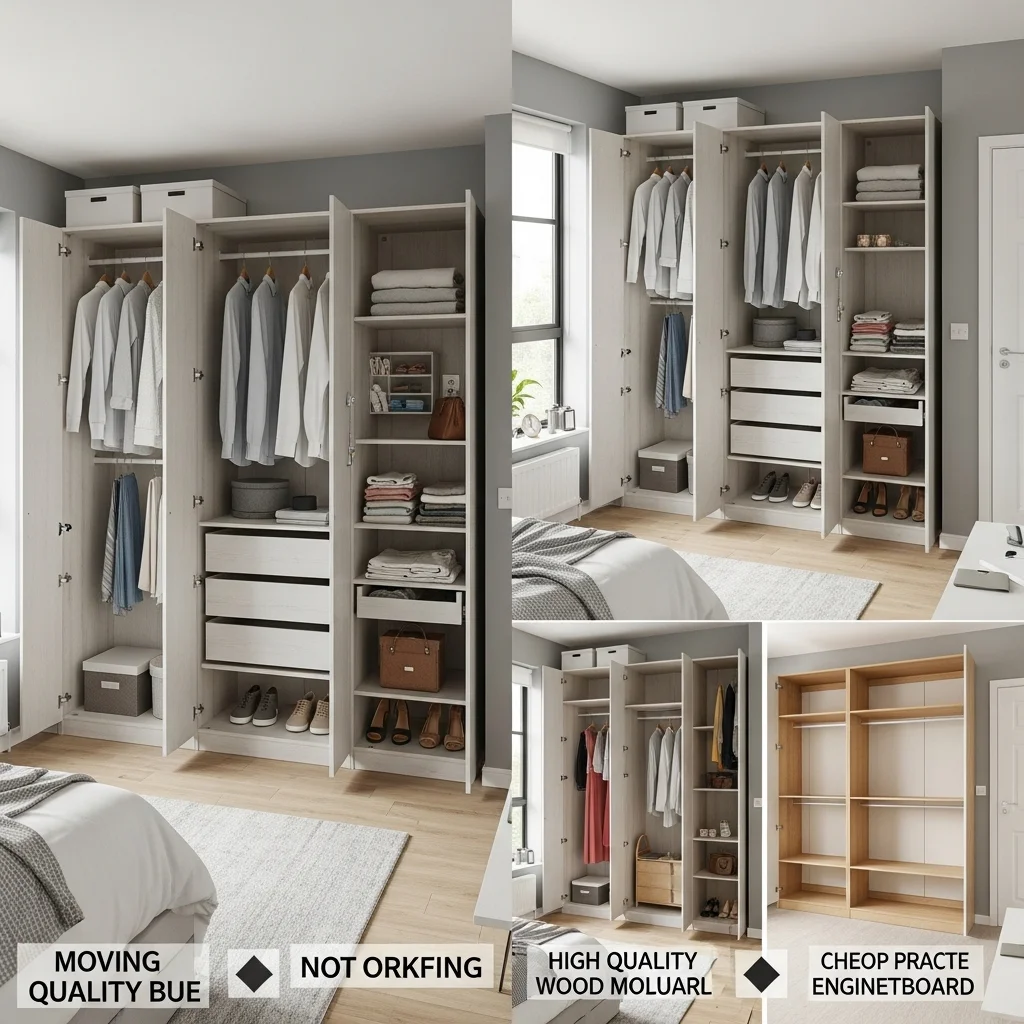
Not everyone owns their home, and not everyone can justify installing built-in wardrobes. Modular wardrobe systems offer a middle ground more customizable than standard furniture but without permanent installation.
Systems like PAX (the popular one from a certain Swedish furniture giant) let you configure your own wardrobe using standardized frames, interiors, and doors. You can create a solution that fits your exact space and storage needs without carpentry. When you move, you disassemble and take it with you or reconfigure it for a different room.
I’ve used these in rental apartments where drilling into walls was limited or prohibited. They offer genuine customization; you choose the internal layout based on whether you need more hanging space, more drawers, shoe storage, or accessory organization. The result looks built-in if you take it to the ceiling, but it remains technically freestanding furniture.
The quality varies. Some modular systems are genuinely robust; others feel flimsy after a few years. Pay attention to the material quality; solid wood or high-quality engineered wood beats cheap particleboard that will sag under weight.
Smart Internal Organization: Making Small Wardrobes Hold More
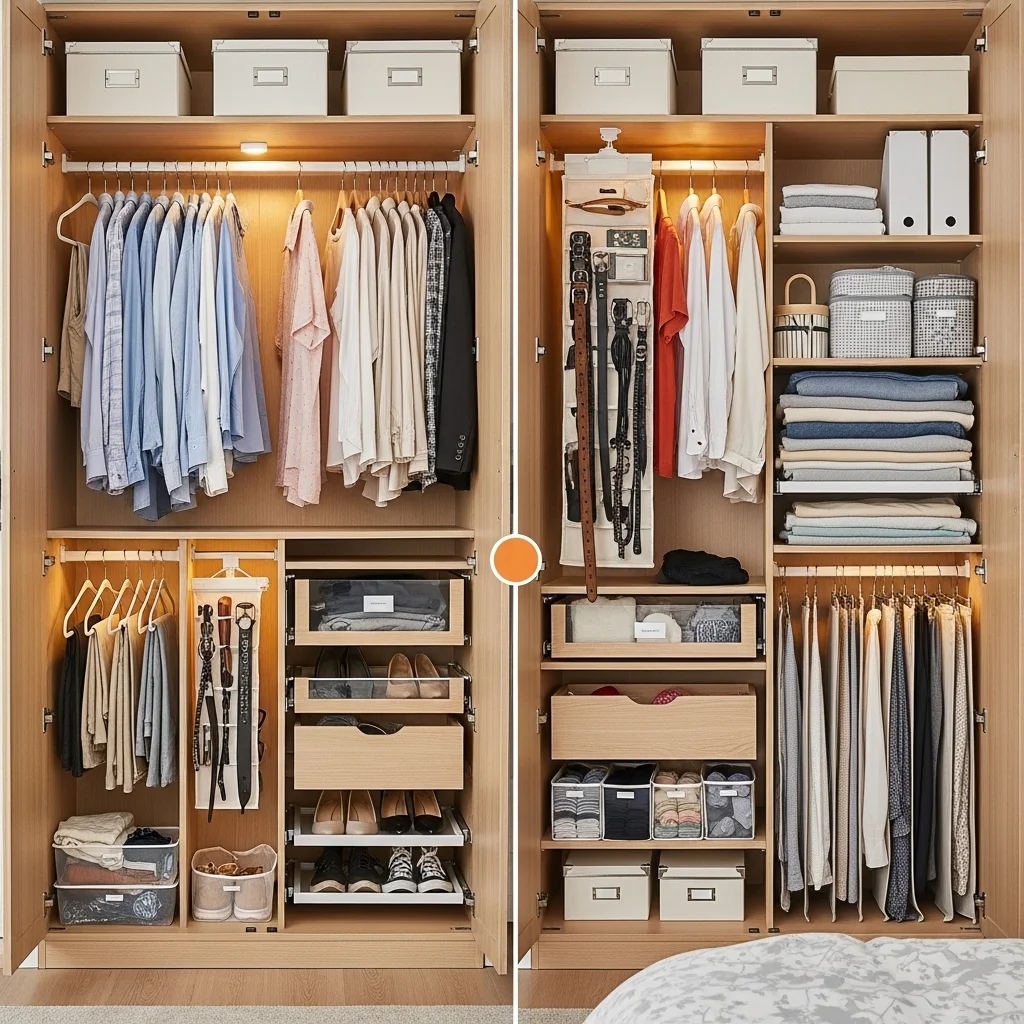
Even the best wardrobe design fails if the interior is poorly organized. I’ve seen huge wardrobes that hold barely anything because the internal space is wasted, and tiny wardrobes that hold remarkable amounts because every inch is optimized.
Double hanging rails are your friend in small wardrobes. If you’re hanging shirts, blouses, and folded trousers, you don’t need six feet of vertical hanging space. Install one rail at around five feet and another at two and a half feet, and suddenly you’ve doubled your hanging capacity in the same width.
Pull-out shoe racks, trouser rails, and tie/belt organizers use space efficiently because they extend out toward you, making everything visible and accessible. Regular shelves in deep wardrobes mean things get lost at the back. Pull-out systems prevent that.
Drawer dividers keep smaller items organized. Without them, sock and underwear drawers become chaotic tangles where you can never find a matching pair. Simple dividers or small boxes turn one messy drawer into organized sections.
Shelf dividers for stacks of clothes prevent the dreaded avalanche when you pull out one sweater, and the entire pile collapses. Vertical dividers let you file-fold your clothes, standing them upright like files rather than stacking them, so you can see everything at once without disturbing other items.
Color and Material Choices for Small Bedrooms
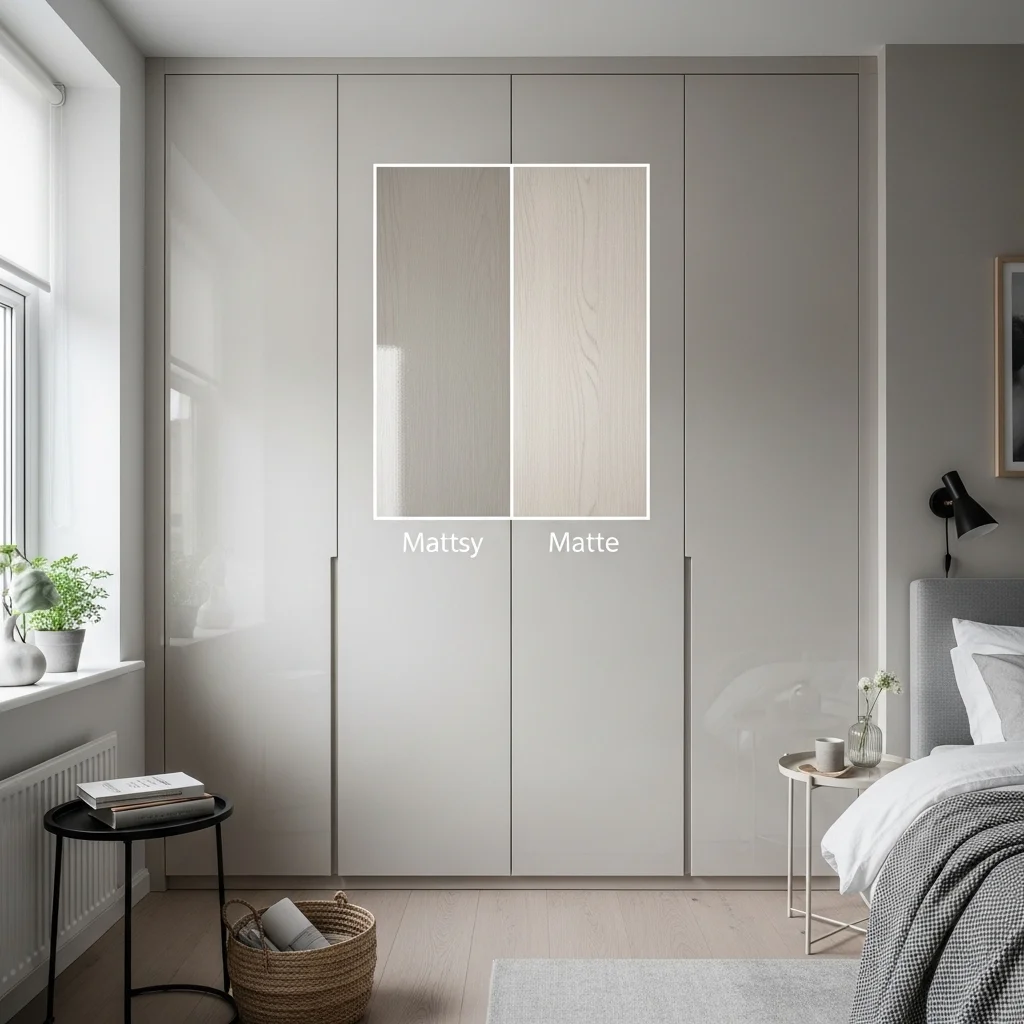
The visual impact of your wardrobe affects how spacious your bedroom feels. Dark, heavy wardrobes in dark wood can make small rooms feel closed in, while light colors and materials maintain airiness.
White or light wood wardrobes reflect light and blend with walls, creating a more seamless look. This doesn’t mean you can’t use darker colors; a dark wardrobe can look stunning against white walls, creating contrast, but be aware that it will feel more present in the space.
Glossy finishes reflect light similarly to mirrors, though less dramatically. Matte finishes absorb light and feel more grounded. Neither is better; it depends on the look and feel you want.
Matching your wardrobe to wall color is a designer trick for making it “disappear.” If your walls are white, a white wardrobe blends in, feeling less like a piece of furniture and more like part of the architecture. This visual trick can make small bedrooms feel less cluttered even when they contain substantial storage.
Read also: Top 10 Cozy Bedroom Decor Ideas for Better Sleep
Wardrobe Placement: Position Matters
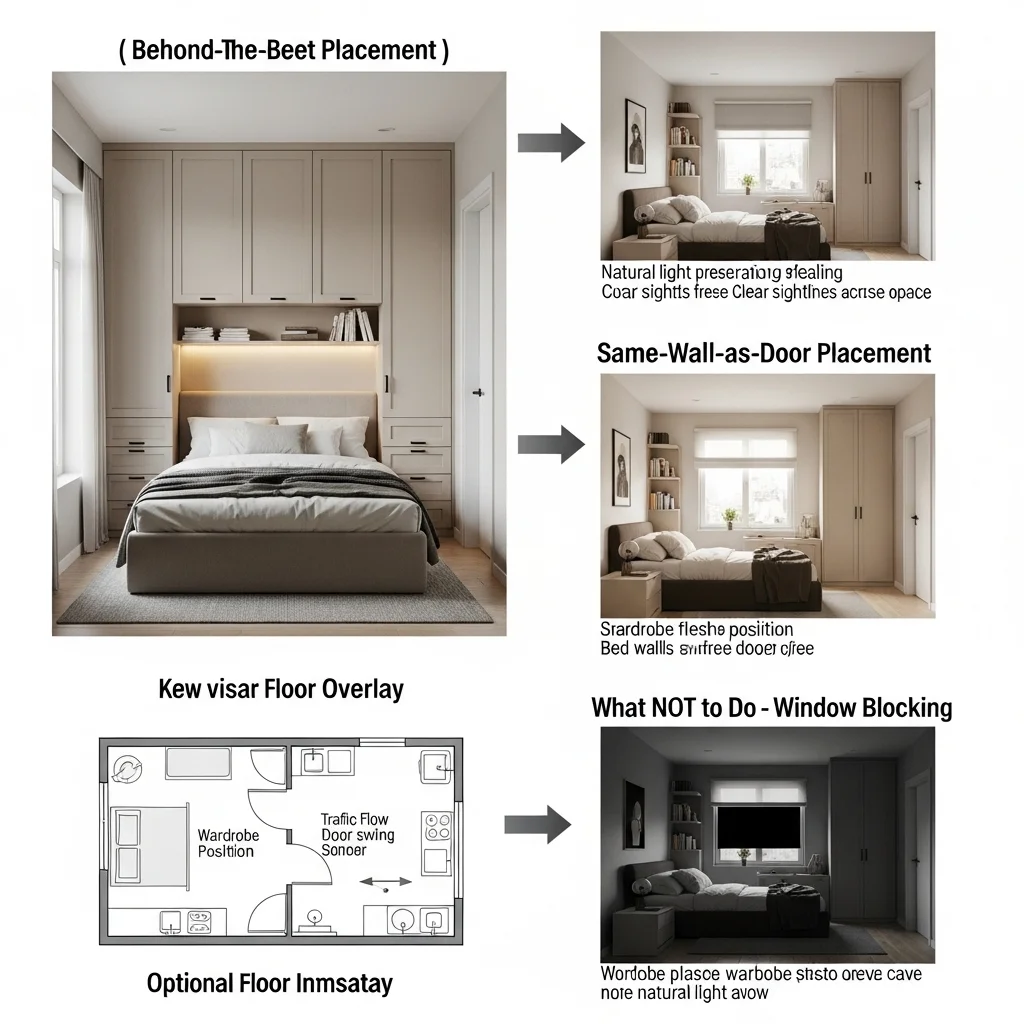
Where you put your wardrobe in a small bedroom significantly affects how the room functions. The instinct is often to place it against the most obvious wall, but sometimes creative placement works better.
Positioning a wardrobe across the entire wall behind your bed can create a built-in look while framing the sleeping area. I’ve seen this work beautifully in narrow bedrooms where one long wall accommodates the bed with wardrobes on either side and even above the headboard. It feels like a sleeping nook within a storage wall, maximizing both functions.
In small square bedrooms, placing the wardrobe on the same wall as the door (when possible) keeps the other three walls free, making the room feel more open when you’re inside. You see the bed and any windows rather than immediately facing a large piece of furniture.
Never block natural light unless absolutely unavoidable. A wardrobe in front of a window makes small rooms feel like dark caves. If your only option is the window wall, consider a lower wardrobe that allows light above, or position it to one side of the window rather than blocking it entirely.
Budget Considerations: What’s Worth Spending On
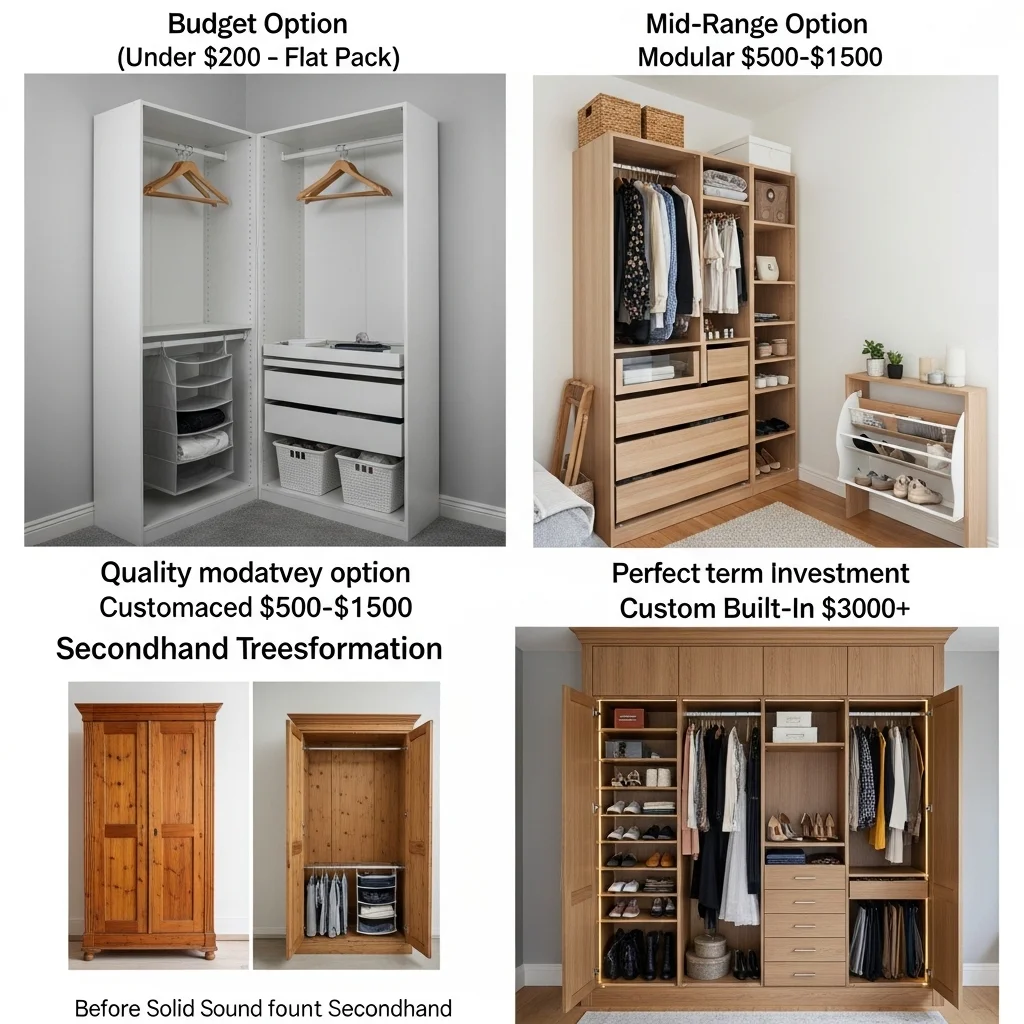
Wardrobes range from cheap flat-pack options under $200 to custom-built-ins costing thousands. For small bedrooms, where the wardrobe is likely a significant visual element, quality matters more than in large rooms where it’s less prominent.
If budget is tight, invest in a good basic structure, even if it’s modular, and upgrade the internals yourself. A simple rail and shelf setup can be enhanced with affordable organizers, dividers, and storage accessories that dramatically improve functionality.
Custom built-ins are expensive but worth considering if you plan to stay in your home for years. The cost per year of use becomes reasonable, and the space efficiency gains in a small bedroom are substantial. If you’re renting or likely to move soon, modular systems offer better value.
One middle option that works well is buying a quality freestanding wardrobe secondhand and customizing the interior yourself. Solid wood wardrobes from decades ago were often much better made than modern, cheap options. You can find them for reasonable prices, refinish or repaint them, and add modern internal storage solutions.
Read also: How to Decorate a Bedroom for Better Sleep Quality
Common Mistakes to Avoid
After seeing countless small bedroom wardrobe situations, certain mistakes come up repeatedly. Buying the wardrobe before measuring the space properly tops the list. I’ve known people who ordered wardrobes that literally wouldn’t fit through their bedroom door, or that blocked radiators, light switches, or power outlets.
Ignoring ceiling height is another one. People buy standard-height wardrobes in rooms with high ceilings, wasting two or three feet of potential storage above the wardrobe. Either choose taller furniture or plan to add storage boxes on top.
Over-stuffing is perhaps the most common issue. A well-designed wardrobe works only if it’s not crammed to bursting. If your small bedroom wardrobe is packed full, even the best design will be frustrating to use. Sometimes the answer isn’t more storage but fewer clothes.
Not considering the bedroom door swing causes problems, too. If the wardrobe doors (or the bedroom door) can’t open fully because they hit each other, you’ve created a daily annoyance. Map out these clearances before committing to a position.
Making It Work: Real Bedroom Examples
I’ve seen these principles work in practice countless times. A friend with a 9×10 bedroom replaced her bulky freestanding wardrobe with a floor-to-ceiling sliding door unit along one entire wall. By going to the ceiling and using every inch of the wall, she actually gained storage space while the room felt bigger because the wardrobe read as part of the wall rather than furniture jutting out.
Another case was a teenager’s bedroom in a converted attic with sloped ceilings. Built-in wardrobes along the low wall under the eaves made perfect use of space that was too short for standing but ideal for storage. Drawers at the bottom, shelves above, and hanging space in the taller sections created a custom solution that no freestanding wardrobe could match.
A city apartment with a bedroom barely large enough for a double bed benefited from a shallow wardrobe just 16 inches deep along the wall opposite the bed. Using slimline hangers and a front-to-back rail arrangement, it held a surprising amount despite the narrow depth, and those eight inches saved compared to a standard wardrobe made the room actually livable.
The Bottom Line
Designing wardrobe storage for a small bedroom isn’t about accepting less or making do with inadequate solutions. It’s about being smarter with the space you have. Whether that means going vertical with floor-to-ceiling designs, saving space with sliding doors, customizing with built-ins, or maximizing every inch with clever internal organization, there are genuine solutions that work.
The best wardrobe for your small bedroom depends on your specific space, budget, how long you’re staying, and how you actually use your clothes. A minimalist with ten carefully curated outfits needs different storage than someone with a large seasonal wardrobe. An open system might work for one person and create stress for another.
What matters is being honest about your needs, measuring carefully, thinking vertically, and recognizing that good storage in a small bedroom is an investment in daily quality of life. Getting dressed shouldn’t be frustrating, and your bedroom shouldn’t feel like you’re living in a closet. With the right wardrobe design, even the smallest bedroom can feel organized, spacious, and genuinely pleasant to live in.