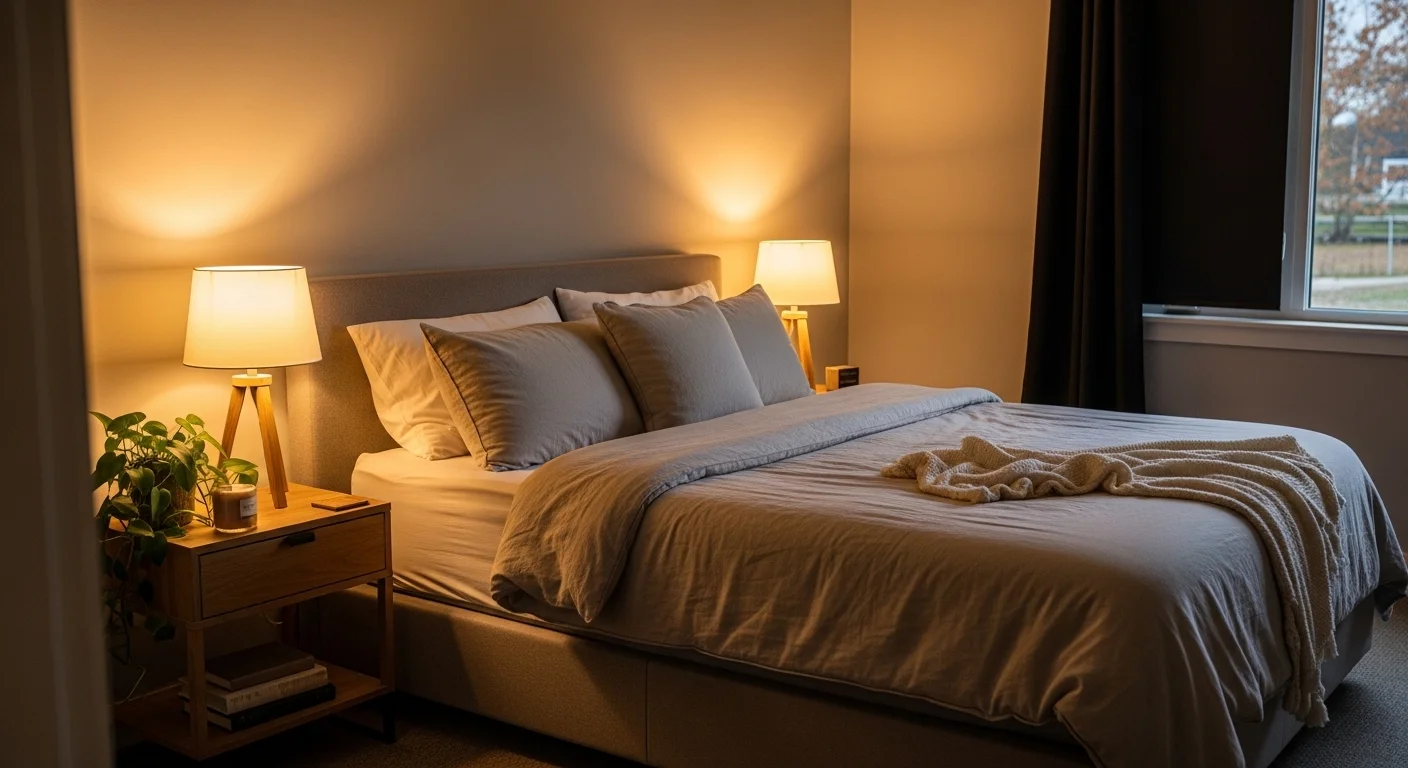
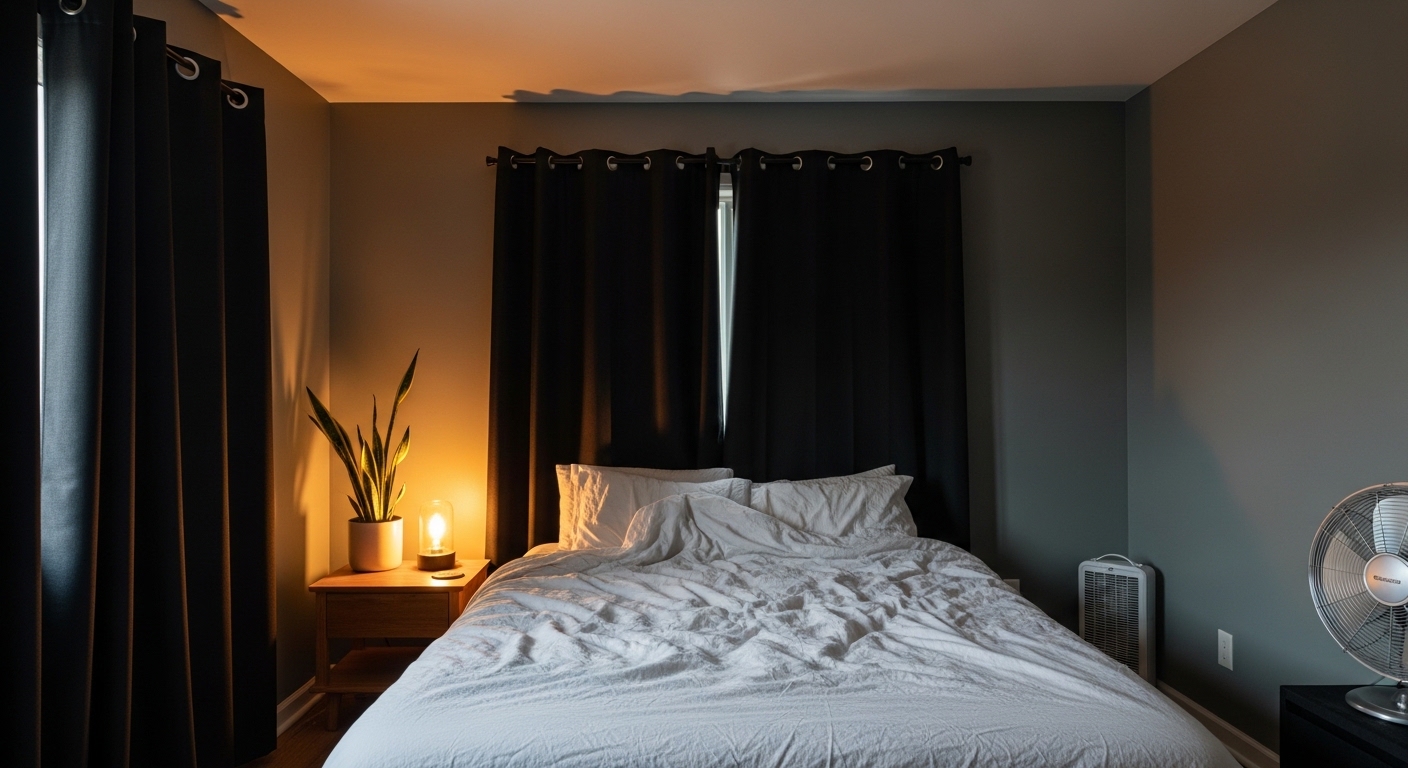
I spent three years sleeping terribly before I figured out the problem wasn’t my stress level, my caffeine intake, or my inability to “turn off my brain.” It was my bedroom. Specifically, it was the streetlight bleeding through my cheap curtains, the bright blue alarm clock 18 inches from my face, and the fact that I’d painted my walls a colour called “Energizing Citrus” because it looked cheerful in the paint store.
Turns out, cheerful at 2pm and conducive to sleep at 11pm are not the same thing.
Since then, I’ve completely redesigned my bedroom around one single purpose: sleep. Not Instagram. Not guests. Not resale value. Just sleep. My sleep quality went from a consistent 5 out of 10 to an honest 8 or 9, and I haven’t changed a single thing about my actual life, just the room I sleep in.
What follows isn’t theory from a sleep scientist’s lab. It’s what genuinely worked when I was averaging 4-5 hours of broken sleep a night and desperate enough to try anything.
Start With Darkness (And I Mean Actual Darkness)
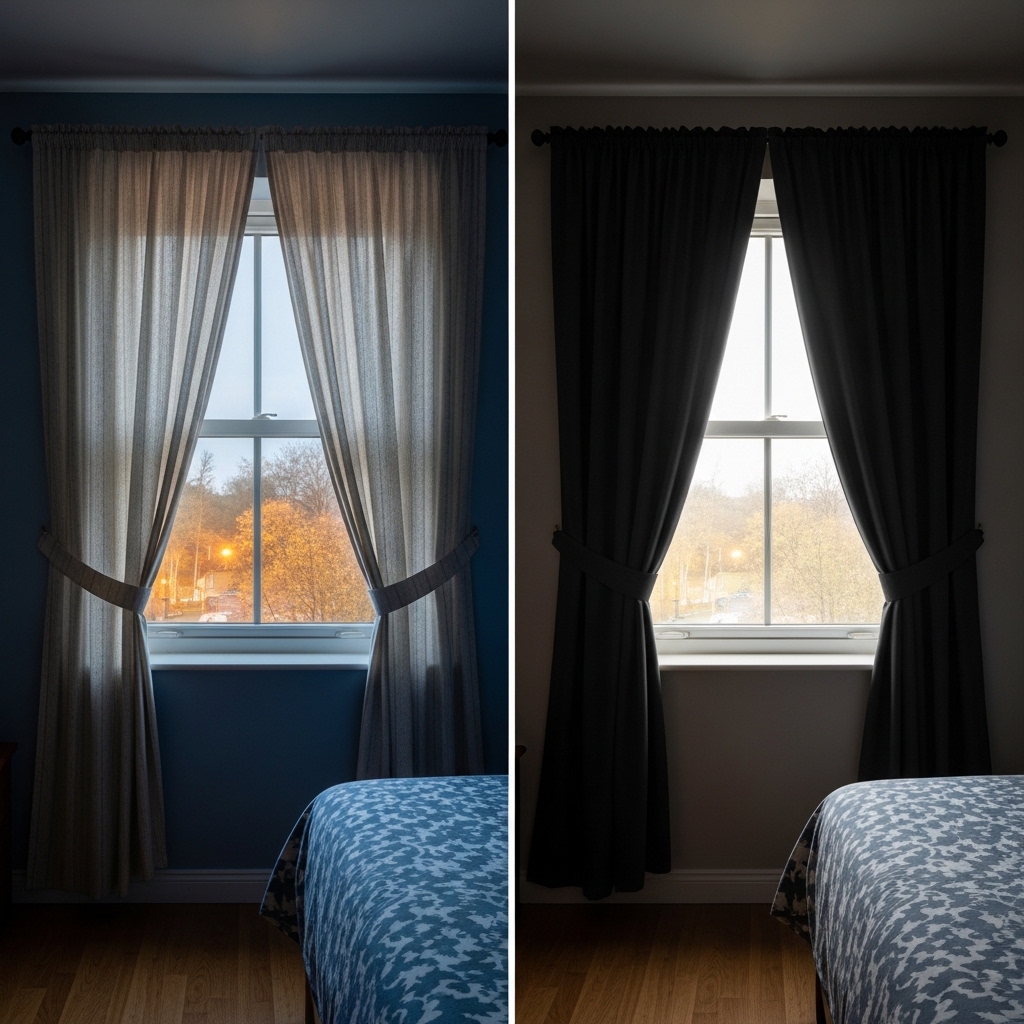
The single most important factor for sleep quality is darkness. Not “pretty dark” or “dark enough.” I mean the kind of darkness where you literally cannot see your hand in front of your face.
I resisted blackout curtains for over a year because I thought they’d make my room feel like a cave during the day. That was stupid. The difference they made was so dramatic that I told my sleep-deprived sister about them, she installed them that weekend, and she texted me four days later: “I slept through the night for the first time in eight months.”
Your brain produces melatonin, the hormone that makes you sleepy in response to darkness. Even small amounts of light suppress melatonin production. That streetlight outside your window? It’s chemically preventing your brain from making the thing that helps you sleep. The glow from your alarm clock, your phone charger light, the LED on your smoke detector, all of it matters more than you think.
How to Actually Achieve Darkness
Blackout curtains are the obvious answer, but not all blackout curtains actually work. The cheap ones from big box stores often have a thin backing that lets light bleed through the fabric. What you want is either thermal blackout curtains with a thick rubberized backing, or layered curtains, blackout liner plus decorative curtain on top.
The trick most people miss: the curtain rod placement. If you mount your rod directly above the window frame, light will pour in around the edges. Mount it 6-8 inches above the frame and extend it 6 inches on each side. Use curtains wide enough to overlap in the middle when closed. This creates a light-blocking seal.
I spent $75 on proper blackout curtains after wasting $35 on ones that didn’t work. The difference was immediately obvious. If you’re on a tight budget, aluminum foil and painter’s tape will block 100% of window light for about $4. It looks terrible, but it works perfectly if you’re renting or experimenting before investing in curtains.
For the smaller light sources alarm clocks, chargers, and electronics, I use small pieces of black electrical tape. One tiny piece of tape over that bright blue power light costs two cents and makes a measurable difference. My bedroom now has zero visible light sources when everything is off. The first night I achieved this, I slept 90 minutes longer than usual without changing anything else.
Color Psychology Isn’t Nonsense (But It’s Not What You Think)
Every sleep blog will tell you to paint your bedroom blue because “blue is calming.” That’s not wrong, exactly, but it misses the point.
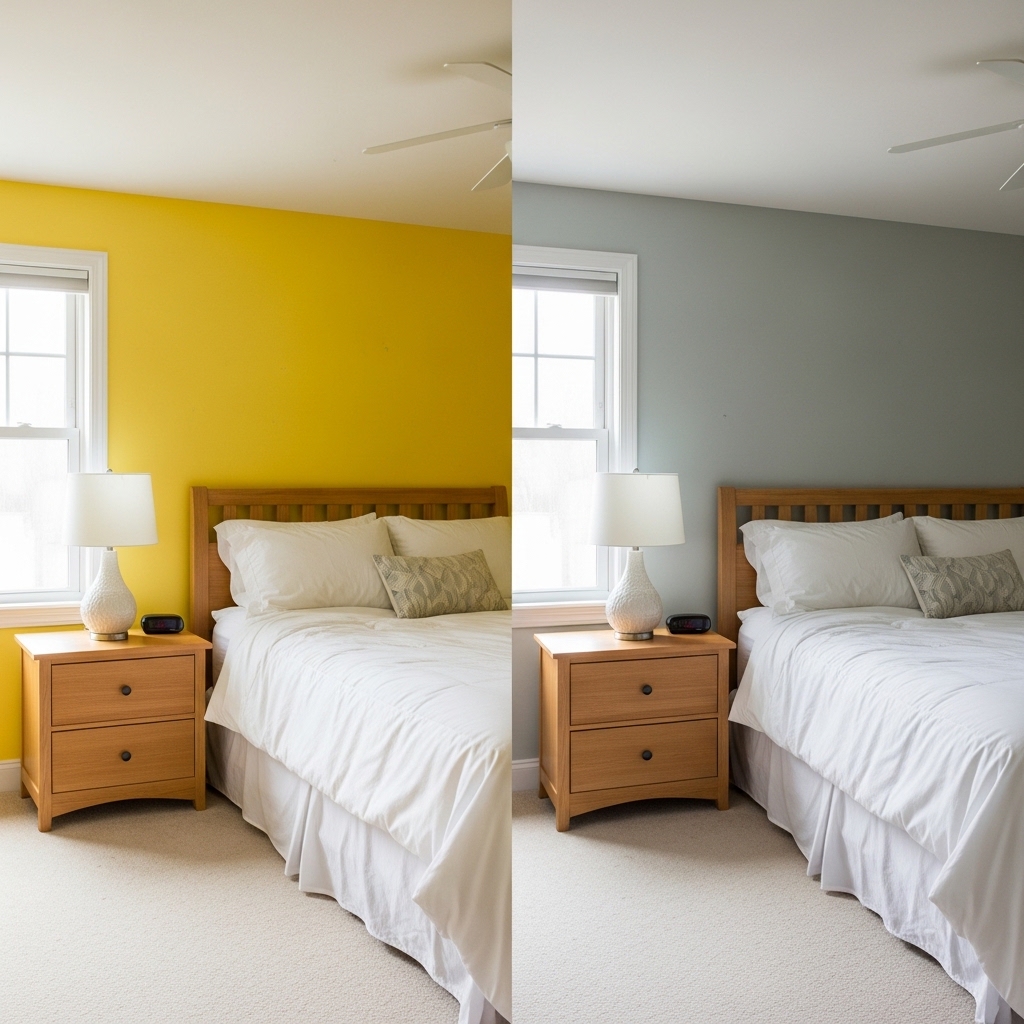
The actual rule is this: your bedroom should not have stimulating colors. That’s it. Bright red, vibrant orange, intense yellow, hot pink, these are activating colors. They increase heart rate and alertness. You don’t want to feel alert in your bedroom.
But “calming” doesn’t have to mean pale blue. I’ve seen beautifully restful bedrooms painted deep charcoal gray, soft sage green, warm taupe, dusty lavender, and even muted terracotta. The common thread isn’t the specific color, it’s the saturation and tone.
I repainted my bedroom from that ridiculous citrus yellow to a color the paint chip called “Silver Strand,” basically a very pale gray-green. The change was subtle but real. The room felt quieter, if that makes sense. Less demanding of my attention.
If you’re not ready to repaint, start with your bedding. White, cream, soft gray, muted blues and greens—anything that doesn’t visually shout at you when you walk in. I switched from bright patterned sheets to plain linen in a light gray, and it genuinely made the room feel more restful. This sounds like placebo effect territory, but your environment affects your nervous system whether you consciously notice it or not.
Temperature Control Is Non-Negotiable
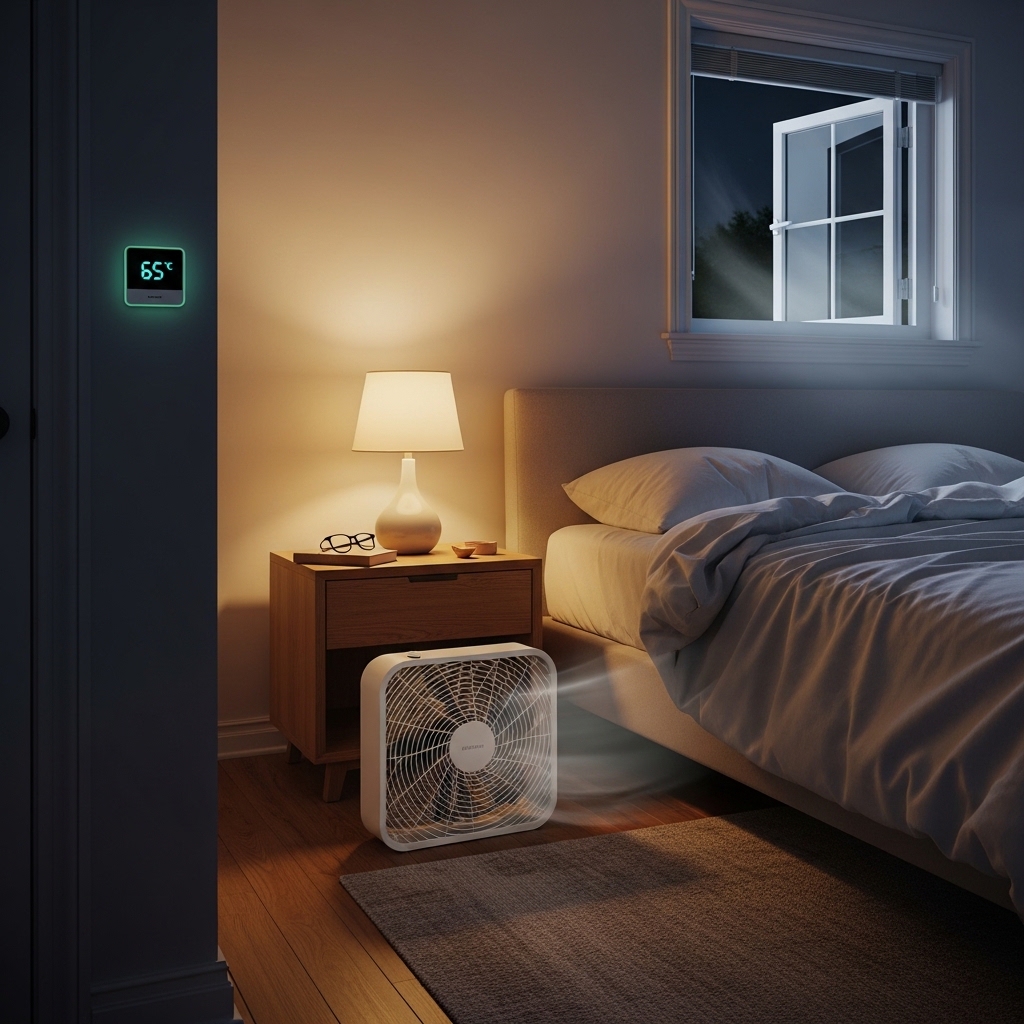
The optimal sleep temperature for most people is between 60-67°F (15-19°C). I learned this after spending months sleeping badly in a room that hovered around 72°F because I was too cheap to run the AC.
Your core body temperature naturally drops when you sleep. If your room is too warm, your body struggles to achieve this temperature drop, and your sleep quality suffers. You’ll toss and turn, wake up multiple times, and never hit the deep sleep stages that actually restore you.
Practical Temperature Solutions
If you can control your thermostat, set it lower at night. I program mine to drop to 65°F at 10pm. The financial hit to my electricity bill is about $12 per month. The improvement to my sleep is worth exponentially more than that.
If you can’t control the temperature (roommates, old building, broken HVAC), there are workarounds:
A fan creates airflow and white noise. I use a simple box fan that cost $20 and runs all night. The moving air helps regulate temperature even if it doesn’t actually cool the room much.
Breathable bedding matters enormously. I switched from microfiber sheets (which trap heat like a plastic bag) to linen sheets. Linen is temperature-regulating; it stays cool in summer and provides warmth in winter. It’s expensive up front ($80-120 for a set), but it’s lasted me four years so far with no signs of wear.
Your pillow traps heat against your head all night. I tried one of those gel cooling pillows and found it genuinely helpful. It’s not magic, but it’s noticeably cooler than a regular pillow. If that’s not in your budget, flip your pillow to the cool side when you wake up hot.
In summer, I also use a thin cotton blanket instead of my regular duvet. Having the weight of covers without the heat buildup helps me sleep without overheating.
Your Bed Is Only For Two Things
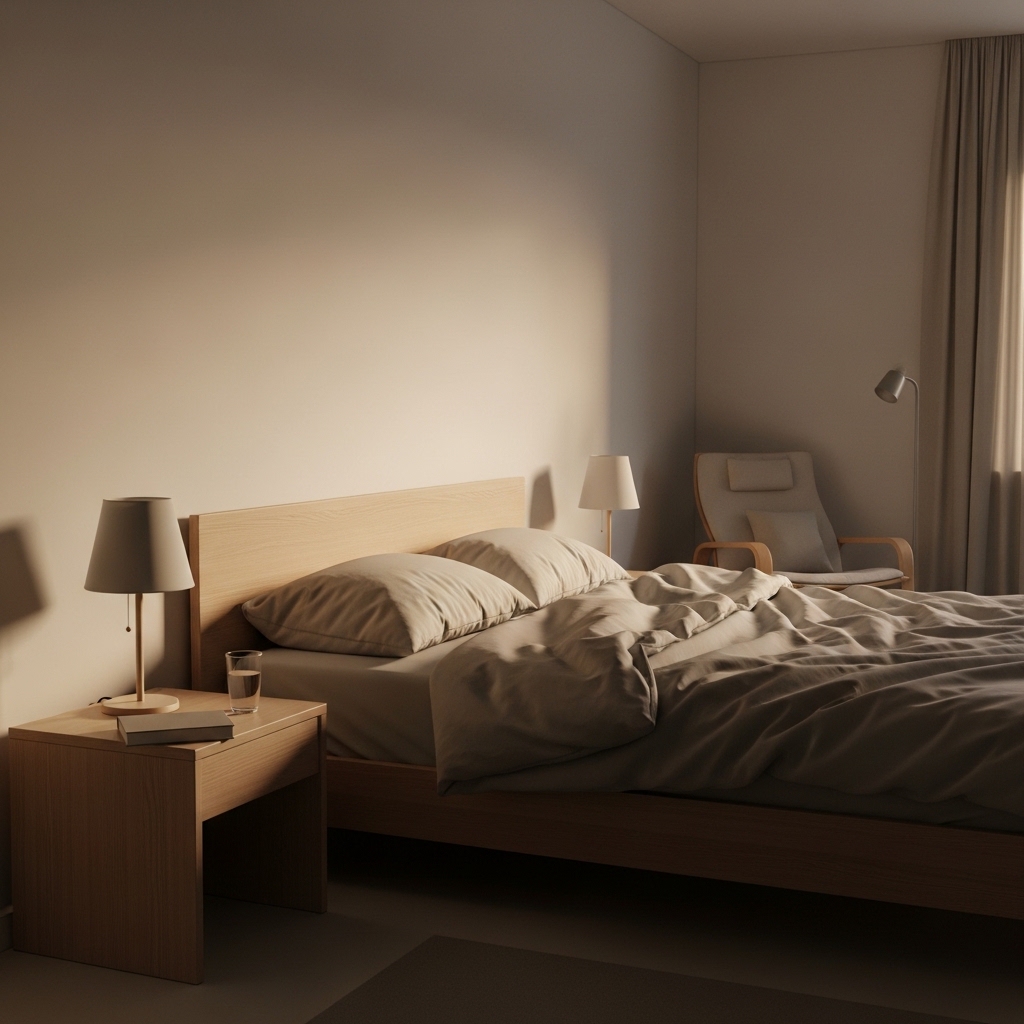
This is the hardest rule and the one that made the biggest difference for me: your bed should only be used for sleep and sex. That’s it.
No working on your laptop in bed. No scrolling your phone in bed. No watching TV in bed. No eating in bed. If you’re not sleeping or being intimate, you should not be in your bed.
I violated this rule for years. I’d get in bed at 9pm and scroll on my phone for 90 minutes, then wonder why my brain didn’t associate bed with sleep. Your brain is a pattern-recognition machine. If you do seventeen different activities in bed, your brain doesn’t know what “getting into bed” means. It could mean work, entertainment, stress, or sleep. No clear signal.
When I finally committed to this rule, I truly committed, no cheating. It took about two weeks before I noticed the change. Now, when I get into bed, my brain knows exactly what’s about to happen. I fall asleep faster and with less of that horrible “trying to fall asleep” anxiety.
The related rule: if you can’t fall asleep after 20-30 minutes, get out of bed. Do something boring in dim light until you feel sleepy, then try again. Don’t lie there for two hours training your brain that bed is a place where you lie awake and feel anxious.
I keep a chair in the corner of my room for this purpose. If I can’t sleep, I get up and sit there and read something genuinely dull (I have a collection of academic papers on topics I find boring). Usually within 15-20 minutes I’m ready to try again.
Declutter Like Your Sleep Depends On It
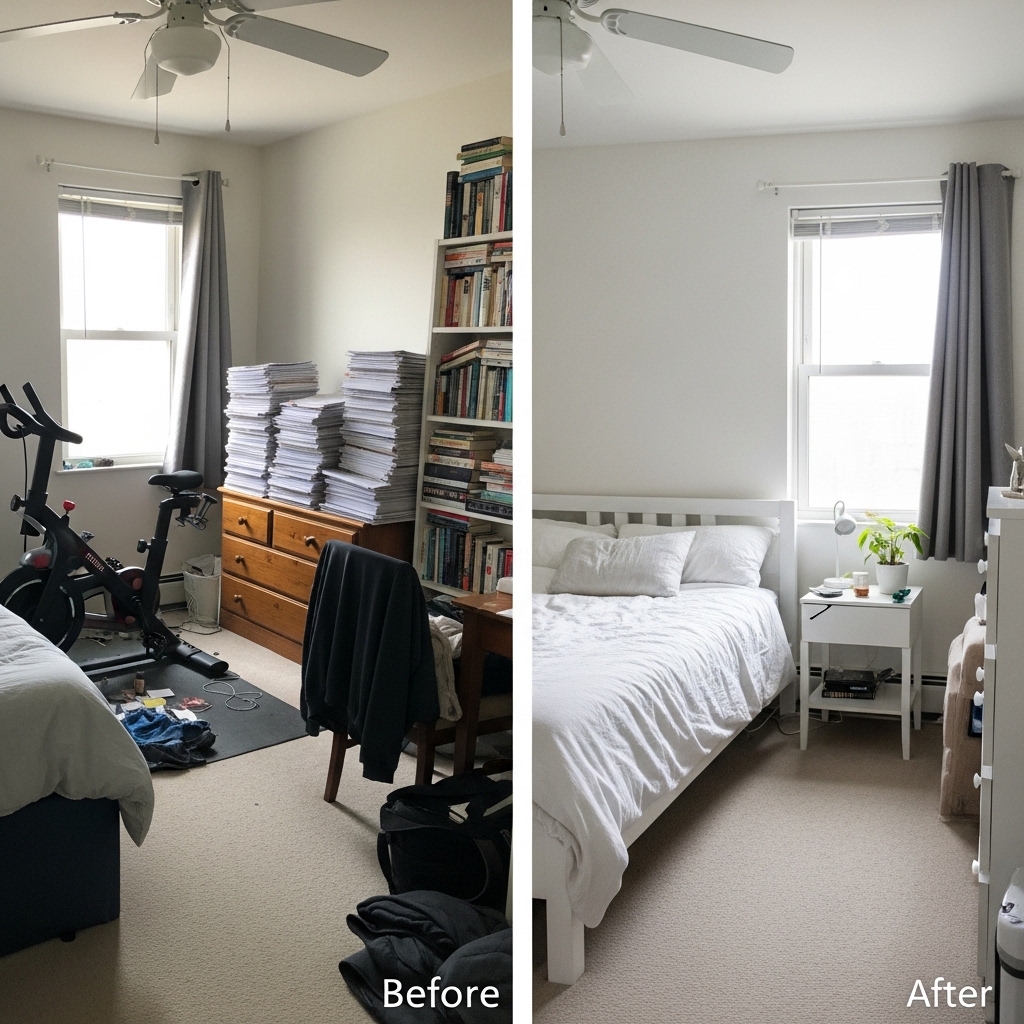
A cluttered room creates a cluttered mind. I know that sounds like something a wellness influencer would needlepoint onto a pillow, but the research backs it up and my personal experience confirms it.
When I finally cleaned my bedroom, and I mean really cleaned it, not just shoved things under the bed, my sleep improved noticeably within three days. I didn’t realize how much ambient stress I was carrying from visual clutter until it was gone.
Your bedroom should have as little in it as possible. Bed, nightstand, dresser, maybe a chair. That’s all you actually need. Everything else is optional at best and sleep-disrupting at worst.
I removed my desk, my bookshelf full of unread books (guilt-inducing every time I looked at it), the exercise bike I never used (more guilt), and the stack of papers I kept meaning to sort through. All of it went to other rooms or got thrown away.
The difference was immediate and striking. The room felt larger, calmer, and easier to relax in. I stopped lying in bed staring at all the things I should be doing.
If you have a small space and can’t separate your bedroom from other life functions, use a room divider or curtain to visually separate your sleep area from the rest. It’s not as effective as a completely separate room, but it’s significantly better than having your bed six feet from your desk.
Hidden clutter counts too. That pile of crap under your bed? You know it’s there even if you can’t see it. Clean it out. Same with your closet if it’s overflowing and stressful. You don’t have to become a minimalist, but your sleep space should feel clear and calm.
Sound: White Noise or Silence
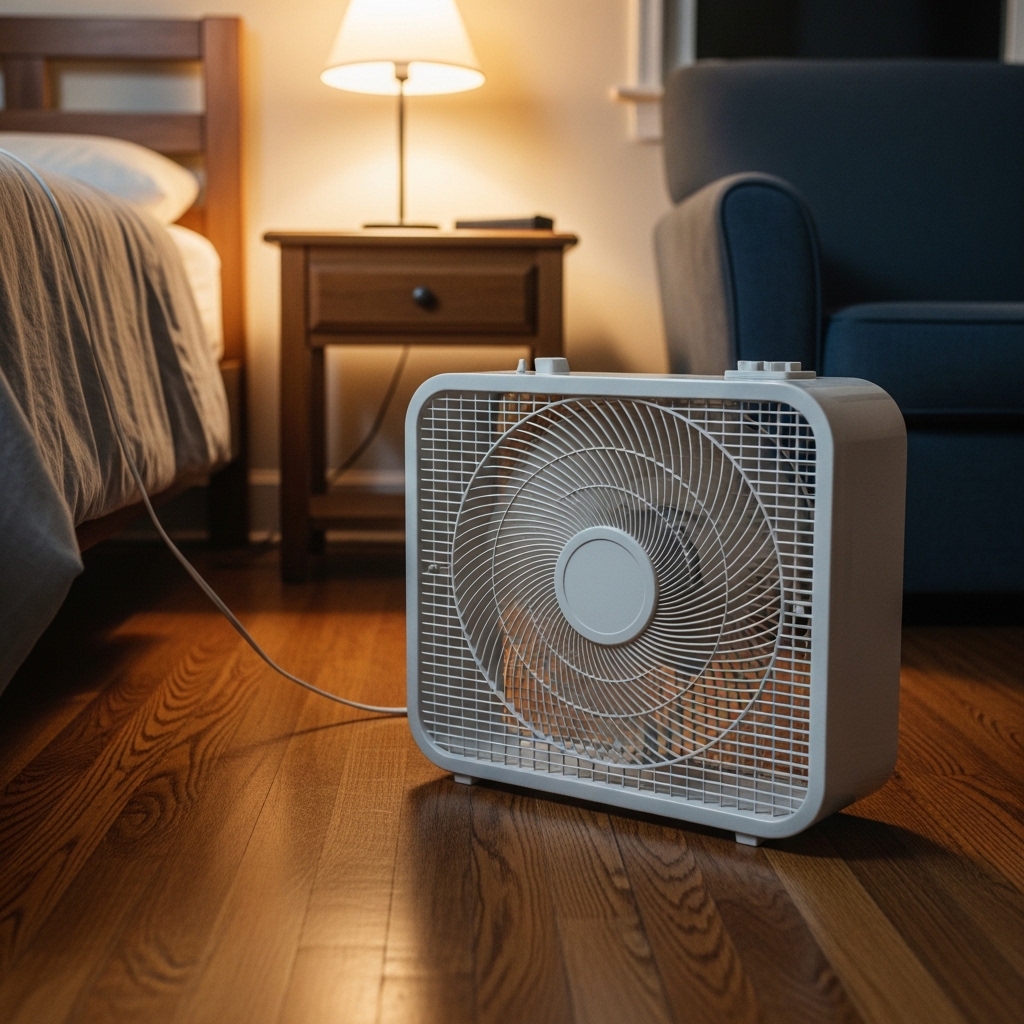
This one’s more personal preference than the darkness and temperature rules, but it still matters.
Some people need complete silence to sleep. Others (like me) find that small random noises, such as a car door, a neighbor’s TV, or the house settling, wake them up constantly. White noise masks those irregular sounds with a consistent sound your brain can tune out.
I’ve used the same box fan for white noise for five years. It costs nothing to run and never breaks. Some people prefer dedicated white noise machines, nature sounds, or apps on their phone. The key is consistency, the same sound every night becomes a sleep cue.
If you’re a silence person, earplugs work well. The foam ones cost 50 cents a pair and block most noise. I have a friend who swears by custom molded earplugs ($150) that block noise without that uncomfortable “plugged up” feeling.
What absolutely does not work for sleep: falling asleep to TV or podcasts or anything with irregular sound and content that might capture your attention. Your sleeping brain continues to process sound. Even if you “sleep through” the TV, your sleep quality is worse because your brain never fully disengages.
Mattress, Pillows, and Bedding: Where to Actually Spend Money
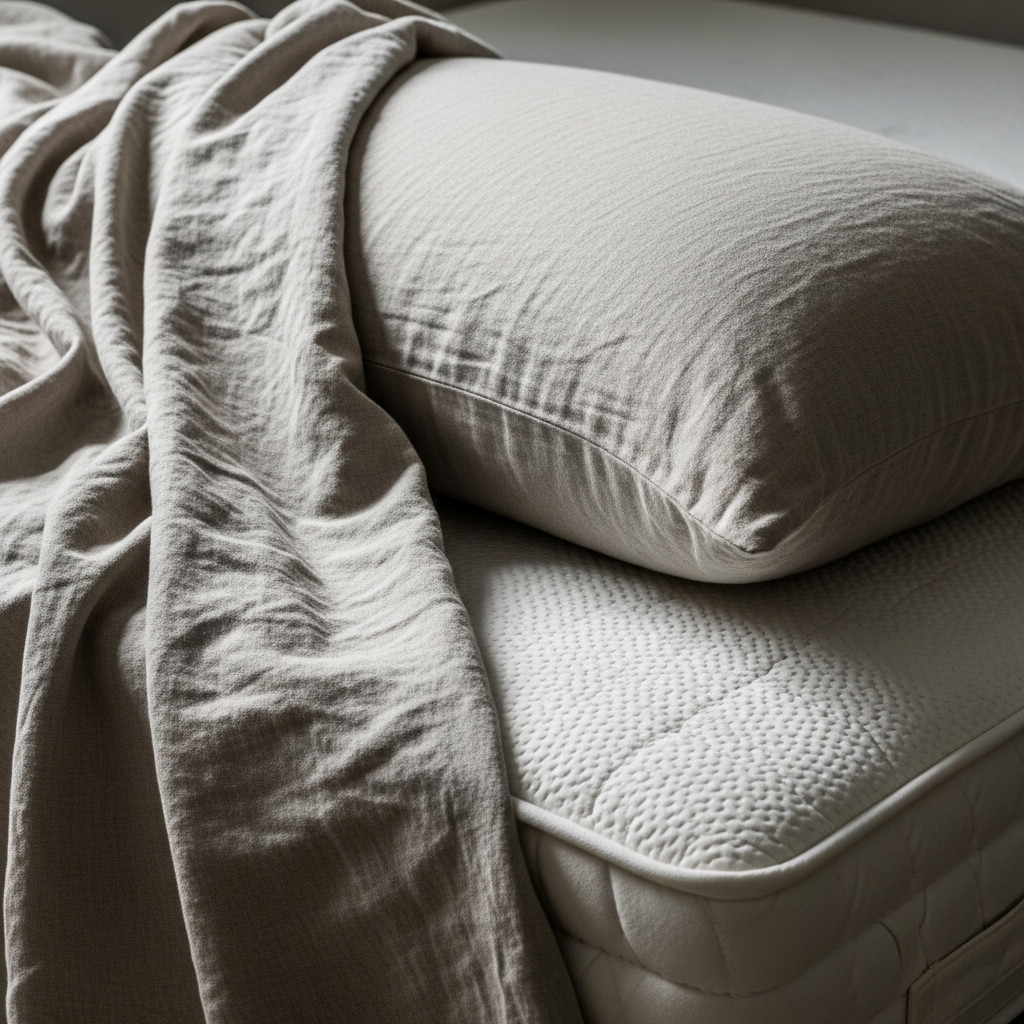
I’m going to say something controversial: you probably don’t need a $3000 mattress.
Yes, your mattress matters. Yes, you should replace it every 7-10 years or when it starts sagging. Yes, you should buy the best one you can reasonably afford. But the difference between a good $800 mattress and a luxury $3000 mattress is marginal for most people.
What matters more than price: the mattress should support your spine in neutral alignment. Side sleepers need something different than back sleepers. Heavy people need more support than light people. The “best” mattress is whichever one keeps your spine aligned and doesn’t create pressure points.
I spent $900 on a medium-firm hybrid mattress six years ago. It’s still excellent. I tried my friend’s $2800 luxury mattress and honestly couldn’t tell much difference.
Where you should absolutely spend money: pillows.
A good pillow makes an enormous difference and most people use terrible pillows. The right pillow keeps your neck and spine aligned. The wrong pillow gives you neck pain and disrupts your sleep.
I’m a side sleeper, so I need a fairly thick, firm pillow that fills the space between my head and the mattress. I spent $85 on a latex pillow and it’s the best sleep-related purchase I’ve ever made. It’s lasted four years with zero flattening.
Back sleepers need thinner pillows. Stomach sleepers need very thin pillows or no pillow. Figure out what you need and spend the money to get it right.
Sheets matter less than people think, but cheap, scratchy polyester sheets are genuinely bad for sleep. Get natural fibers, cotton, linen, or bamboo. They breathe better and regulate temperature. You don’t need $400 luxury sheets, but spend at least $50-80 on a decent set.
Lighting: The Pre-Sleep Environment
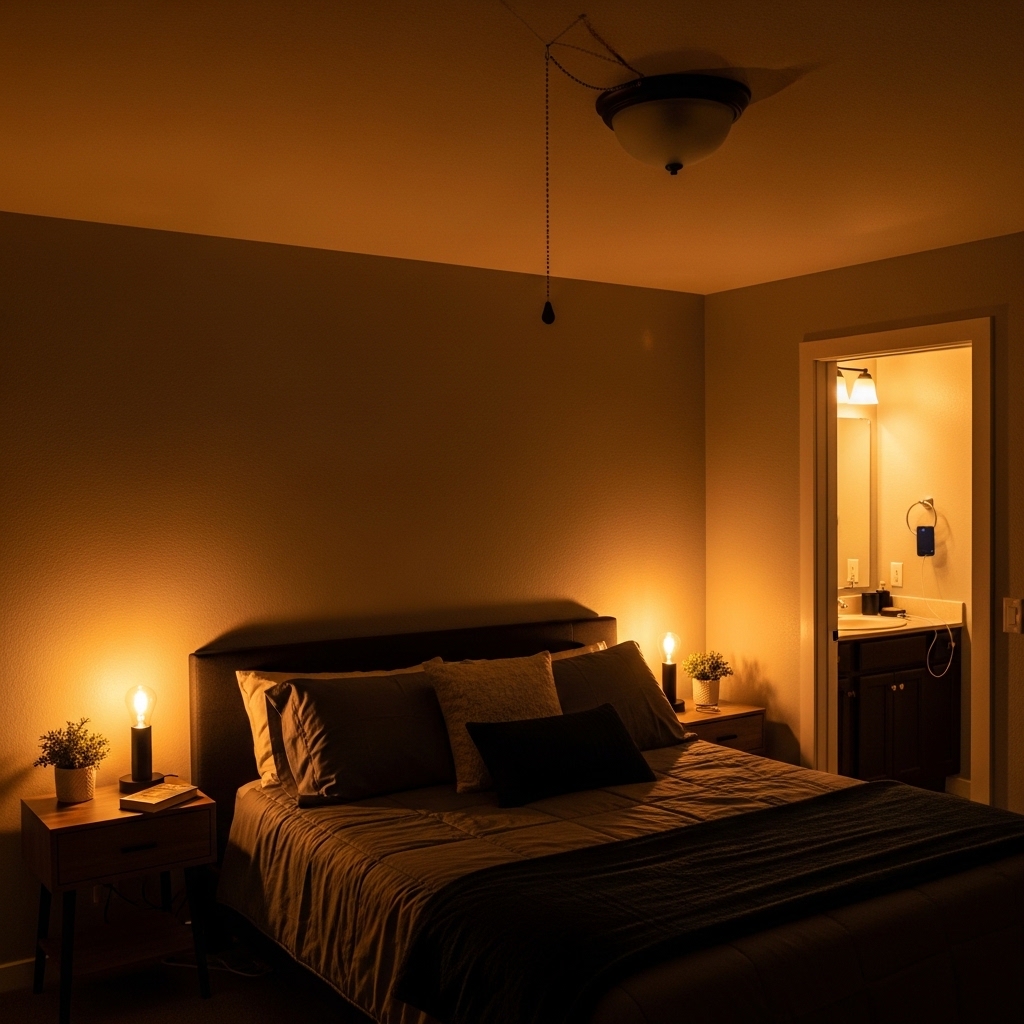
Here’s something that took me years to figure out: your bedroom lighting affects your sleep quality even before you get into bed.
Bright white overhead light in the hours before bed suppresses melatonin production. Your body needs a gradual transition from daytime alertness to nighttime sleep mode. Harsh lighting prevents that transition.
I removed the overhead light bulb in my bedroom entirely. I only use two small bedside lamps with warm-toned bulbs (2700K color temperature, not the 5000K “daylight” bulbs that feel like a hospital). Starting about two hours before bed, these are the only lights on in my bedroom.
The difference was subtle but real. I started feeling naturally sleepy earlier in the evening instead of being wide awake until midnight.
If you need better light for tasks like getting dressed or cleaning, install a dimmer switch. They’re $15 and take 20 minutes to install if you’re remotely handy. Being able to adjust your bedroom light from “getting ready for work” brightness to “winding down” dimness is genuinely valuable.
Some people swear by red light bulbs for nighttime, as red light doesn’t suppress melatonin the way blue and white light do. I tried this and found it weird and uncomfortable, but I have friends who love it. It’s worth experimenting if you’re still struggling.
The related issue: screens. Phone, tablet, laptop, TV, all of them emit blue light that tells your brain it’s daytime. I know everyone says this and everyone ignores it, but it’s true. I charge my phone in the bathroom at night so I’m not tempted to check it in bed.
If you absolutely must use screens before bed, use blue light filters (Night Shift on iPhone, Night Light on Android, f.lux on computers). They’re not as good as just avoiding screens, but they’re better than nothing.
Natural Elements: Small Touches That Add Up
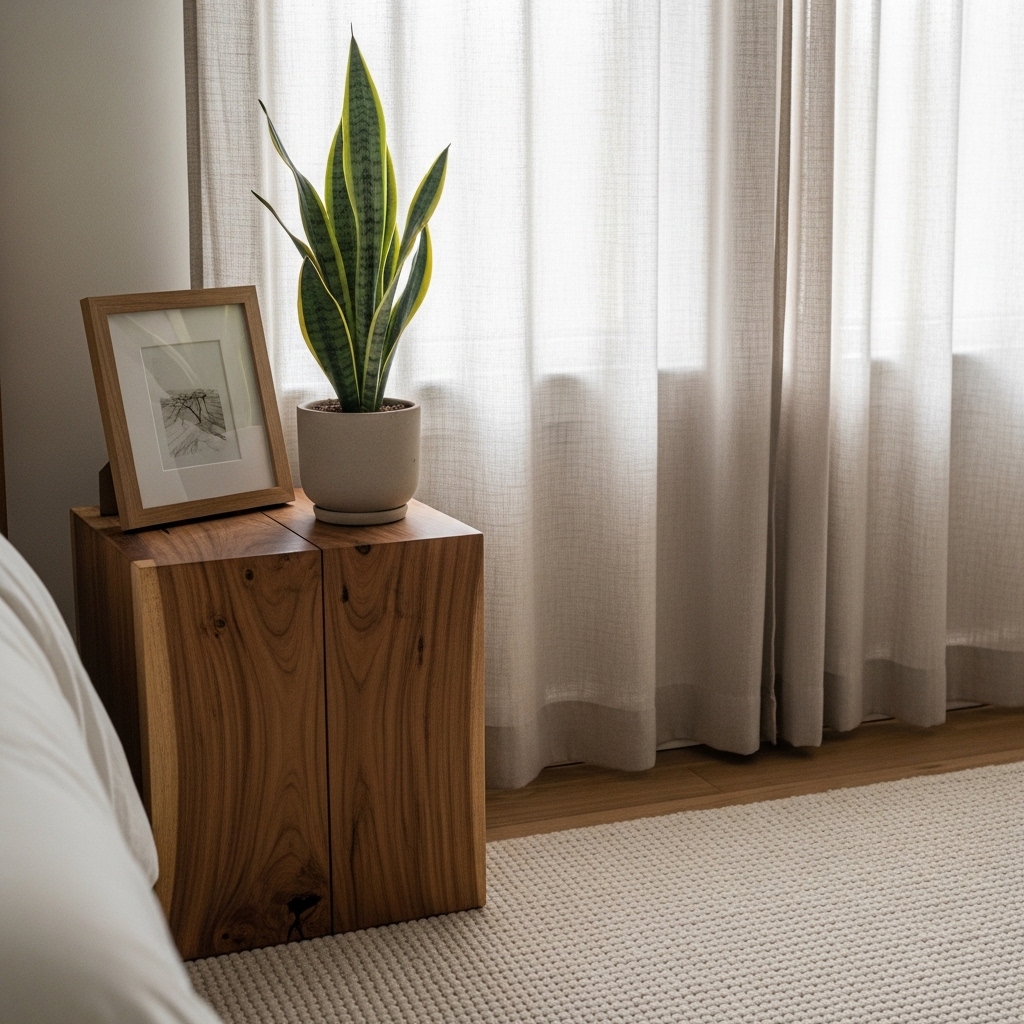
This is going to sound like woo-woo wellness nonsense, but adding natural elements to my bedroom genuinely improved how it felt.
I’m not talking about filling your room with crystals and essential oils. I mean simple things: a small plant, wooden furniture instead of plastic, natural fiber rugs, linen curtains instead of polyester.
I added one snake plant to my bedroom. It requires zero care, survives neglect, and quietly produces oxygen at night (most plants only do this during the day, but snake plants are one of the few exceptions). Does this meaningfully improve air quality? Probably not in any measurable way. Does the room feel better with a living thing in it? Yes, inexplicably, it does.
I replaced my cheap particle board nightstand with a solid wood one from a thrift store. Same function, but the room felt warmer and more grounded. This is entirely subjective and psychological, but sleep is psychological. If your environment feels better, you sleep better.
Natural materials tend to regulate temperature and humidity better than synthetic ones. Wool rugs, cotton curtains, and wooden furniture all slightly improve the air quality and feel of a room compared to plastic and polyester equivalents.
You don’t need to replace everything. Even one or two natural elements make a difference. A wooden tray on your nightstand. A cotton rug beside your bed. Linen pillow cases. Small changes that cumulatively make the space feel more restful.
What Doesn’t Actually Matter
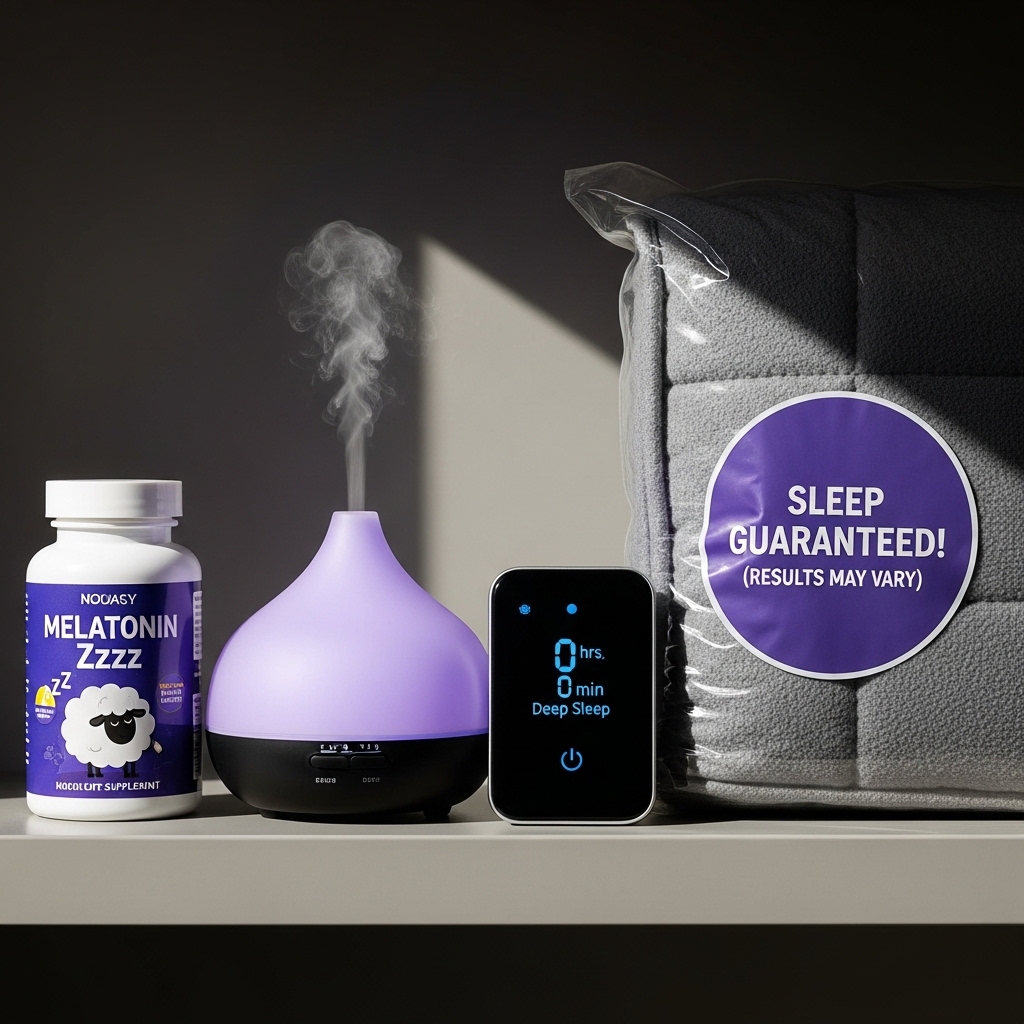
After years of experimenting and researching, here’s what I’ve found makes minimal to no difference:
Feng shui bed placement. I tried positioning my bed according to feng shui principles. It made zero difference to my sleep. Put your bed wherever it fits and feels comfortable.
Expensive sleep supplements. I’ve tried magnesium, melatonin, valerian root, CBD, and a dozen other things. For me personally, none of them worked as well as just fixing my bedroom environment. Your experience may vary, but start with the free environmental changes before spending money on supplements.
Weighted blankets. These help some people significantly and do nothing for others. I found mine too hot and restrictive. Try one if you’re curious, but don’t expect miracles.
Essential oils and aromatherapy. Lavender is supposed to promote sleep. I’ve tried it multiple ways and never noticed any difference. Some people swear by it. It’s cheap enough to experiment with, but don’t expect it to fix poor sleep if your room is bright, hot, and cluttered.
Smart home sleep tracking devices. I used a sleep tracker for six months. It told me I was sleeping poorly, which I already knew. It didn’t help me sleep better. The data was mildly interesting but ultimately not actionable in any way the simple changes in this article didn’t already cover.
The Gradual Approach: Where to Start
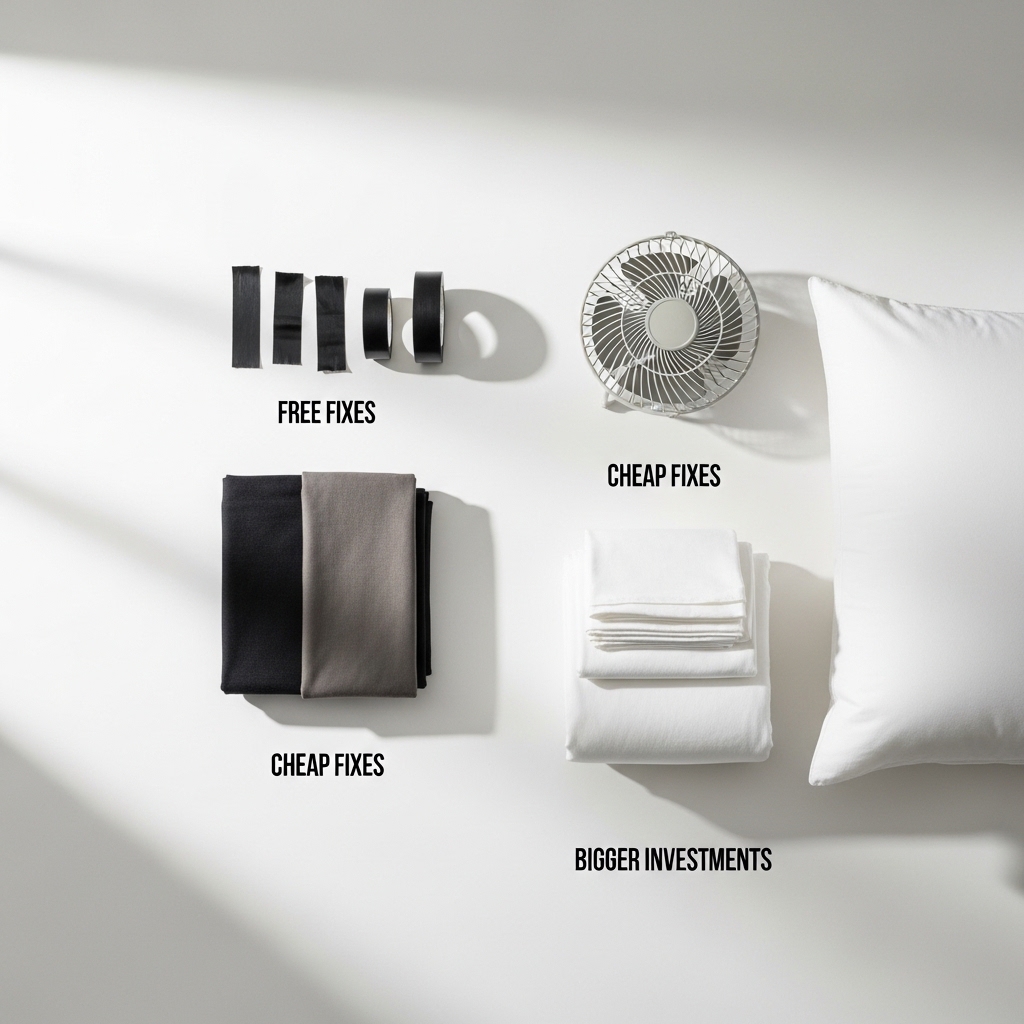
Don’t try to do everything at once. I made that mistake, bought blackout curtains, new sheets, new pillows, painted the room, and rearranged everything in one weekend. It was overwhelming and expensive.
Start with the changes that cost nothing:
- Remove clutter
- Cover light sources with electrical tape
- Stop using your bed for anything except sleep
- Charge your phone outside the bedroom
Then tackle the cheap fixes:
- Blackout curtains (or aluminum foil if you’re testing)
- Fan for cooling and white noise
- Lower thermostat at night
Finally, invest in the bigger items when you can:
- Good pillow ($50-100)
- Quality sheets ($50-100)
- Paint if needed ($40-80)
- New mattress if yours is old (save up for this one)
I implemented these changes over about four months, one or two at a time. Each small improvement made a noticeable difference, and they compounded over time.
The Bottom Line
Your bedroom has one job: help you sleep. Everything else is secondary.
I know this seems obvious, but most people decorate their bedroom to look good or impress guests or match the rest of their house. They choose style over function, then wonder why they sleep badly.
The bedroom I sleep best in doesn’t photograph well. The blackout curtains are ugly. The white noise fan is loud and industrial-looking. The walls are a boring neutral gray-green. There’s almost nothing in the room except the bed and two nightstands. It looks like a very boring hotel room.
But I sleep 7.5-8.5 hours every night now, down from 4-6 hours of broken sleep three years ago. I wake up feeling actually rested instead of hitting snooze four times and dragging myself out of bed. I haven’t changed careers, relationships, stress levels, or daily routines. I just changed my bedroom.
You don’t need a designer room. You don’t need expensive furniture. You need darkness, coolness, quiet (or consistent white noise), comfort, and the absence of stimulation. Everything else is optional.
Start with one change this week. Just one. Cover the lights on your electronics, or install blackout curtains, or move the clutter out of your bedroom. Notice if it helps. Then make another change next week.
Your sleep quality affects literally everything else in your life. It’s worth the effort to get your bedroom right.