
I’ll never forget walking into my friend Sarah’s home last spring and being struck by how her dining table looked like it belonged in a magazine not because it was overly fancy, but because it felt so intentional yet lived-in. Here was a family of four who actually ate at this table every night, helped with homework there, and probably argued over whose turn it was to clear it. Yet somehow, it always looked pulled together.
That visit changed how I thought about dining table decor. Most of us don’t need our tables to look perfect for special occasions only. We need them to function beautifully on a Tuesday night when we’re eating takeout, on Saturday morning during a chaotic pancake breakfast, and yes, when we have friends over for dinner. The sweet spot is finding decor that elevates your everyday without making you feel like you’re living in a museum where nobody can touch anything.
After years of experimenting with my own dining space and observing what actually works in real homes, I’ve landed on ten approaches that strike this balance. These aren’t rigid rules think of them more as starting points that you can adapt to your own style and how you actually live.
1. A Statement Centerpiece That Earns Its Keep
The centerpiece debate is real. Some design purists will tell you to keep your table completely clear, while others pile on so much stuff that you need a crane to set down a dinner plate. The truth? A good centerpiece anchors your table without hogging all the real estate.
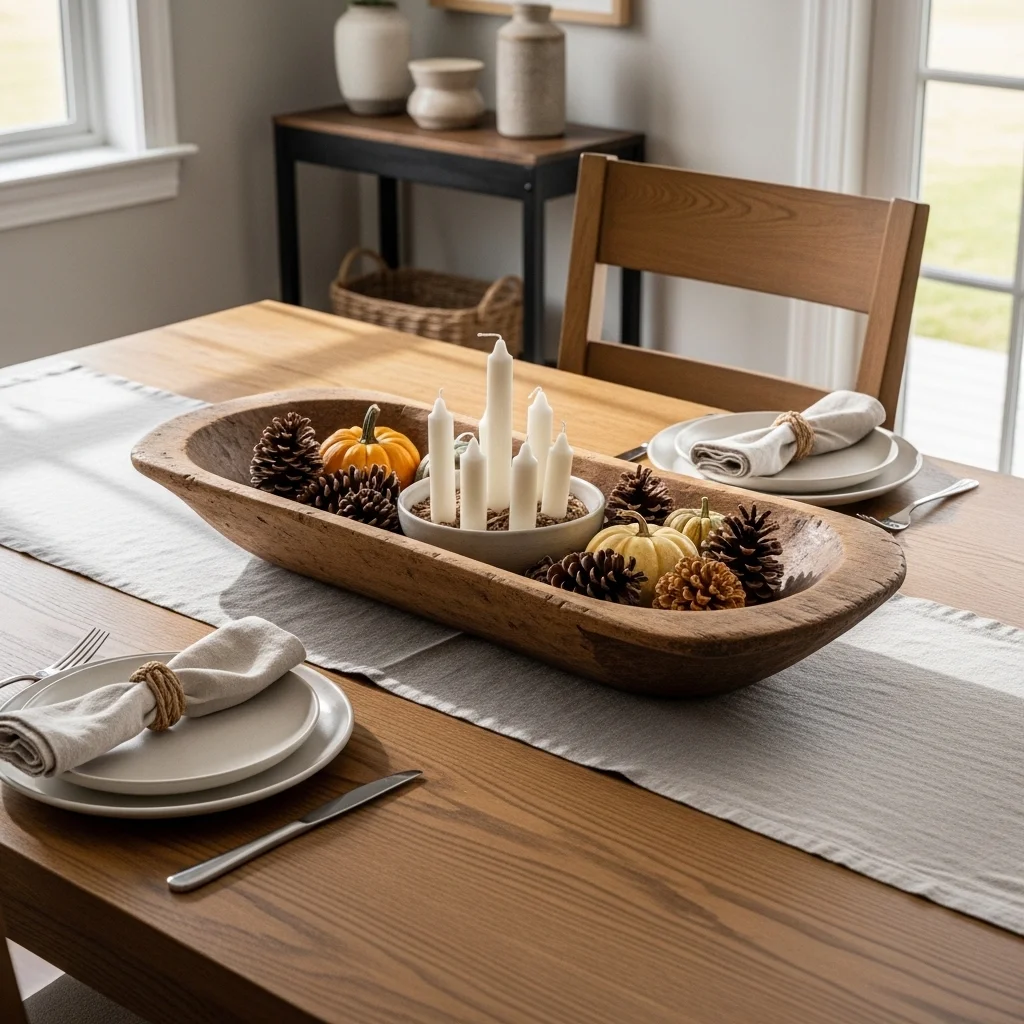
I’m partial to low, wide vessels, think a wooden dough bowl, a shallow ceramic dish, or even a vintage tray. The keyword here is low. Nobody wants to peer around a tower of branches to make eye contact during dinner. Fill your chosen vessel with items that reflect the season or your mood. In fall, I toss in small pumpkins, pinecones, and maybe some cuttings from the yard. Come January, it might hold a collection of white candles in varying heights, some books, or interesting objects I’ve picked up.
What makes this work for everyday use is flexibility. Your centerpiece should be something you can easily shift to one end of the table or remove entirely when you need the space. If moving it feels like a major production, it’s not practical enough.
The Layered Table Runner Approach
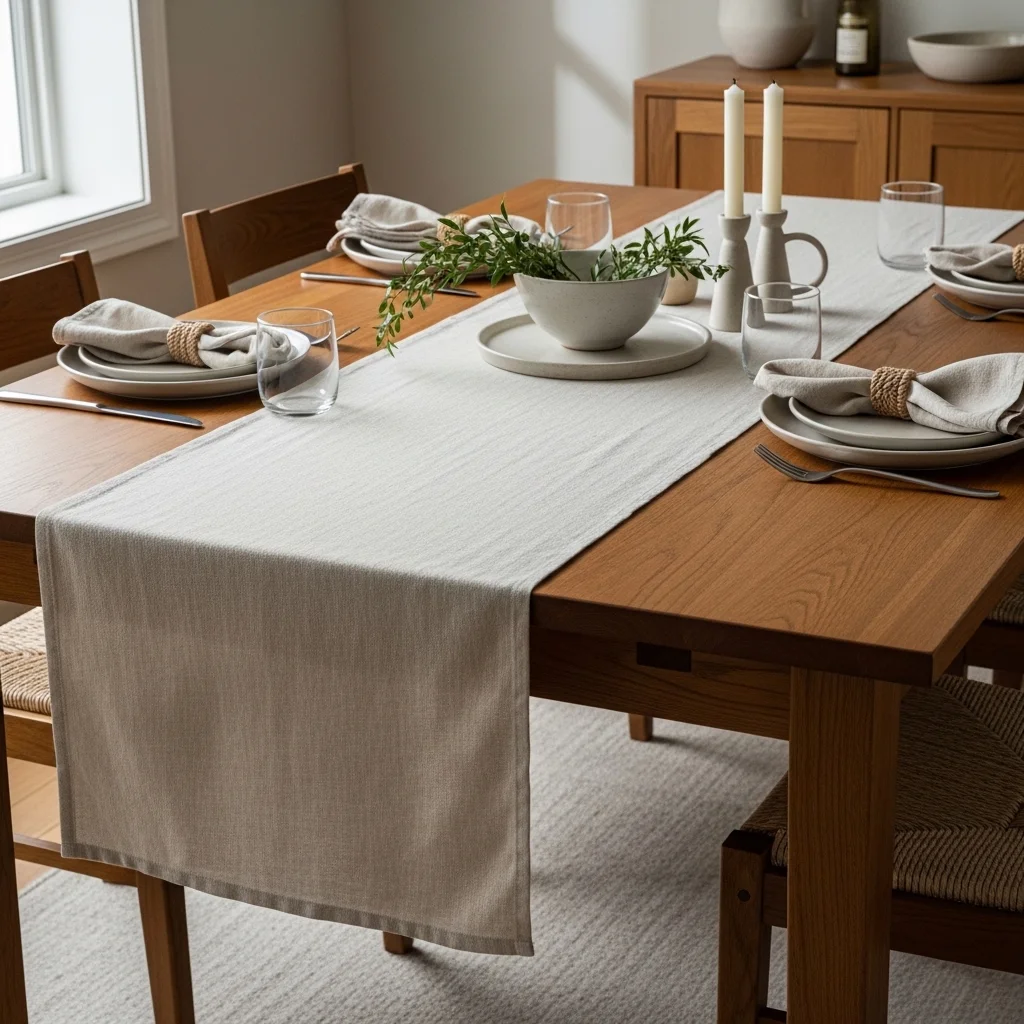
Here’s something I learned from my neighbor who happens to be a caterer: table runners are more forgiving than full tablecloths for daily use. A good linen or cotton runner down the center of your table adds texture and visual interest while leaving the ends exposed. This gives you the best of both worlds some protection for the table surface and an instant elevated look, but you’re not washing a massive tablecloth every time someone spills orange juice.
I actually keep two runners in rotation: a neutral one in oatmeal linen that goes with everything, and a seasonal one I swap in when I’m feeling inspired. The neutral one can stay put for weeks without looking tired. And here’s a small trick if your runner is looking a little wrinkled, the slightly rumpled look actually reads as more relaxed and natural than something perfectly pressed. We’re going for “effortlessly stylish,” not “uptight.”
Fresh Greenery That Doesn’t Break the Bank
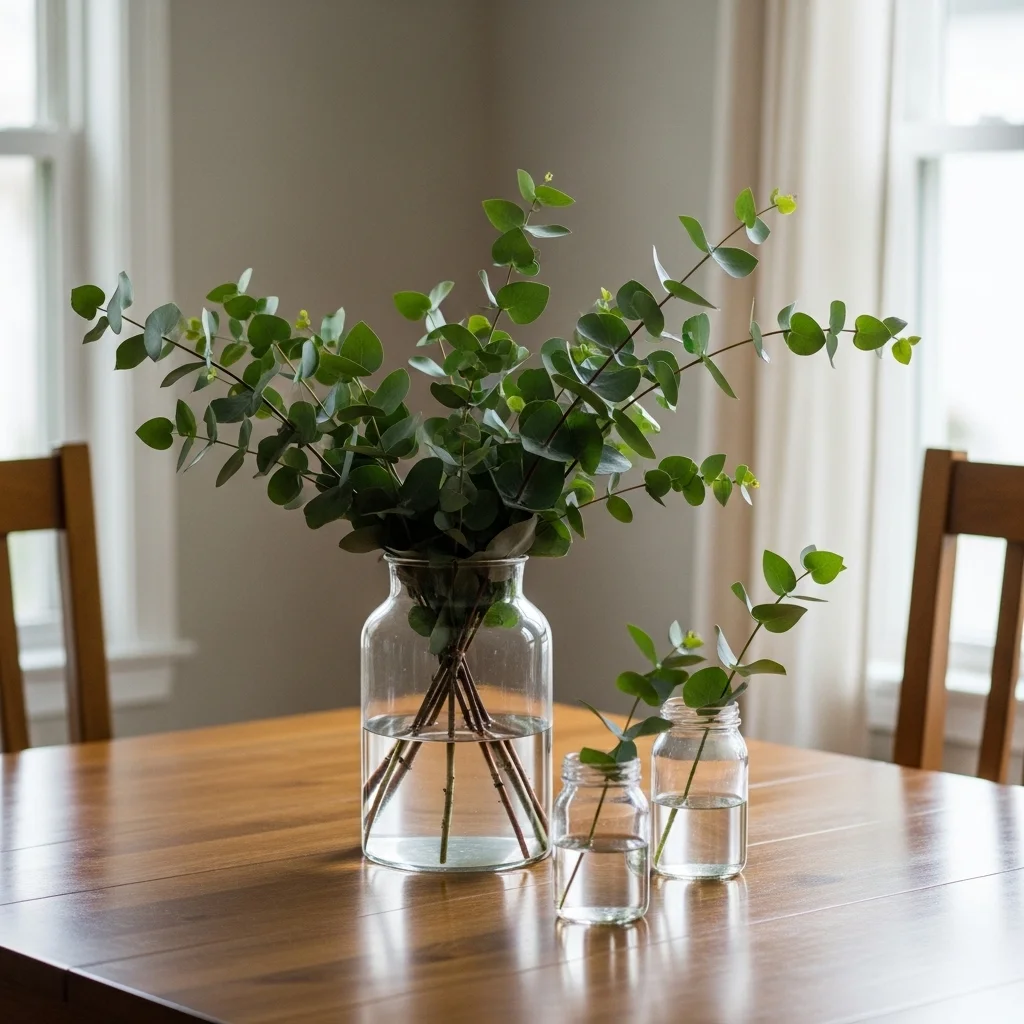
Every design magazine shows tables laden with enormous floral arrangements, which is lovely if you have a florist on retainer. For the rest of us, greenery from the grocery store or even our own yards works beautifully and costs next to nothing.
I keep a simple glass vase or two on hand nothing fancy, maybe something around 8-10 inches tall. Once a week during my grocery run, I grab whatever greenery looks good. Eucalyptus bundles last forever and smell amazing. In summer, I’ll cut branches from my overgrown hedges (yes, really). In winter, pine or cedar branches bring that fresh scent indoors.
The mistake people make is thinking arrangements need to be complicated. A single type of greenery in a clear vase looks clean and modern. Cluster three small jars with single stems if you want something more collected. The point is bringing in that organic element that makes your table feel alive without requiring a degree in floral design.
Candles for Everyday Ambiance
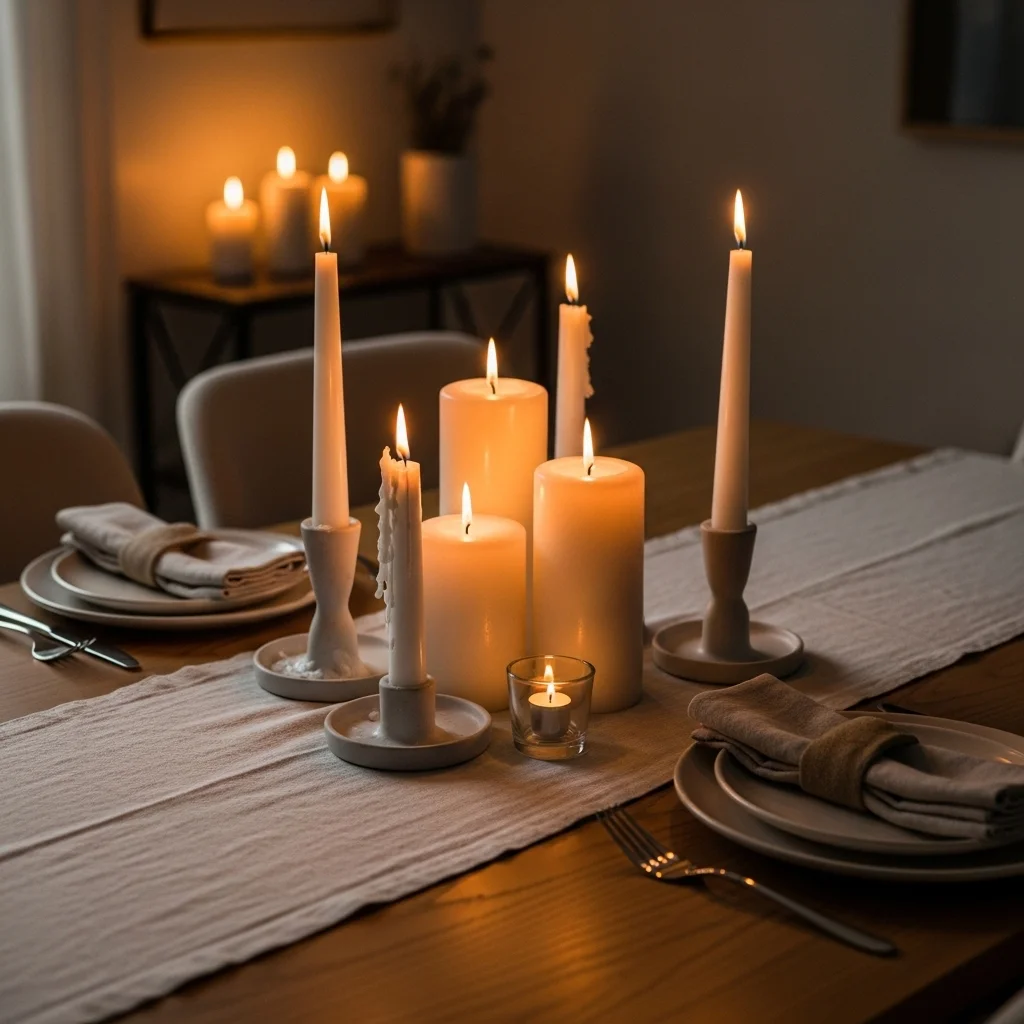
I used to save candles for dinner parties, which in hindsight seems ridiculous. Why would I deny myself candlelight on a regular Wednesday? Now I keep a mix of candles on the table pretty much always some pillars, some tapers, some votives in small holders.
The practical consideration here is choosing candles you’ll actually light versus ones that just sit there gathering dust. Unscented or lightly scented works better for the dining table since strong fragrances can compete with food. I go through a surprising number of simple white taper candles; they’re inexpensive, classic, and you can find them anywhere.
Cluster candles in odd numbers three or five usually looks more natural than two or four. Mix heights if you’re using pillars or tapers in candlesticks. And this might sound obvious, but trim those wicks and actually light them. A table with burned-down candles tells a story of meals enjoyed and evenings spent together. It’s infinitely more appealing than pristine candles that are clearly just props.
Personal Collections on Display
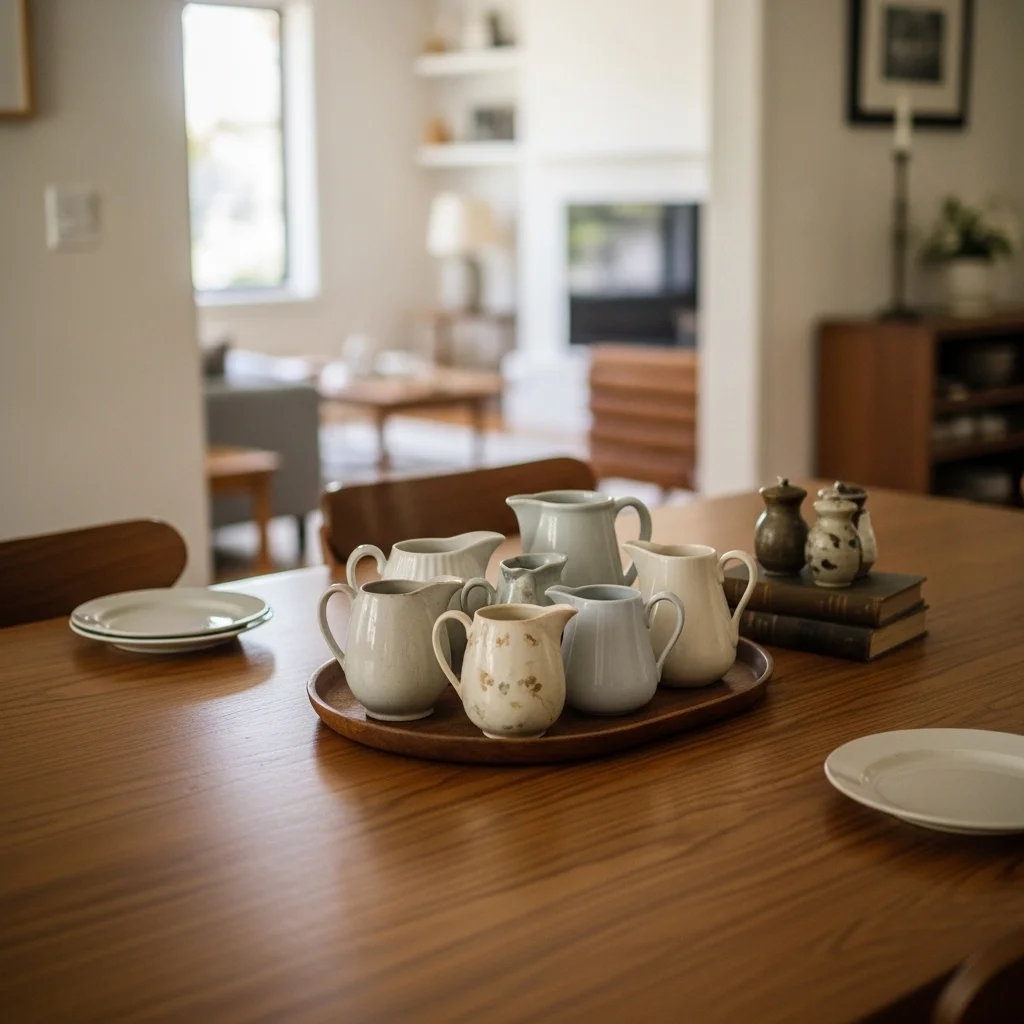
This one surprised me when I started seeing it more often. Using your dining table to showcase small collections adds personality that generic decor simply can’t match. I’m talking about things like vintage salt and pepper shakers, small pottery pieces, old bottles, interesting rocks or shells, or antique books.
My friend collects antique creamers, and she keeps five or six of them arranged on a small wooden tray in the center of her table. It’s a conversation starter, it reflects her interests, and it costs nothing since she already owned them. The trick is editing down to a few choice pieces rather than creating a cluttered flea market vibe.
This approach works especially well if your dining area is visible from other parts of your home. Your table becomes a curated display space that makes the whole room feel more intentional and personal.
Placemats That Pull Their Weight
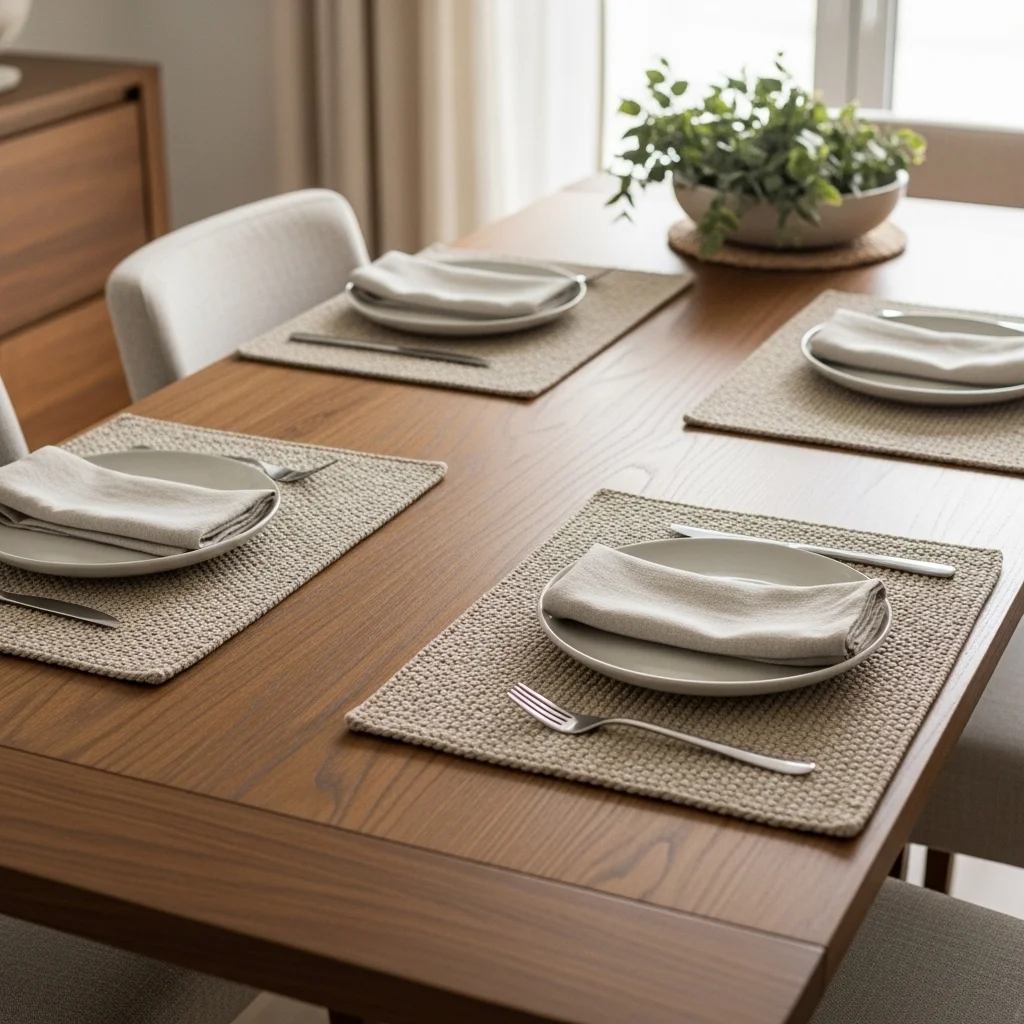
I went years without placemats because I thought they looked fussy and old-fashioned. Then I discovered the right ones, and suddenly they made sense. Good placemats define each person’s space at the table, protect the surface, and add another layer of texture and color.
The key is choosing materials that actually fit your life. If you have young kids, plastic or wipeable placemats just make sense, even if design blogs tell you otherwise. For adults or calmer dining situations, natural materials like woven jute, linen, or even wood veneer add warmth without looking precious.
I keep mine simple and neutral so they work with any seasonal decor changes I make to the centerpiece. They stay on the table all the time, which means the table never looks completely bare even if I’ve cleared everything else off. When it’s time to eat, each spot already has definition.
The Practical Catch-All Bowl
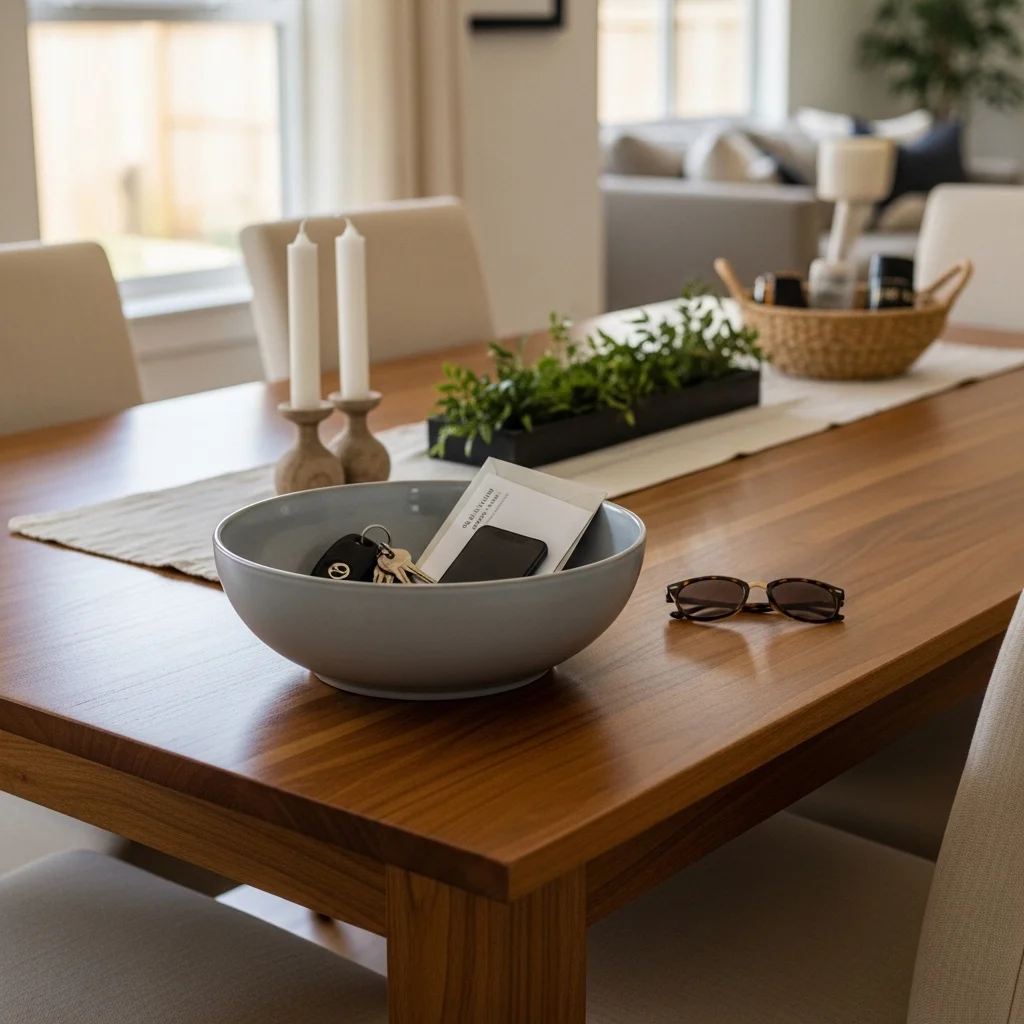
This might be the least glamorous suggestion, but it’s maybe the most honest. Most dining tables in real homes accumulate stuff keys, mail, phones, random things that need to go somewhere. Fighting this is exhausting. Instead, I keep one beautiful bowl or basket specifically for this purpose, usually near one end of the table or on a sideboard if you have one nearby.
The bowl I use is a wide ceramic piece in a soft gray attractive enough that it doesn’t look like clutter, but functional enough that I can toss things in it without guilt. When people are coming over, I can quickly empty it out. The rest of the time, it keeps the chaos somewhat contained rather than spreading across the entire table surface.
This is one of those things nobody tells you in design guides, but it makes everyday life so much easier. Give the clutter a designated attractive home rather than pretending it won’t happen.
Seasonal Swaps That Take Five Minutes
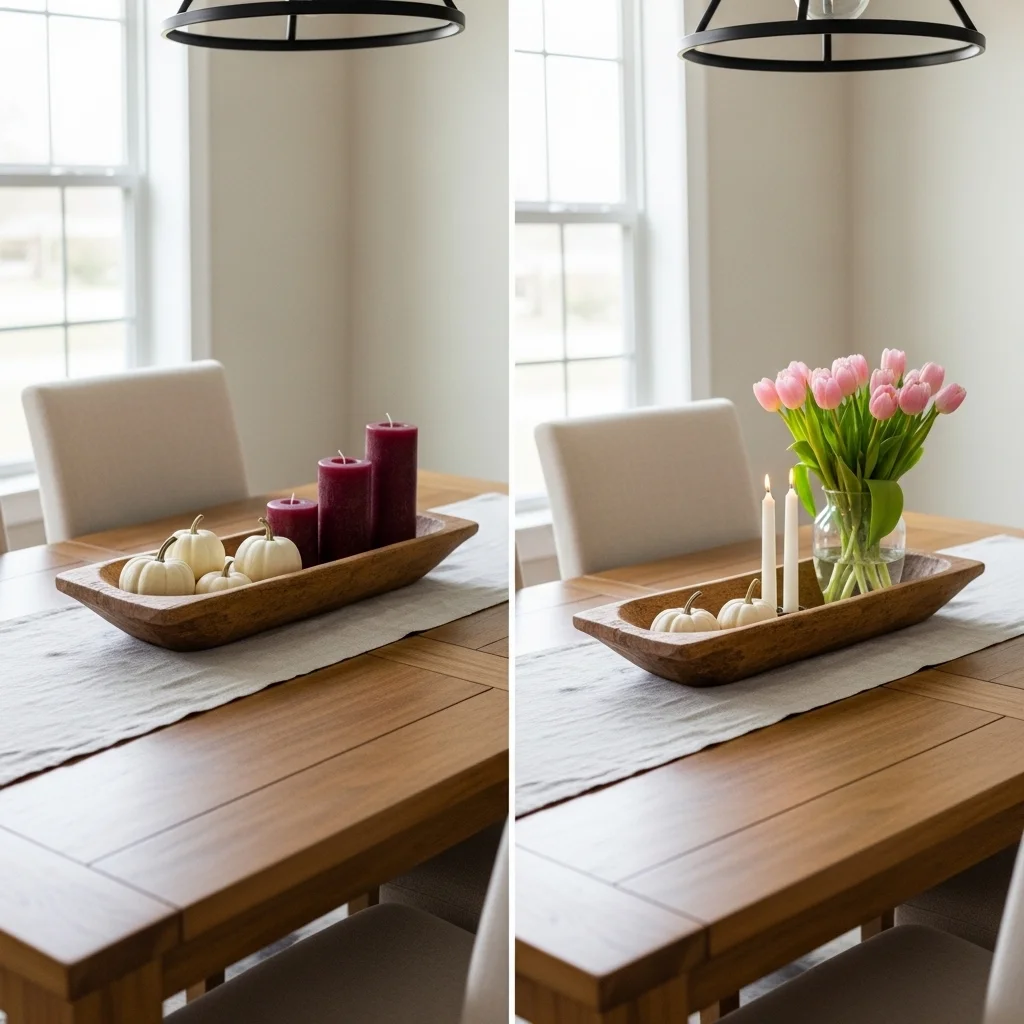
I used to think seasonal decorating meant hauling out boxes of themed items and doing a complete overhaul. That felt overwhelming, so I didn’t do it at all. What actually works is having a few small elements you can swap quickly to acknowledge the changing seasons.
For me, this might mean switching out pillar candles from white to burgundy in fall, or adding a few small white pumpkins to my dough bowl centerpiece. In spring, I might tuck a few tulips in a vase instead of my usual greenery. These tiny adjustments take almost no time but keep your table from feeling stale and disconnected from what’s happening outside.
The point isn’t to redecorate constantly. It’s to stay engaged with your space in small, manageable ways that feel good rather than burdensome.
Layered Lighting Consideration
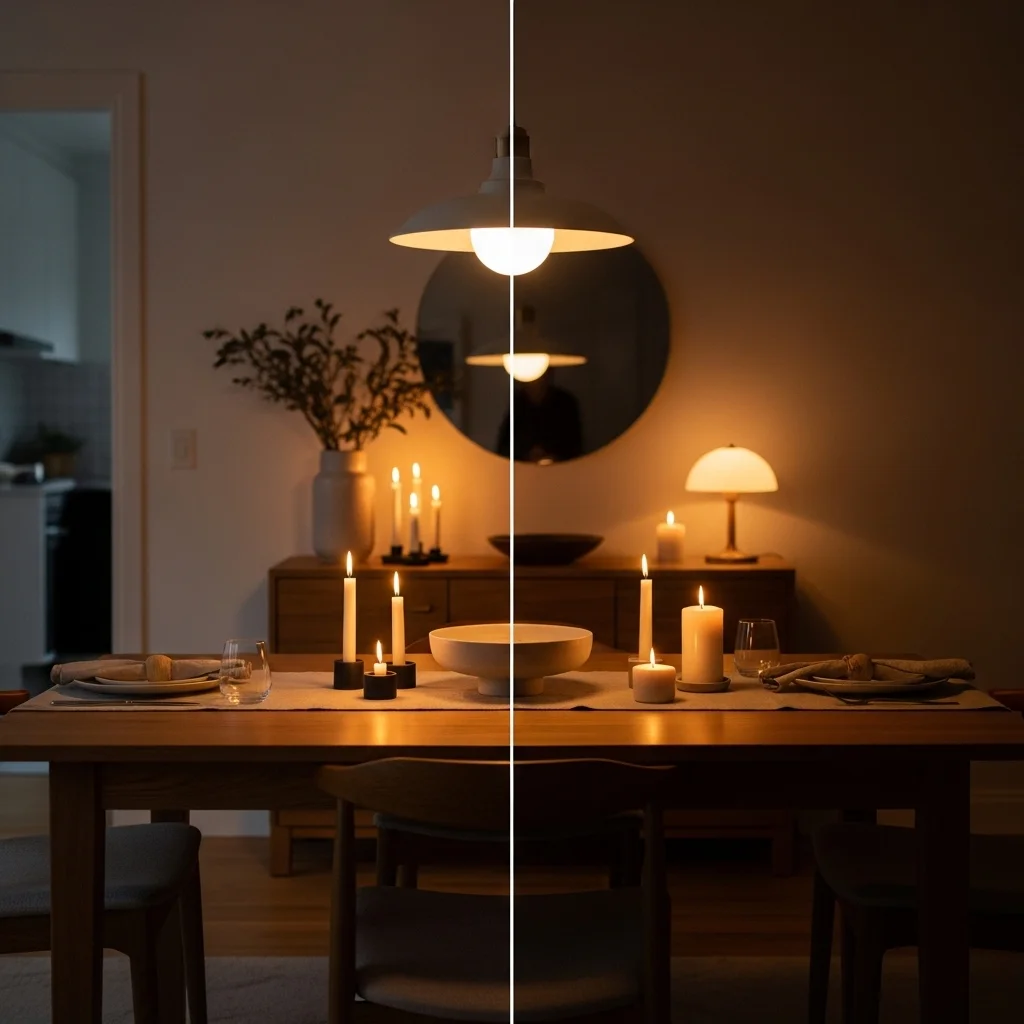
This isn’t about what’s on your table but what’s above it, and it matters more than you might think. If you have a chandelier or pendant light over your dining table, putting it on a dimmer switch changes everything. Bright overhead light for homework and projects, dimmed romantic glow for dinner same fixture, completely different mood.
If you don’t have overhead lighting, consider how table-level lighting affects the whole setup. Those candles I mentioned earlier do some heavy lifting here. Even a small lamp on a nearby sideboard or console can create ambiance that makes your everyday dining table feel special.
Lighting is one of those background elements that dramatically impacts how your table decor looks and feels, but it’s easy to overlook when you’re focused on physical objects.
The Beauty of Negative Space
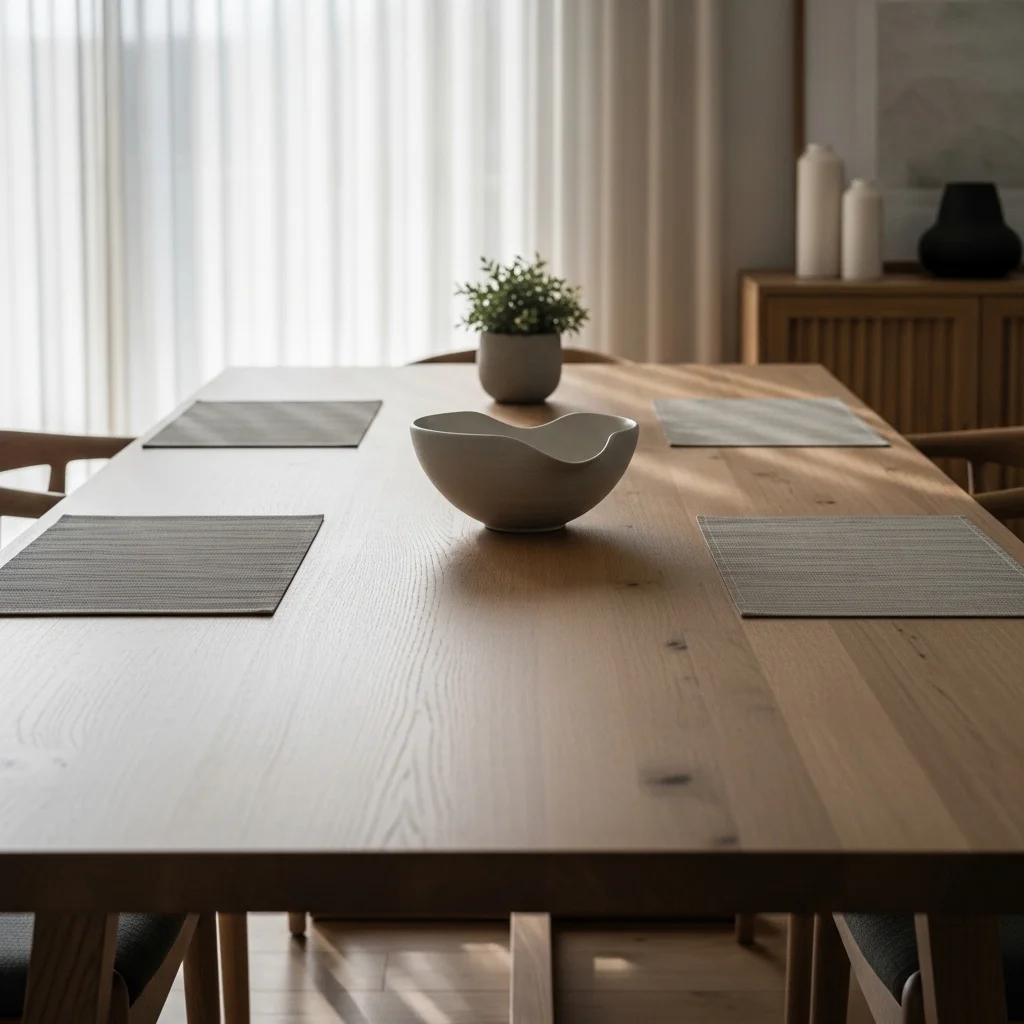
Here’s my last piece of wisdom, and it might be the most important: know when to leave space empty. A table doesn’t need to be covered in decor to look good. In fact, some of the most beautiful dining tables I’ve seen have just one or two thoughtful elements and lots of breathing room.
There’s real elegance in restraint. A single perfect bowl, a small plant, or just a set of simple placemats can be enough. Particularly if your dining area is small or your life is busy, less might genuinely be more. You need room to actually use the table, after all.
I go through phases where my table has quite a bit going on, and other times when I strip it back to almost nothing. Both can work. The goal is finding what makes you happy when you look at it and what doesn’t create frustration when you need to use the space.
Making It Work for Your Real Life
The thread running through all these ideas is practicality alongside beauty. Your dining table should reflect how you actually live, not some idealized version of life you saw on Pinterest. If you have toddlers, delicate glass sculptures probably aren’t the move right now. If you work from home and use your dining table as a desk, your decor needs to be easily movable.
I’ve made plenty of mistakes over the years buying decor that looked amazing but didn’t fit my lifestyle, creating arrangements so precious I was afraid to disturb them, following trends that didn’t suit my actual taste. What I’ve learned is that the best dining table decor almost disappears into your daily routine. It makes your space feel more beautiful without requiring constant attention or adjustment.
Start with one or two ideas that genuinely appeal to you. Maybe it’s finally getting a good table runner, or committing to keeping fresh greenery on hand. See how it feels for a few weeks. Add another element if you’re inspired. This isn’t a project with a finish line it’s an ongoing relationship with a space you use every day.
Your dining table is probably one of the most-used surfaces in your home. It deserves to look good, and you deserve to enjoy it, not just on special occasions but on all the regular, unremarkable days in between. That’s where we actually live, after all.