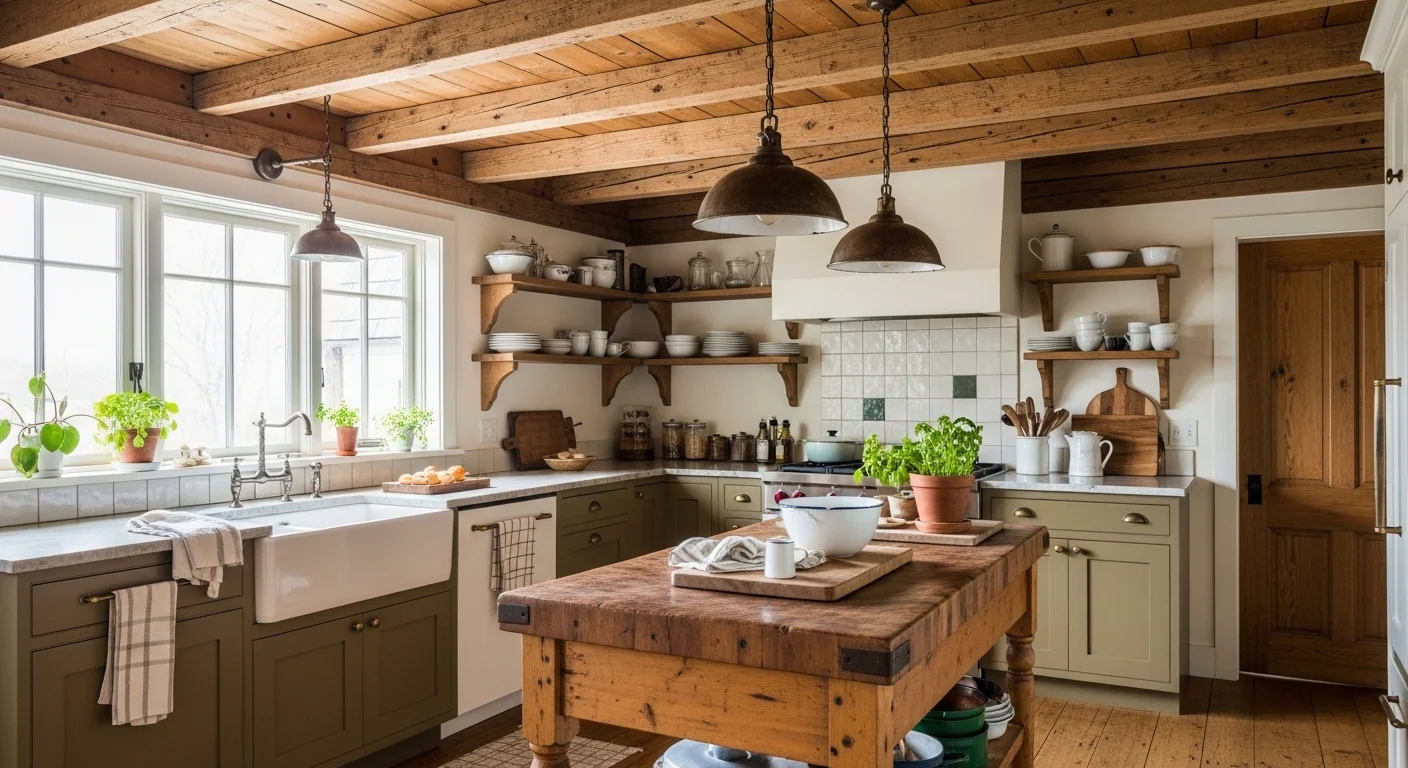
I’ve renovated three kitchens in my lifetime, two in homes I owned and one for my parents and every single time, I started with grand visions of sleek, modern minimalism. Stainless steel everything. Handle-less cabinets. That clinical, restaurant-kitchen aesthetic.
And every single time, I ended up gravitating back toward rustic elements. Not because I’m stuck in the past or obsessed with farmhouse Pinterest boards, but because rustic kitchens actually feel like places where people cook, gather, make messes, and live. There’s a forgiveness to the style, a worn butcher block doesn’t show new scratches the way pristine marble does. An old wooden beam doesn’t look worse with age; it looks better.
The trick with rustic kitchen decor is walking the line between “cozy countryside charm” and “stuck in a time warp.” Done wrong, it feels like a theme restaurant. Done right, it feels like the kind of kitchen where someone’s grandmother made the best meals of your childhood, even if that’s not literally true.
Here’s what I’ve learned actually works, both from my own projects and from working with clients who wanted that rustic feel without sacrificing modern function.
Top 10 Ideas for Rustic Kitchen Design
1. Embrace Exposed Beams

One of the most distinctive features of rustic kitchens is exposed wooden beams. Whether you opt for reclaimed wood or finish new timber to look distressed, these beams add architectural interest and a touch of nature. They also establish a warm, earthy tone within the space.
2. Choose Natural Materials

In a rustic kitchen, the choice of materials is crucial. Opt for wooden cabinetry, stone countertops, and ceramic tiles. Each element should embrace imperfections, embracing the beauty of natural textures. Reclaimed wood not only supports sustainability but also brings character to your kitchen.
3. Incorporate Vintage Appliances

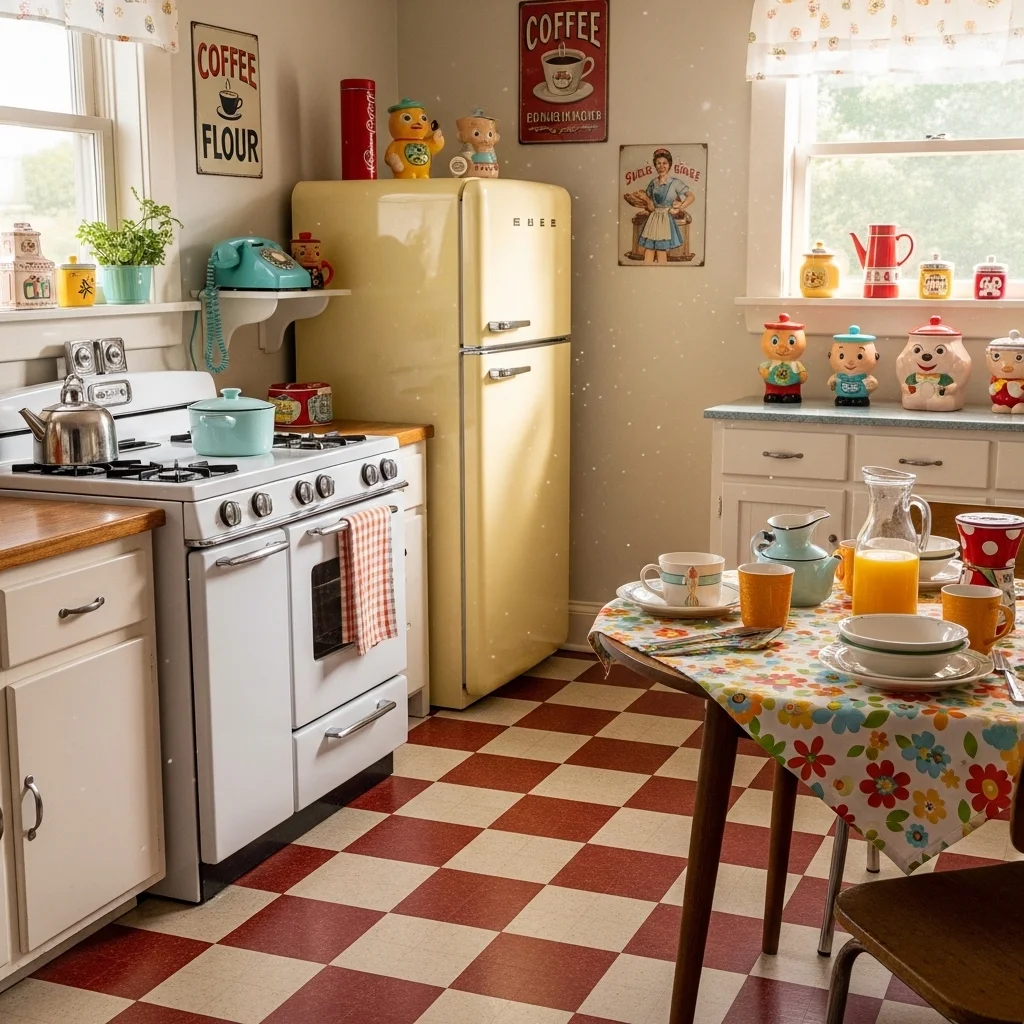
Vintage or retro-style appliances can enhance the rustic feel. Think about a classic farmhouse sink, a retro-styled refrigerator, or an old-fashioned range cooker. These pieces not only serve practical purposes but also add a nostalgic charm, marrying modern efficiency with classic aesthetics.
4. Install a Farmhouse Sink

A large, deep farmhouse sink is not only functional for washing dishes but also a standout feature in any rustic kitchen. Typically made from fireclay or stainless steel, these sinks have a simple yet elegant design that evokes the traditional kitchens of the countryside.
5. Use Open Shelving

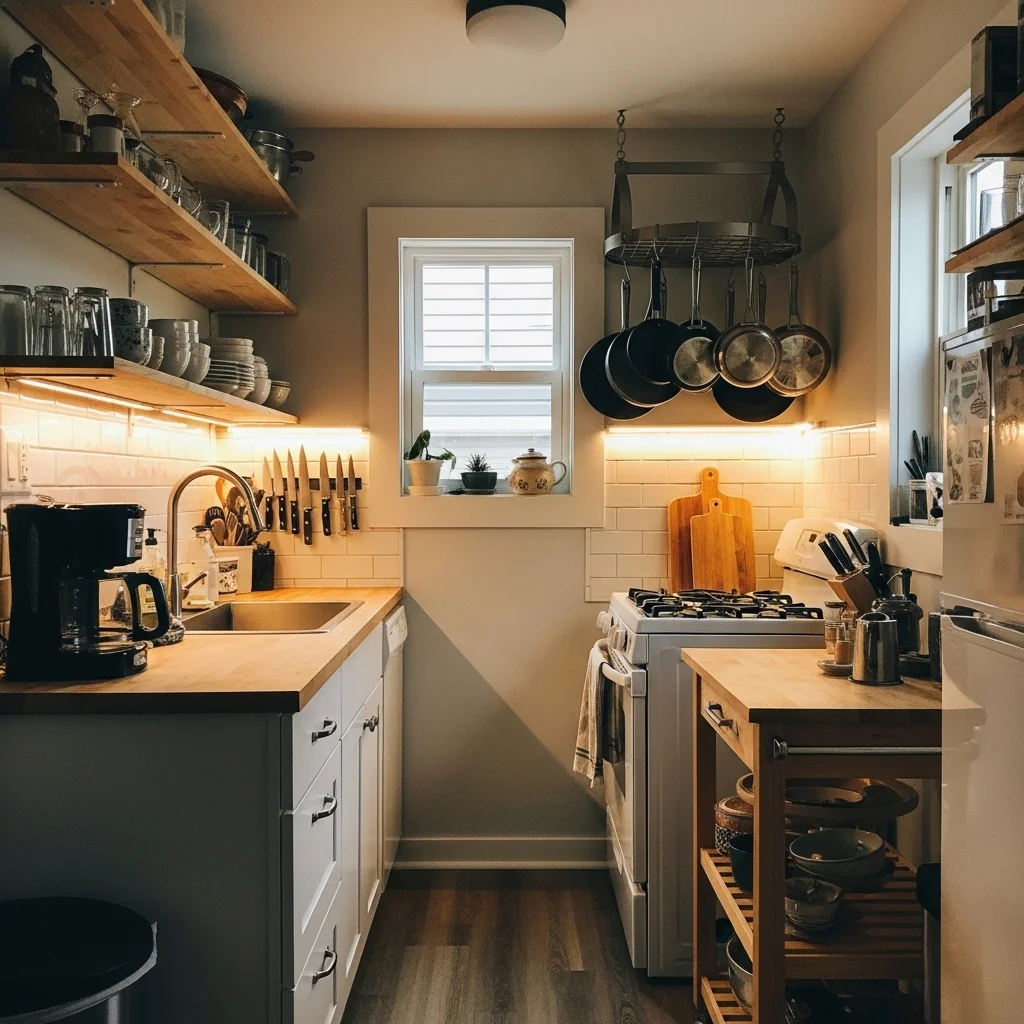
Open shelving provides an opportunity to display beautiful dishware and glassware. It creates an uncluttered look while allowing you to showcase your favorite vintage finds. Incorporate wooden or metal brackets for an added rustic touch.
6. Add a Touch of Hardware
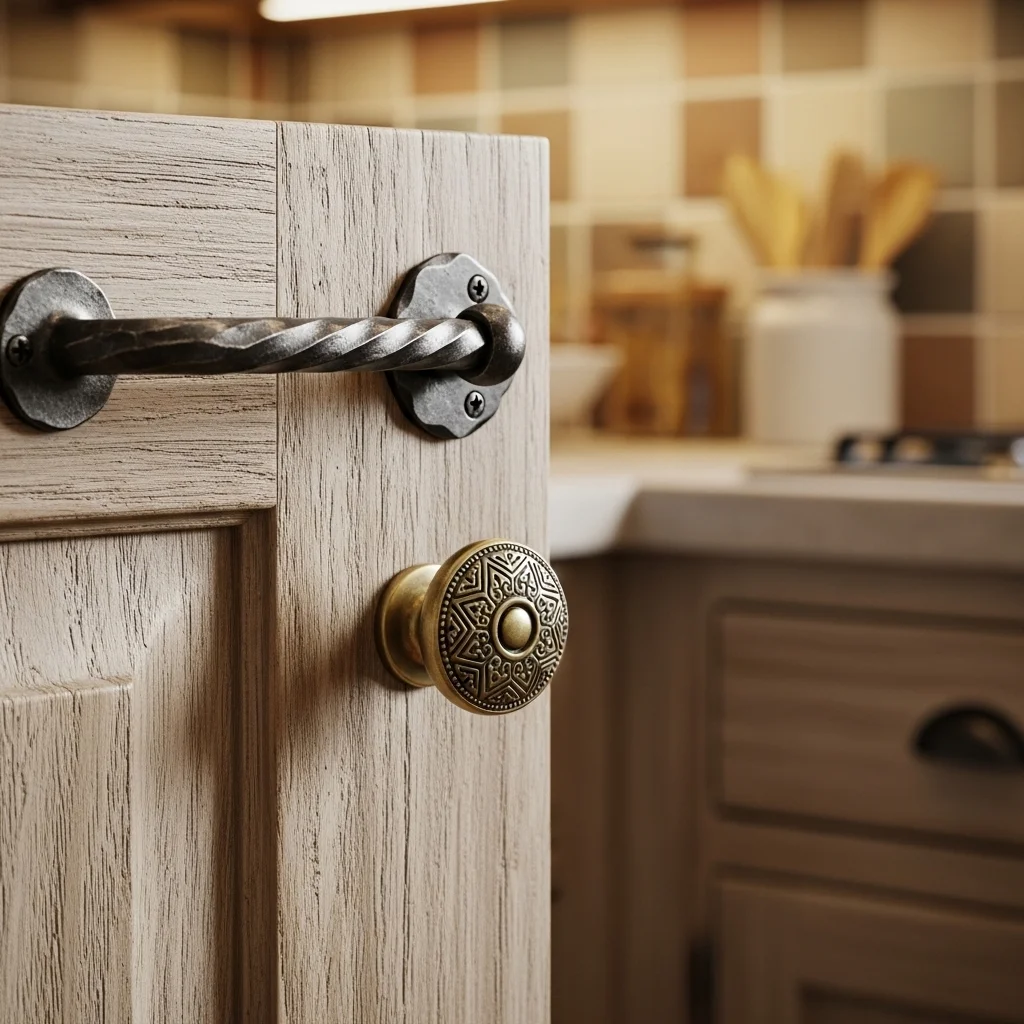
Selecting the right hardware can significantly impact the overall feel of your kitchen. Look for wrought iron or antique brass handles and knobs, which complement the rustic aesthetic beautifully. These elements can elevate the look of cabinets without overwhelming the design.
7. Incorporate an Island
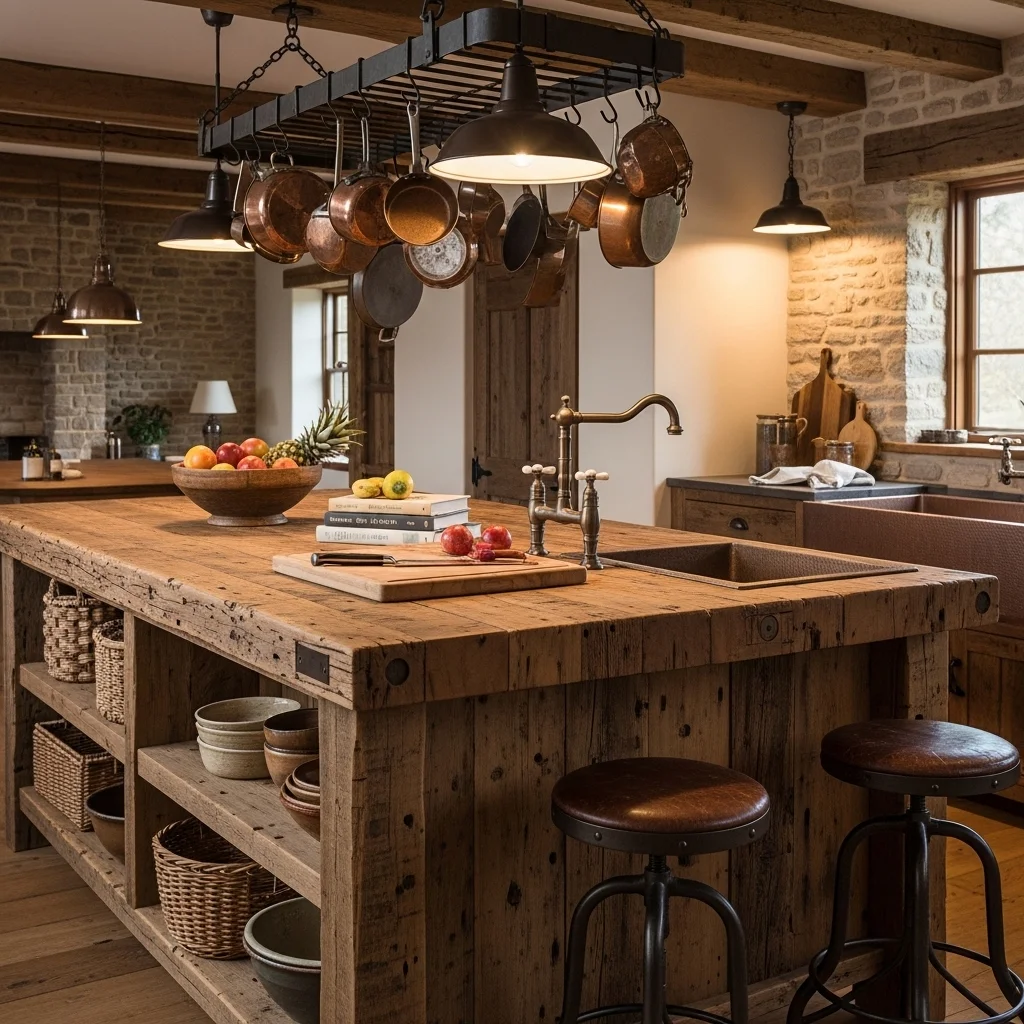
An island serves as a functional centerpiece in a rustic kitchen. Consider using reclaimed wood for the island’s construction or top it with a striking butcher block. Not only does it provide additional workspace, but it also serves as a natural gathering spot for family and friends.
8. Play with Color Palettes

Stick to a muted color palette that reflects nature: think earthy browns, soft greens, and warm grays. These colors complement wooden tones and enhance the cozy atmosphere of a rustic kitchen. Accent with brighter shades through kitchen accessories or décor.
9. Utilize Textiles Wisely

Incorporate rustic textiles to soften hard surfaces. Think of linen, cotton, or even burlap for curtains, table runners, and seat cushions. Patterns like checks, plaids, and florals add to the charm without overpowering the overall look.
10. Feature Unique Lighting

Lighting fixtures play a crucial role in rustic kitchen design. Choose wrought iron chandeliers, pendant lights with an industrial vibe, or lantern-style fixtures. These lighting options provide ample illumination while adding character, enhancing the warm environment.
The Honest Truth About Going Rustic
Here’s what I wish someone had told me before my first rustic kitchen project: this style requires either genuine vintage pieces (which take time and effort to source) or higher-quality new materials made to look old (which cost more than standard options). The cheap shortcuts, vinyl “wood” beams, plastic hardware, prefab “distressed” cabinets from big-box stores almost always look fake.
That doesn’t mean you need unlimited budget. It means you need patience and priorities. Maybe you splurge on a real farmhouse sink and save money by painting existing cabinets instead of replacing them. Maybe you invest in one spectacular reclaimed wood element and keep everything else simple. Maybe you hit salvage yards every weekend for three months until you find the perfect vintage lighting.
My kitchen took almost two years to feel finished, and even now I’m still finding pieces and making small changes. That’s actually perfect for rustic style it’s supposed to look collected over time, not designed all at once.
The result is a kitchen that feels warm, welcoming, and genuinely lived-in. A place where scratches and dings just add to the character instead of ruining the aesthetic. Where people naturally gather because it feels comfortable, not precious.
That’s what rustic really means, not a style period or a specific look, but a philosophy of embracing materials that age well, functions that matter, and imperfections that tell a story. If your kitchen can do that, you’ve succeeded, whether or not it has exposed beams.