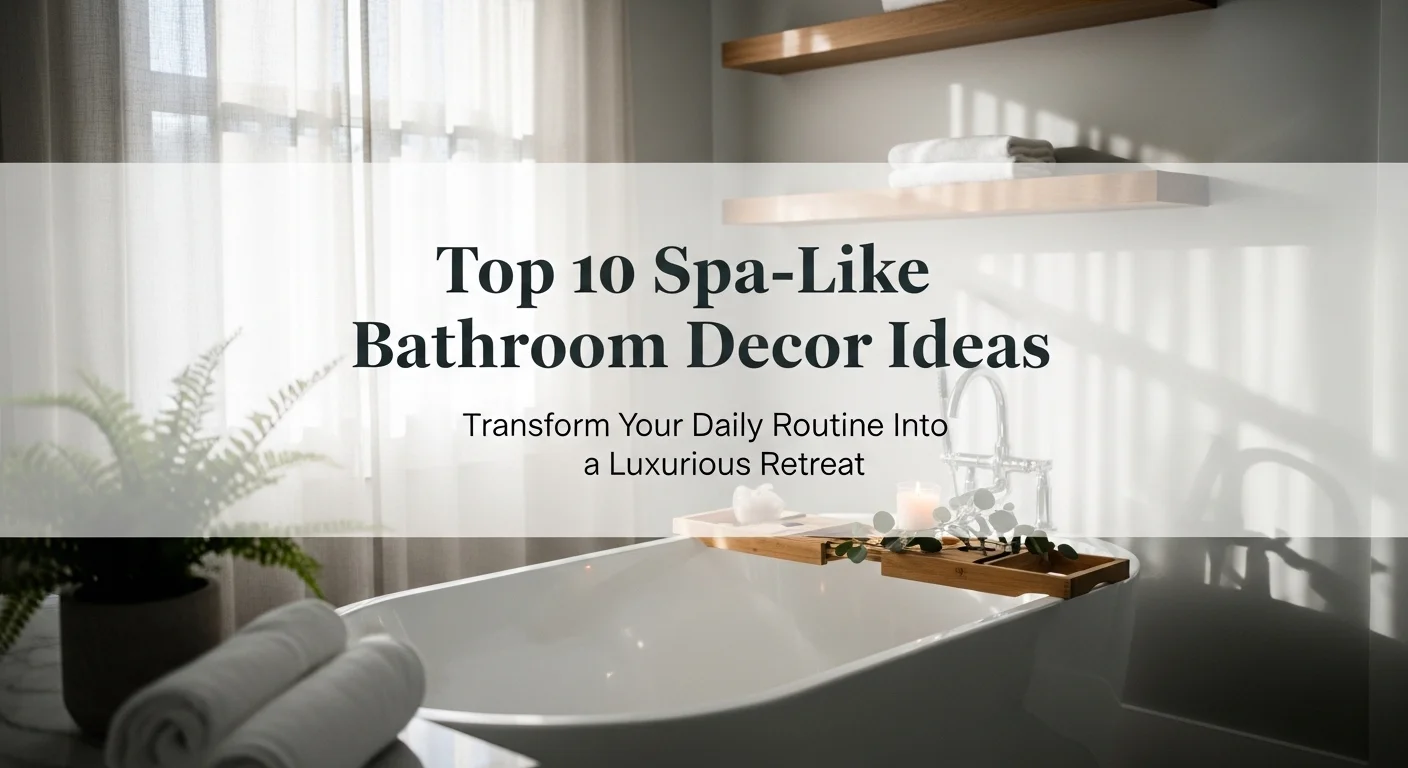
I’ll never forget the first time I stayed at a boutique hotel in Sedona with a bathroom that made me want to cancel my dinner reservation just to soak in the tub longer. The space wasn’t particularly large, maybe 80 square feet, but it felt like a sanctuary. That experience changed how I thought about bathroom design entirely. Since then, I’ve spent years studying what makes certain bathrooms feel like private retreats while others remain purely functional spaces.
The difference isn’t always about square footage or budget, though those certainly help. It’s about intentional choices that engage your senses the moment you step through the door. After working on dozens of bathroom renovations and visiting high-end spas from Bali to Big Sur, I’ve identified the design elements that consistently transform ordinary bathrooms into spa-like escapes.
1. Layer Your Lighting Like a Professional
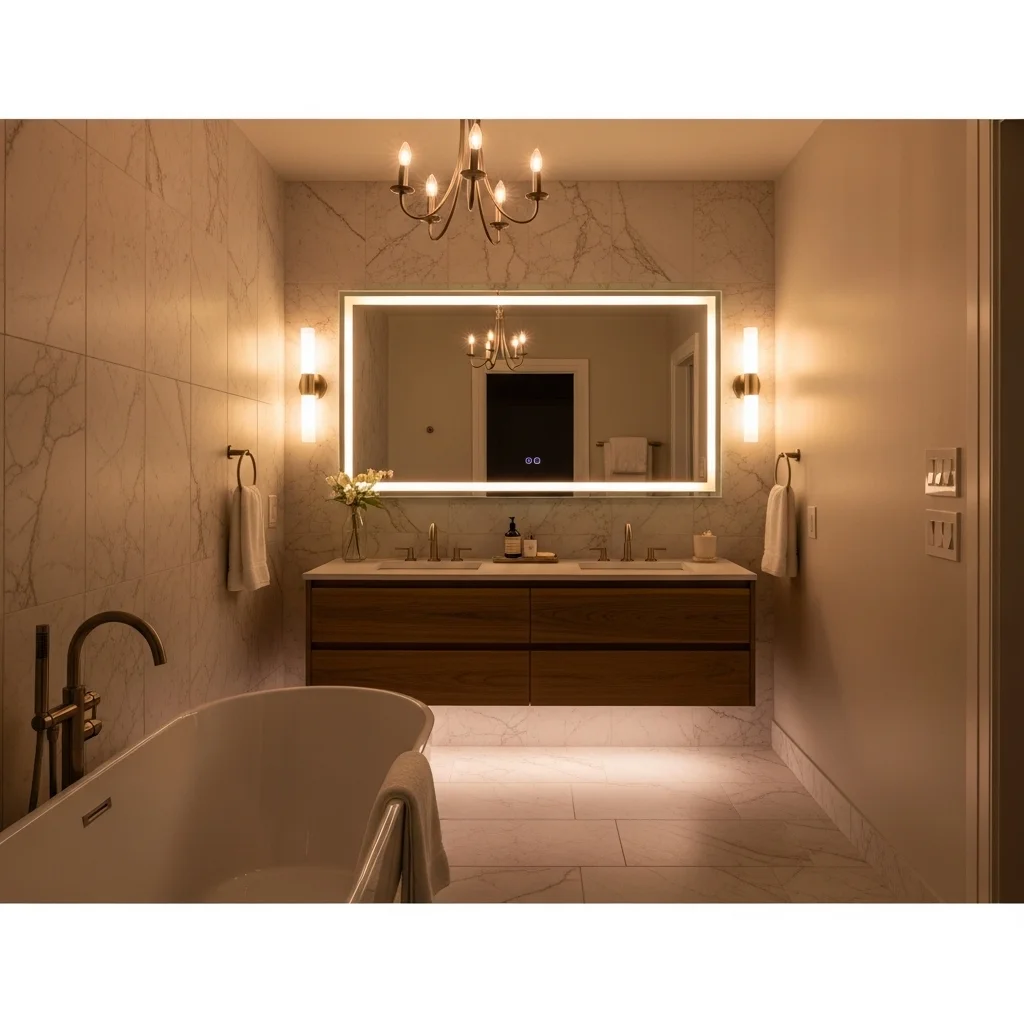
Most bathrooms suffer from terrible lighting, a single overhead fixture that casts unflattering shadows and kills any hope of ambiance. Spas understand that lighting sets the entire mood, and they use multiple sources at different heights.
I learned this lesson the hard way during my first bathroom remodel. I’d installed beautiful marble tile and a gorgeous freestanding tub, but the space still felt cold and institutional under those bright LED ceiling lights. The transformation happened when I added three additional lighting layers: sconces flanking the mirror at eye level, a small chandelier over the tub, and LED strips under the vanity that cast a soft glow on the floor.
The key is creating options. You want bright task lighting for applying makeup or shaving, but you also need ambient lighting for relaxation. Dimmer switches are non-negotiable. I install them on every bathroom light fixture now. For under $40, a dimmer switch gives you complete control over the atmosphere.
Consider the color temperature, too. Cool white light (5000K) might wake you up for morning routines, but it’s harsh for evening baths. Warm white (2700-3000K) creates that cozy, candlelit feeling that spas cultivate. I often recommend smart bulbs that let you adjust both brightness and warmth from your phone. Yes, they cost more initially, but the flexibility is worth it.
One unconventional lighting choice I’ve grown to love: backlit mirrors. They provide even, shadow-free illumination for grooming while adding a subtle, modern glow to the space. The ones with adjustable color temperature have become standard in my bathroom projects.
2. Embrace Natural Materials (But Know Their Limitations)
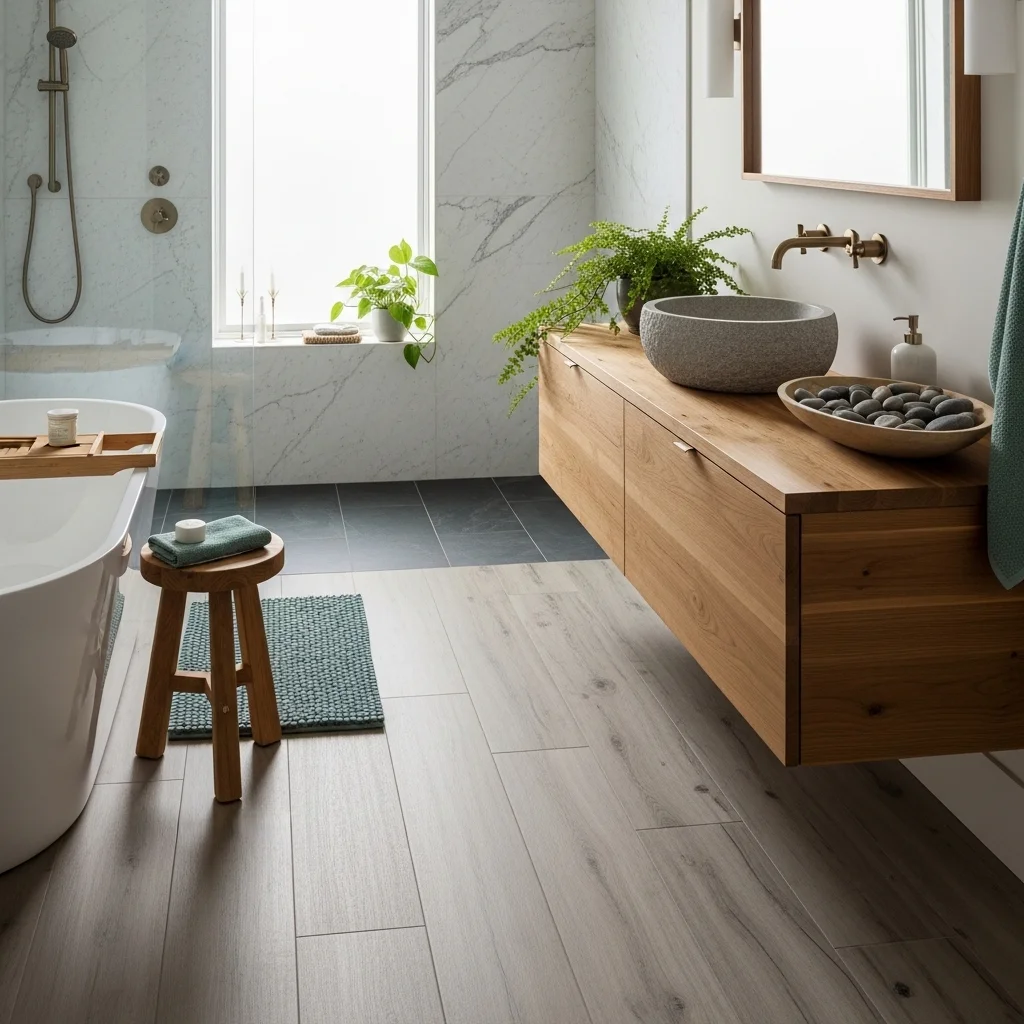
Walk into any high-end spa, and you’ll notice an abundance of wood, stone, and plants materials that connect us to nature. There’s actual research behind this. Biophilic design, which incorporates natural elements into built environments, has been shown to reduce stress and improve well-being.
In bathrooms, this translates to choosing materials like teak, bamboo, limestone, and marble. I’ve used wide-plank porcelain tile that mimics weathered oak for clients who wanted the warmth of wood without the moisture concerns. Modern porcelain technology is remarkable. I’ve seen tiles that fool even experienced contractors.
But let’s be honest about real wood in bathrooms. Teak works beautifully because of its natural water resistance and high oil content. I’ve installed teak bath mats, stools, and even entire vanities that have held up for years. Cedar is another good option. Regular oak or pine? That’s asking for warping and mold unless you’re religious about ventilation and maintenance.
Stone is more forgiving but comes with its own considerations. I once used honed Carrara marble for a shower surround, stunning to look at, but it required sealing every six months and showed every water spot. Darker stones, such as absolute black granite or slate, hide water marks better and require less maintenance.
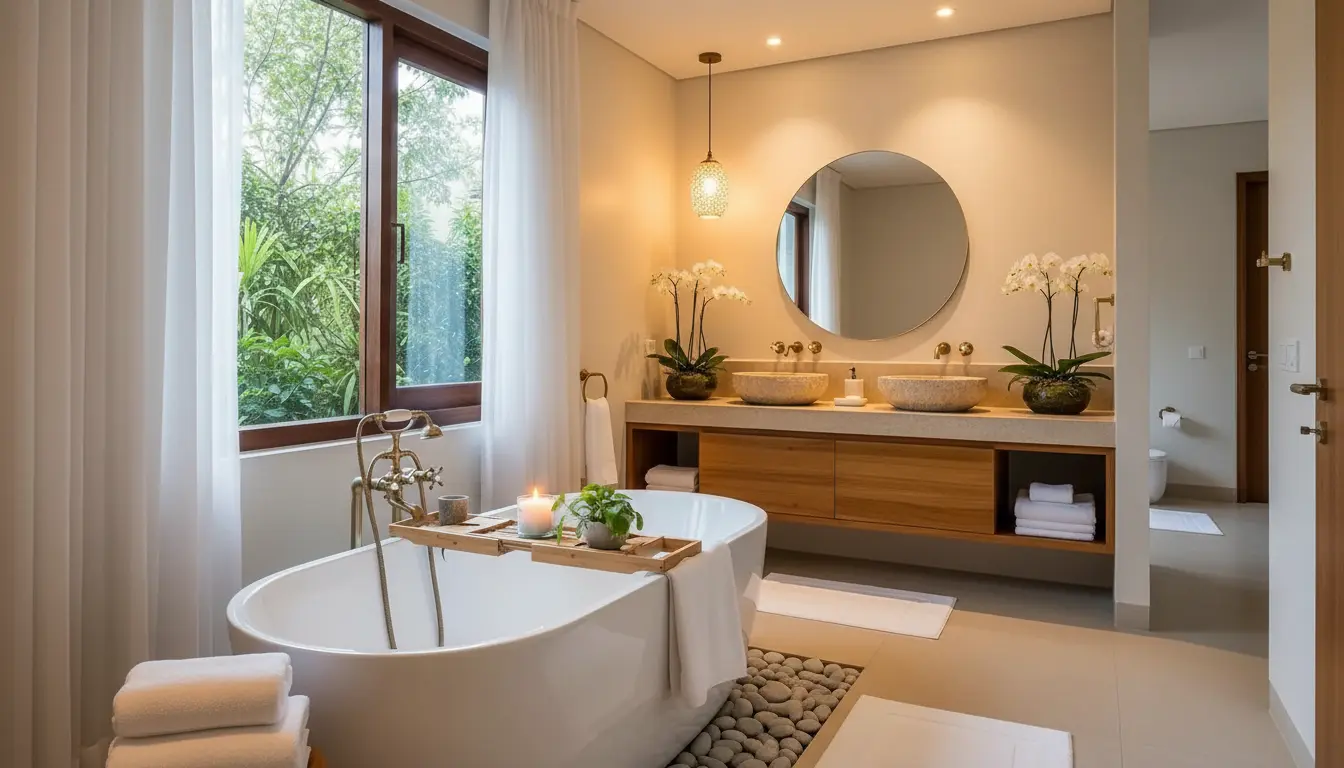
A middle ground I’ve found effective: use natural materials as accents rather than covering entire surfaces. A stone vessel sink, a wooden bath tray, river rocks in a decorative bowl, these bring that organic spa feeling without the commitment or cost of a full marble bathroom.
3. Invest in Touchable Textures
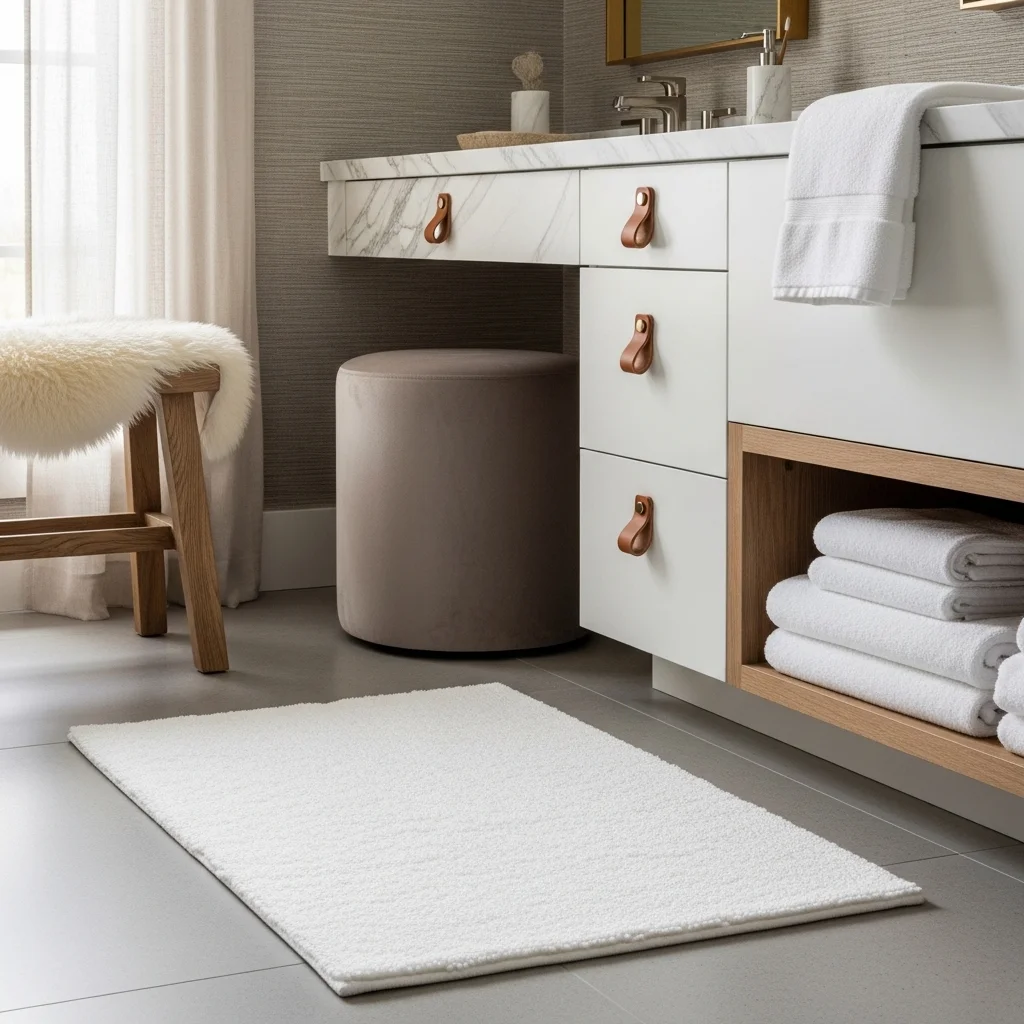
Spas engage all your senses, and touch is often overlooked in bathroom design. The difference between a basic cotton bath mat and a thick, plush Turkish cotton one is the difference between stepping onto a damp towel and sinking your toes into something luxurious.
I’ve become somewhat obsessed with textile quality over the years. After testing probably thirty different towel sets, I can tell you that GSM (grams per square meter) matters. Anything below 400 GSM feels thin. The sweet spot for that spa-quality feel is 600-900 GSM, dense enough to feel substantial but still manageable in your washing machine.
But texture isn’t just about softness. Contrast matters too. In my own bathroom, I paired smooth marble countertops with a textured grasscloth wallpaper and rough-hewn wooden shelving. Your hand naturally wants to touch different surfaces, and that tactile variety makes a space more interesting.
Consider adding a sheepskin rug (real or faux), linen window treatments, or even a velvet vanity stool. I installed leather drawer pulls on a client’s built-in cabinetry, an unusual choice that added warmth and a subtle luxury that announced itself when you opened a drawer.
One texture that’s recently won me over: microcement. It creates a smooth, seamless surface with subtle variation that works for walls, floors, even bathtubs. It has this soft, warm feel underfoot that cold tile doesn’t offer, and the lack of grout lines makes it feel more cohesive and calm.
4. Create a Sensory Nook for Bath Products
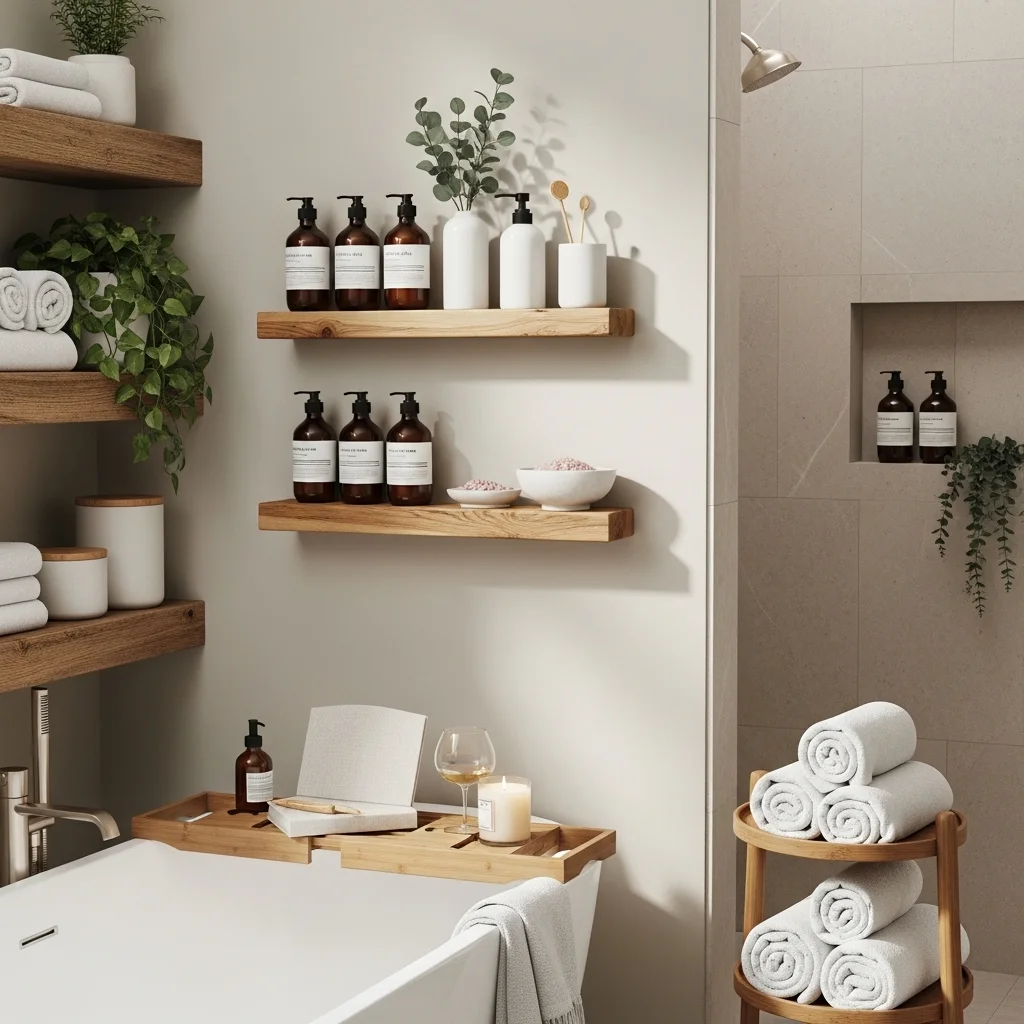
Here’s where many bathroom renovations miss the mark: they focus on fixed elements and overlook the products and accessories that get used daily. Spas curate their products carefully and display them beautifully; bottles and jars become part of the decor.
I started creating dedicated “sensory stations” in bathroom designs after visiting a spa in Kyoto where all the bath products were arranged on a floating cypress shelf with perfect precision. Each bottle was beautiful enough to display, and the arrangement itself became a visual focal point.
For your own bathroom, this might mean decanting products into matching glass dispensers or ceramic containers. I buy amber glass bottles in bulk and use a label maker to identify contents. It sounds precious, maybe, but there’s something calming about visual uniformity versus a chaotic collection of mismatched plastic bottles.
Create a specific home for everything: a teak tray for the tub that holds a book, a wine glass, and candle; a three-tiered stand for rolled towels; a wall-mounted niche in the shower for products. The niche is crucial; I always include at least one in shower designs, preferably with a slight slope so water doesn’t pool.
I’m also a big advocate for open shelving in bathrooms, though you need to be honest about your tidiness habits first. Floating shelves made from reclaimed wood, displaying neatly rolled towels, a few plants, and beautiful product containers, can transform a blank wall. But if you’re not committed to keeping them organized, closed storage is the better choice.
5. Bring the Outside In (Strategically)
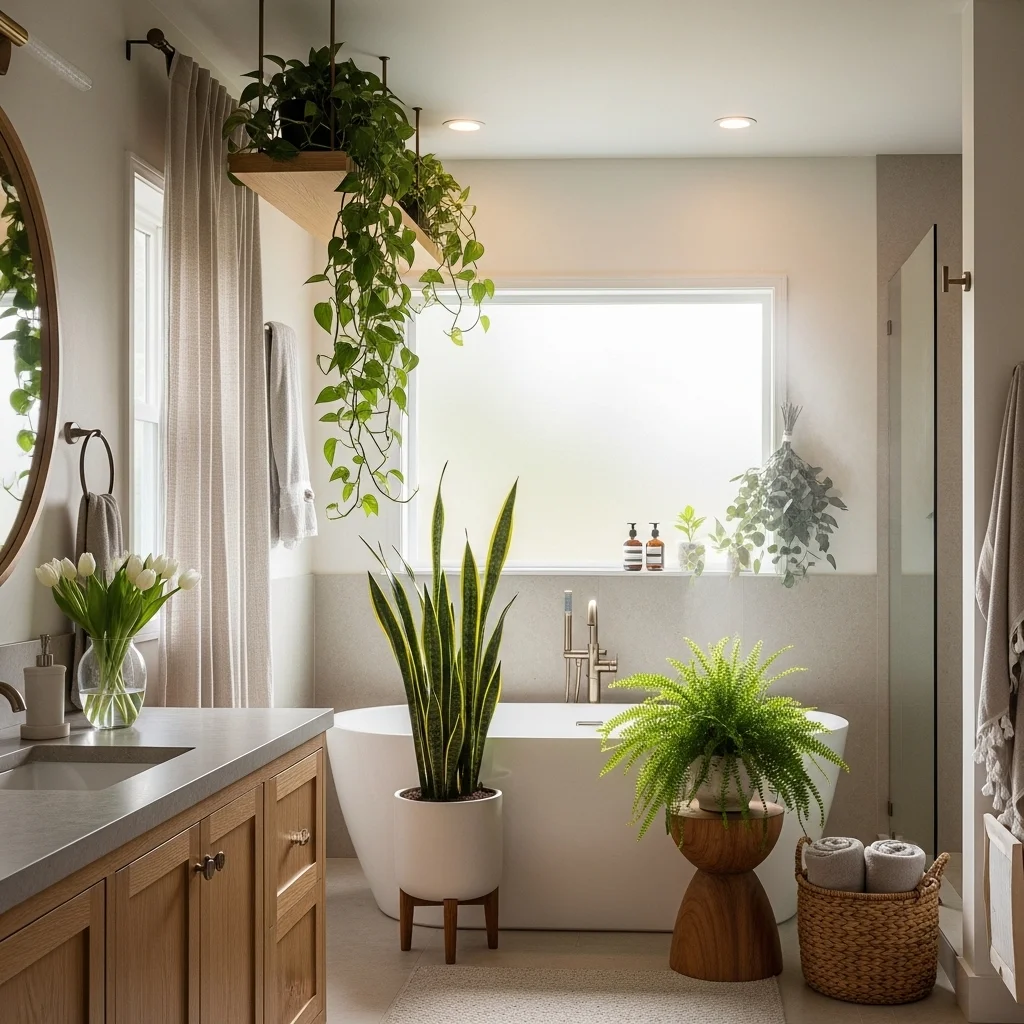
Every spa I’ve visited incorporates living plants, and for good reason. Beyond aesthetics, certain plants actually improve air quality and thrive in bathroom humidity.
My go-to bathroom plants are pothos, snake plants, and ferns. Pothos is nearly indestructible and looks gorgeous trailing from a high shelf or hanging planter. Snake plants tolerate low light and irregular watering, perfect for a bathroom without windows. Boston ferns love humidity and create that lush, tropical feeling if you have enough natural light.
I learned through trial and error that placement matters enormously. I once put a beautiful fiddle leaf fig in a bathroom with a small north-facing window. It dropped leaves within weeks. Now I evaluate light levels carefully before recommending plants. A bright, steamy bathroom can support orchids, peace lilies, even small palms. A windowless powder room needs something much more forgiving.
For bathrooms with zero natural light, I’ve had surprising success with high-quality grow lights integrated into the design. There are now LED fixtures that provide the full spectrum plants need while still looking like normal design lighting not the purple glow you might imagine.
If you’re not confident with living plants, high-quality artificial ones have come a long way. I’ll admit I was skeptical, but some of the preserved moss wall panels and silk plants now on the market look remarkably real. I’ve used artificial eucalyptus in shower enclosures where real plants wouldn’t survive.
Fresh flowers make a huge impact too. I keep a small vase on my bathroom counter and refresh it weekly usually something simple like white tulips or eucalyptus branches. It’s a small luxury that costs maybe $8 per week and makes every morning feel special.
6. Consider the Power of Scent (Without Overwhelming)
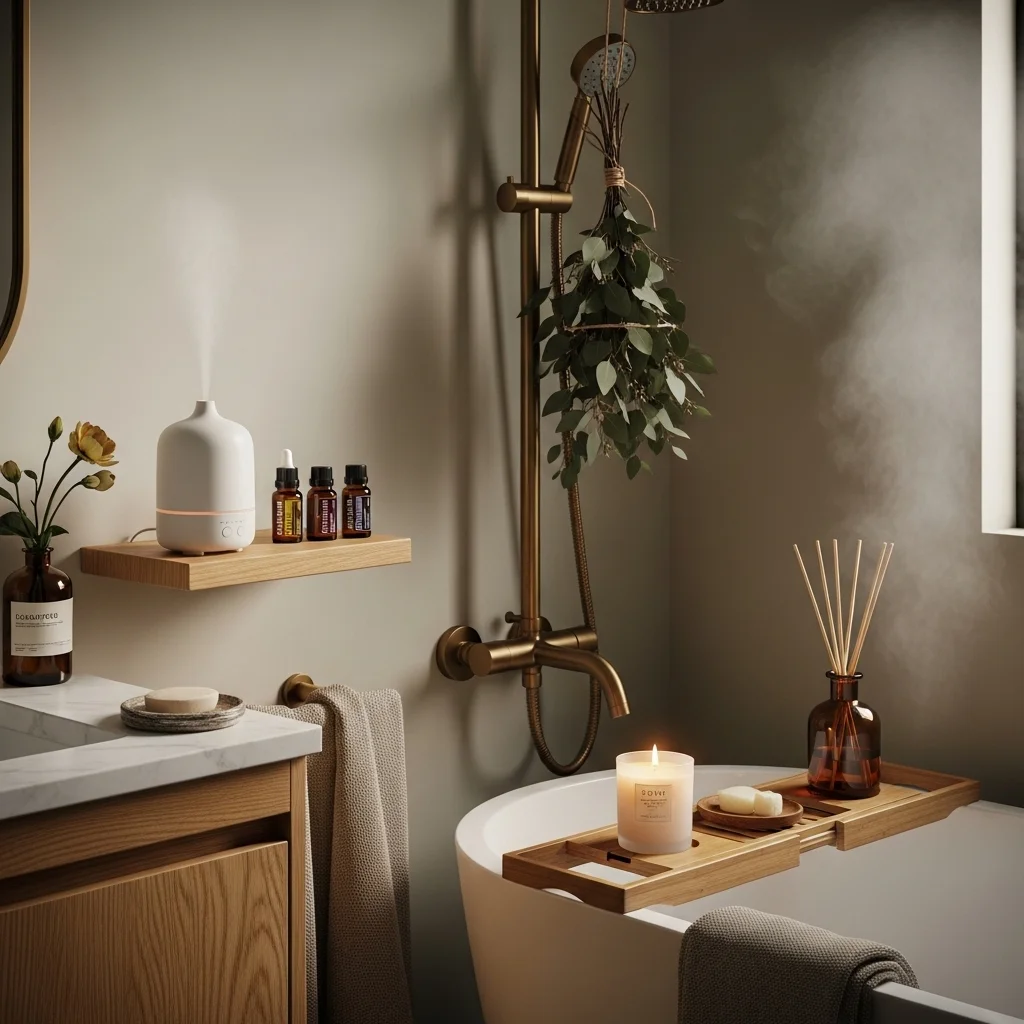
Scent might be the most powerful sense for creating a spa atmosphere, but it’s also where many people go wrong. Walking into a cloud of synthetic air freshener isn’t relaxing, it’s migraine-inducing.
Professional spas use scent strategically and subtly. They prefer natural options like essential oil diffusers, fresh eucalyptus hanging in the shower, or high-quality candles made with soy or beeswax.
I keep a small ultrasonic diffuser on a bathroom shelf with a rotation of essential oils. Eucalyptus and peppermint for morning showers when I need energy. Lavender and chamomile for evening baths when I want to unwind. Cedarwood and sandalwood for something grounding and neutral.
The mistake people make is using too much. Three drops of essential oil in a diffuser is plenty for most bathrooms. You want a subtle background note, not something that hits you in the face.
Fresh eucalyptus in the shower is one of my favorite tricks. Tie a bundle with twine and hang it from the showerhead the steam releases the oils, creating a gentle aromatherapy experience. It looks beautiful too, like something you’d see at a high-end spa. Eucalyptus bundles last about three weeks before they dry out.
For candles, I’ve become particular about quality. Cheap paraffin candles can release toxins when burned. I look for candles made with soy, coconut, or beeswax, with cotton wicks and phthalate-free fragrance or essential oils. Yes, they cost more, sometimes $30-40 for a good candle, but they burn cleaner and longer.
Reed diffusers offer constant, low-level scent without needing to light anything. I position them away from direct moisture but somewhere with slight air circulation to spread the fragrance.
7. Upgrade Your Shower Experience
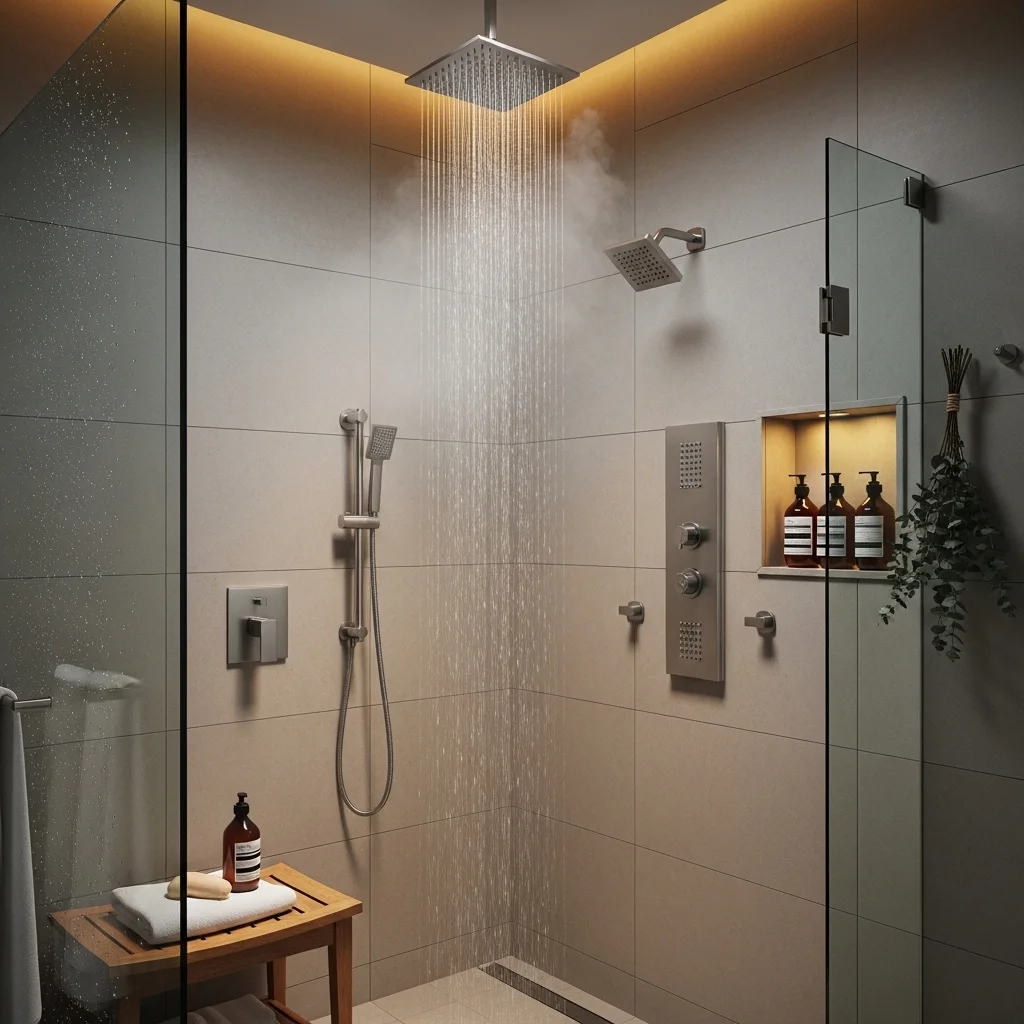
If you’re not planning a full renovation, upgrading your showerhead might give you the biggest bang for your buck in creating a spa feeling. The difference between a basic showerhead and a quality rain shower or multi-function system is night and day.
I replaced my standard showerhead with a 10-inch rain shower fixture about five years ago, and it changed my entire morning routine. Rain showerheads mimic standing in warm rainfall. The water comes straight down in a wide pattern rather than shooting at an angle. It’s less aggressive, more enveloping.
For the ultimate spa shower, consider a system with multiple functions: a rainfall head, a handheld wand, and even body jets. I installed a system like this for a client with chronic back pain, positioning body jets to hit their lower back. The cost was around $800 for the fixtures plus installation, but they said it reduced their physical therapy visits.
Water pressure matters enormously. If yours is low, look for showerheads specifically designed to increase pressure. They work by restricting flow through smaller holes, which actually feels more powerful. Just check that they meet water conservation standards in your area.
Steam showers are the ultimate luxury if you’re doing a major renovation. I’ve installed a few, and while they’re not cheap (budget $3,000-$10,000 depending on size and features), they transform a daily shower into a true spa experience. You need proper waterproofing and ventilation, though this isn’t a DIY project.
A simpler upgrade: add a teak shower bench or stool. Even if you don’t sit during showers, it’s practical for leg shaving, placing products, or just making the space feel more furnished and intentional.
8. Rethink Your Color Palette
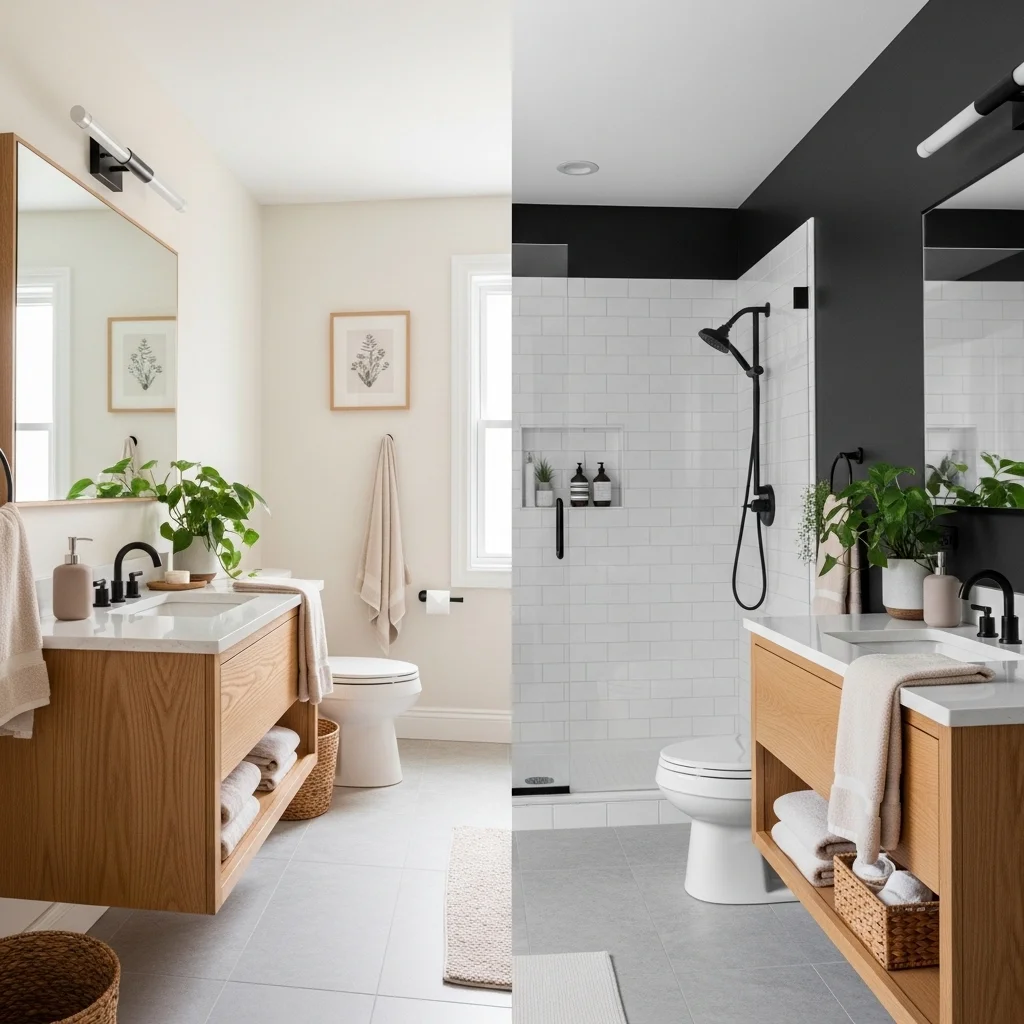
Walk into most spas, and you’ll notice a deliberate color story usually neutrals with natural accents. There’s a reason bright orange and lime green bathrooms don’t feel relaxing.
The safest spa-like palette uses whites, creams, soft grays, and beiges as a base, then adds interest through natural materials and textures rather than bold colors. Think white subway tile with natural wood vanity, gray limestone floor, plants for green accents.
That said, I’ve created spa bathrooms that break this rule successfully. I once designed a bathroom with deep charcoal walls, matte black fixtures, and blonde wood accents that felt incredibly sophisticated and calm. The key was keeping it monochromatic and using matte finishes rather than glossy ones.
Blues and greens work well because they connect to water and nature, think seafoam, sage, soft aqua. I used a pale celadon green paint in my own bathroom, and it creates this serene, slightly vintage feel.
What I avoid: bright whites that feel clinical rather than spa-like. I prefer softer whites with warm undertones, colors like Swiss Coffee, Natural Linen, or Alabaster. Pure white can feel cold and institutional.
Consider carrying your color palette through all the elements: towels, bath mats, storage containers, even soap dispensers. This visual cohesion is part of what makes spa spaces feel so intentional and calm.
One trend I’m seeing more of and cautiously recommending is wallpaper in bathrooms. Modern wallpapers can handle moisture if you have good ventilation. A subtle grasscloth or watercolor-effect paper on one accent wall can add tremendous warmth and interest. Just make sure it’s specifically rated for bathrooms.
9. Focus on the Bathtub as a Centerpiece
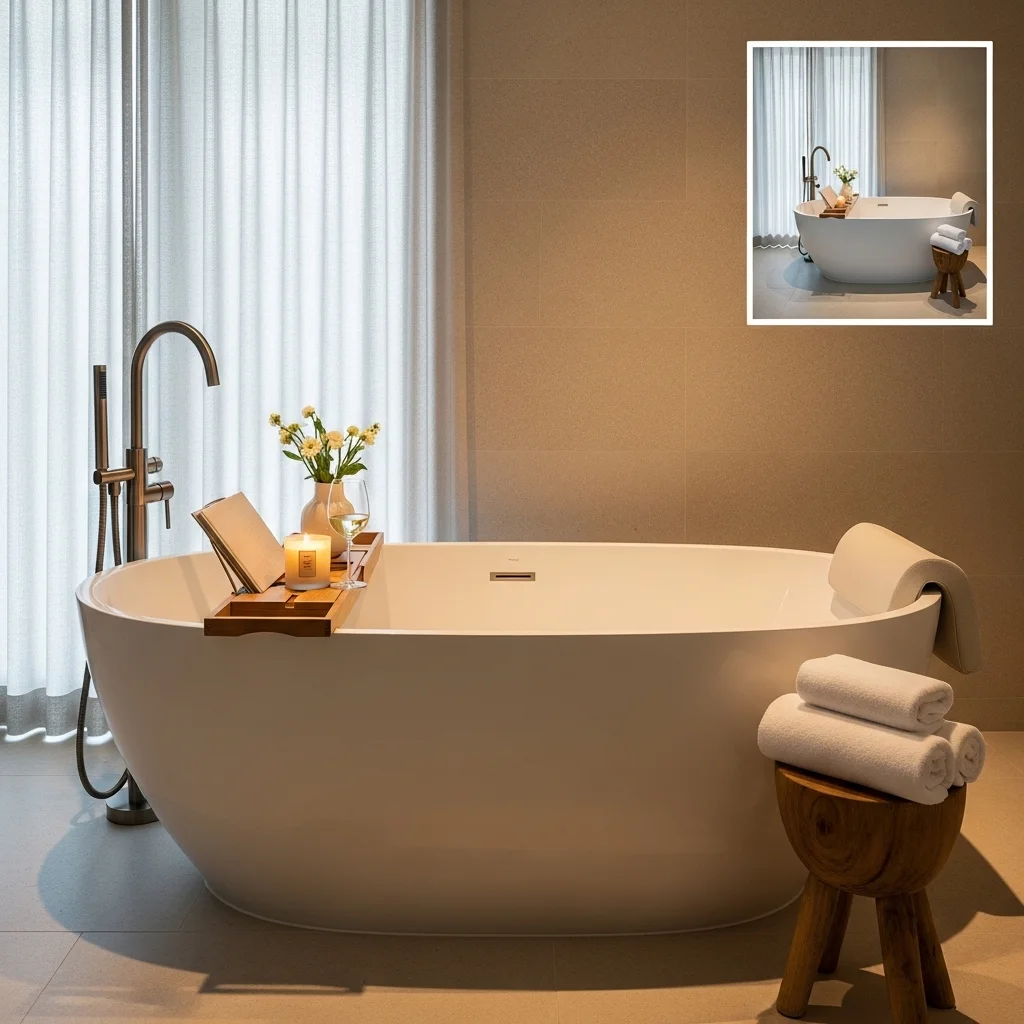
If you have space and budget for a quality bathtub, it can become the anchor of your spa bathroom. Freestanding tubs especially create that luxury hotel feeling.
I’ve installed everything from classic clawfoot tubs to modern egg-shaped soaking tubs. The trend has moved toward deeper, more sculptural tubs designed for full immersion. Japanese soaking tubs, which are deeper and more upright than Western tubs, create an incredible soaking experience in a smaller footprint.
But here’s something many people don’t consider: bathtub comfort varies wildly. I always recommend testing the angle and depth before buying, if possible. Some tubs look stunning but are actually uncomfortable for extended soaking, too upright, too shallow, the neck rest at an awkward angle.
For a truly spa-like experience, add a tub filler that mounts on the floor or wall rather than at the end of the tub. This creates cleaner lines and a more luxurious look. Floor-mounted fillers are striking but require planning during installation since the plumbing needs to come up through the floor.
Bath caddies or trays are essential accessories. A teak or bamboo tray that spans the tub, holding a book, candle, wine glass, and maybe some flowers, makes bath time feel like an event rather than just getting clean.
If a new tub isn’t in the budget, you can still elevate what you have. A good bath pillow, quality bath products, ambient lighting, and a ritual around bath time can transform the experience.
10. Eliminate Visual Clutter Through Smart Storage
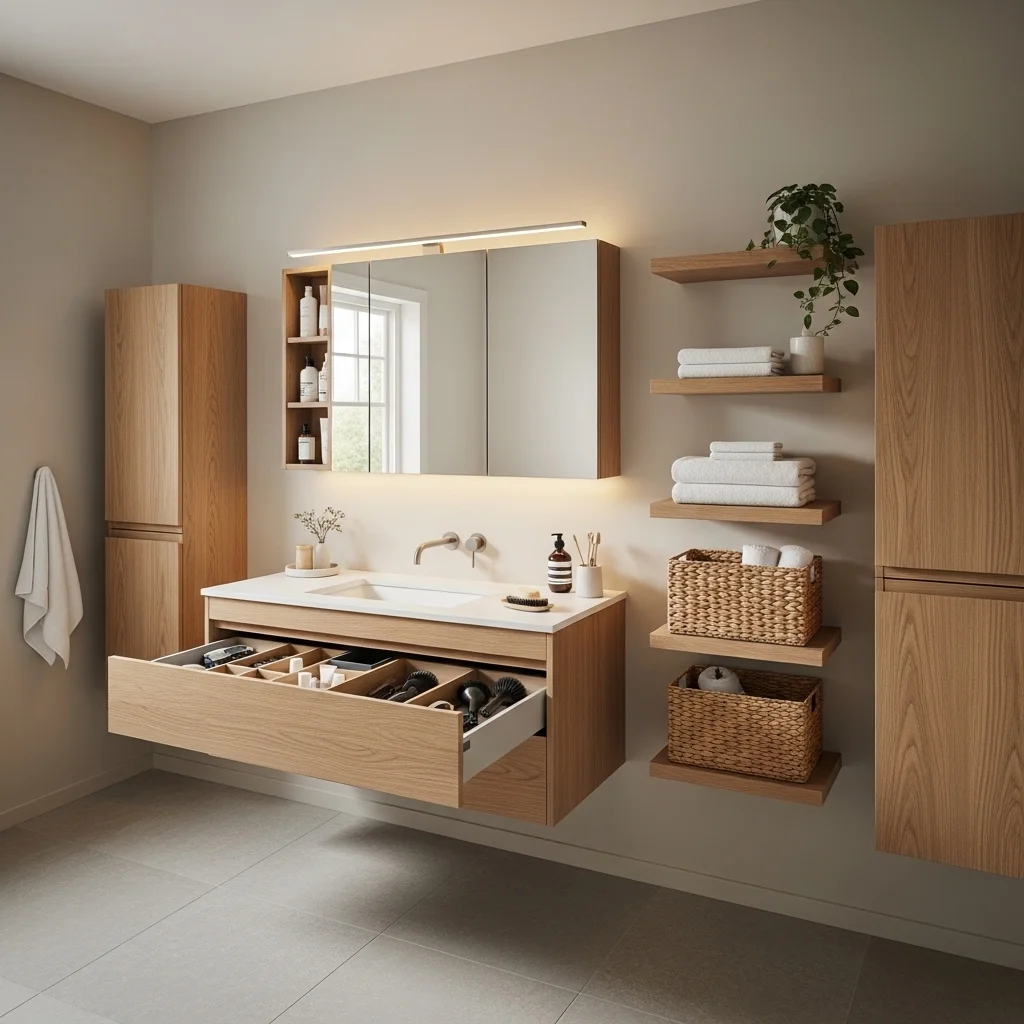
This might be the least glamorous tip, but it’s one of the most important. Spas feel calm partly because they’re meticulously organized you don’t see piles of products, tangled hair tools, or overflowing trash cans.
I’ve become somewhat militant about bathroom storage in my designs. Everything needs a designated home, preferably behind closed doors. Medicine cabinets, vanity drawers with dividers, built-in linen closets, even toe-kick drawers under the vanity I use every available inch.
For existing bathrooms, storage baskets and bins can contain the chaos. I like natural materials like woven seagrass or bamboo that reinforce the spa aesthetic while hiding less attractive necessities.
One solution I’ve used repeatedly: floating vanities with built-in storage. They create a lighter, more modern look than traditional vanities while often offering similar storage capacity. The space underneath makes the room feel larger and easier to clean.
Wall-mounted storage gets overlooked but offers huge potential. Ladder shelves, floating shelves, wall cabinets, even decorative hooks they all free up counter space while adding visual interest.
For towels specifically, I prefer closed storage for most and open display for a curated few. A stack of pristine white towels on open shelving looks beautiful. The hodgepodge of mismatched towels most of us actually own? Those go in the linen closet.
Don’t forget vertical space. Tall narrow cabinets make use of corner areas or gaps beside vanities. Over-toilet storage (done well, not the cheap chrome variety) can be quite attractive and functional.
Making It Happen: Practical Considerations
After working through these ideas, you might be wondering about budget and feasibility. Here’s the truth: creating a spa-like bathroom can cost $500 or $50,000 depending on your starting point and ambitions.
If you’re working with what you have, focus on the changes that require no construction: upgrade your towels and bath mat, add plants, improve lighting with new fixtures or bulbs, incorporate scent, declutter and organize, and choose a cohesive color palette for accessories.
For those considering renovation, prioritize based on your specific bathroom’s weaknesses. A bathroom with good bones but bad lighting benefits most from electrical work. A nicely lit space with a sad shower needs fixture upgrades. A cramped, cluttered bathroom needs better storage solutions.
One thing I’ve learned: phasing a bathroom renovation works better than most people expect. You don’t have to gut everything at once. Maybe you start with paint, lighting, and accessories. Six months later you upgrade the shower. Eventually you replace the vanity. This approach spreads the cost and lets you live with decisions before committing to the next phase.
The spa bathroom trend isn’t going anywhere because it addresses something fundamental, our need for personal sanctuary spaces in increasingly chaotic lives. Your bathroom might be the only room where you regularly lock the door and have true privacy. Making it feel special isn’t frivolous; it’s investing in daily moments of peace.
Start with one or two changes that excite you most. Maybe it’s that rainfall showerhead you’ve been eyeing, or finally buying towels that feel luxurious instead of scratchy. Small improvements compound. Before long, you’ll have created a space that makes you want to linger a little longer each day, and that’s exactly what a spa bathroom should do.