There’s a moment, usually on a vacation at a nice hotel, when you step into the bathroom and just stop. The light is perfect. The materials feel expensive under your fingertips. There’s a specific kind of quiet in the room, like it was designed specifically to slow you down. And then you go home and look at your own bathroom with fresh, slightly disappointed eyes.
I’ve had that moment more times than I can count. And it sent me down a years-long obsession with understanding what actually makes a bathroom feel luxurious not just expensive, but genuinely indulgent and restorative. The difference between a bathroom that feels like a chore and one that feels like a retreat rarely comes down to square footage or budget alone. It comes down to decisions. Specific, thoughtful decisions about materials, light, texture, and detail.
Over the years, I’ve renovated three bathrooms, consulted on a dozen more for friends and family, spent time in high-end hotels studying what they do and why it works, and read more than my fair share of interior design literature. What follows is genuinely the best of what I’ve learned: ten luxury bathroom decor ideas that are achievable in real homes, with real budgets, and real space constraints.
Some of these are big moves. Some are surprisingly small. All of them make a meaningful difference.
1. Invest in Natural Stone Even If It’s Just One Surface
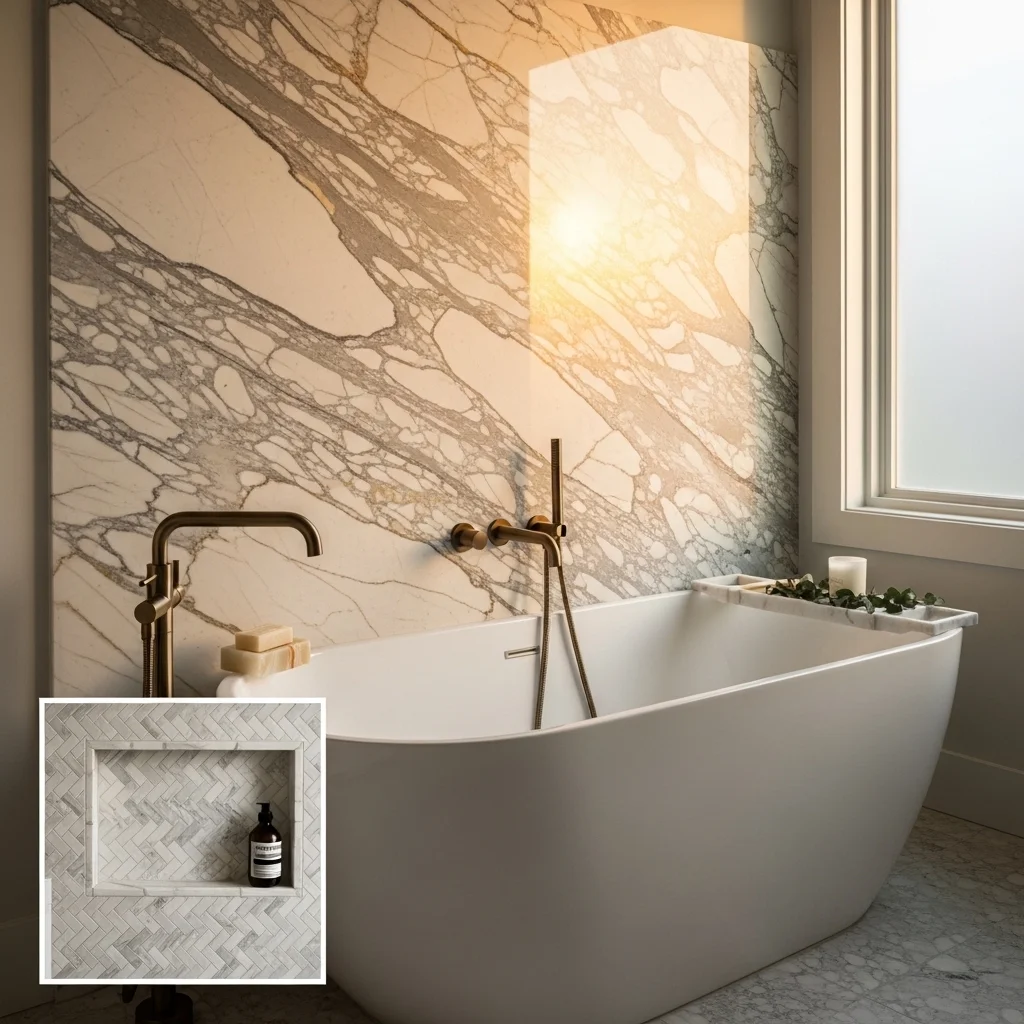
Nothing signals luxury quite like natural stone. Not stone-look tile, not printed porcelain, trying to pass as marble, actual natural stone. The variation in veining, the cool weight of it under your hand, the way it photographs and catches light, these are qualities that reproduction simply cannot fully replicate, no matter how sophisticated the printing technology gets.
Now, I’m not saying you need to clad every surface in Calacatta marble. Full marble bathrooms are beautiful, but they’re also expensive, high-maintenance, and frankly can tip into cold and clinical if not balanced carefully. The smarter approach and the one that works in real homes with real budgets is to choose one surface and do it in natural stone, then build everything else around it.
The most impactful single stone surface in a bathroom is usually the floor or the main vanity wall. A honed marble or travertine floor immediately elevates the entire room, and because it’s horizontal, it draws the eye down and creates a sense of groundedness and solidity. Alternatively, a stone feature wall behind the bathtub or shower what designers sometimes call a wet wall becomes the visual anchor of the space.
If full slabs feel financially out of reach, consider stone mosaics smaller format tiles in marble, travertine, or limestone that can cover a floor or shower niche at a fraction of the cost of full slabs. The visual effect is different but equally beautiful, and in some ways more artisanal.
One practical note from personal experience: if you go with marble, seal it properly and maintain that seal annually. Marble is porous and will stain red wine, makeup, and certain cleaning products. This isn’t a reason to avoid it; it’s just a reason to go in with realistic expectations and a maintenance routine.
2. Get the Lighting Right All Three Layers of It
Lighting is, without exaggeration, the single biggest difference between a bathroom that feels luxurious and one that feels like a gas station restroom. And yet it’s the element most homeowners either neglect entirely or handle with a single overhead fixture that casts flat, unflattering light across everything.
High-end bathrooms hotel bathrooms, spa bathrooms, the kind you remember almost always use layered lighting. Three distinct layers, each serving a different purpose.
Ambient lighting is the base layer. This is the general illumination that fills the room often recessed downlights or a ceiling fixture. This alone is never enough.
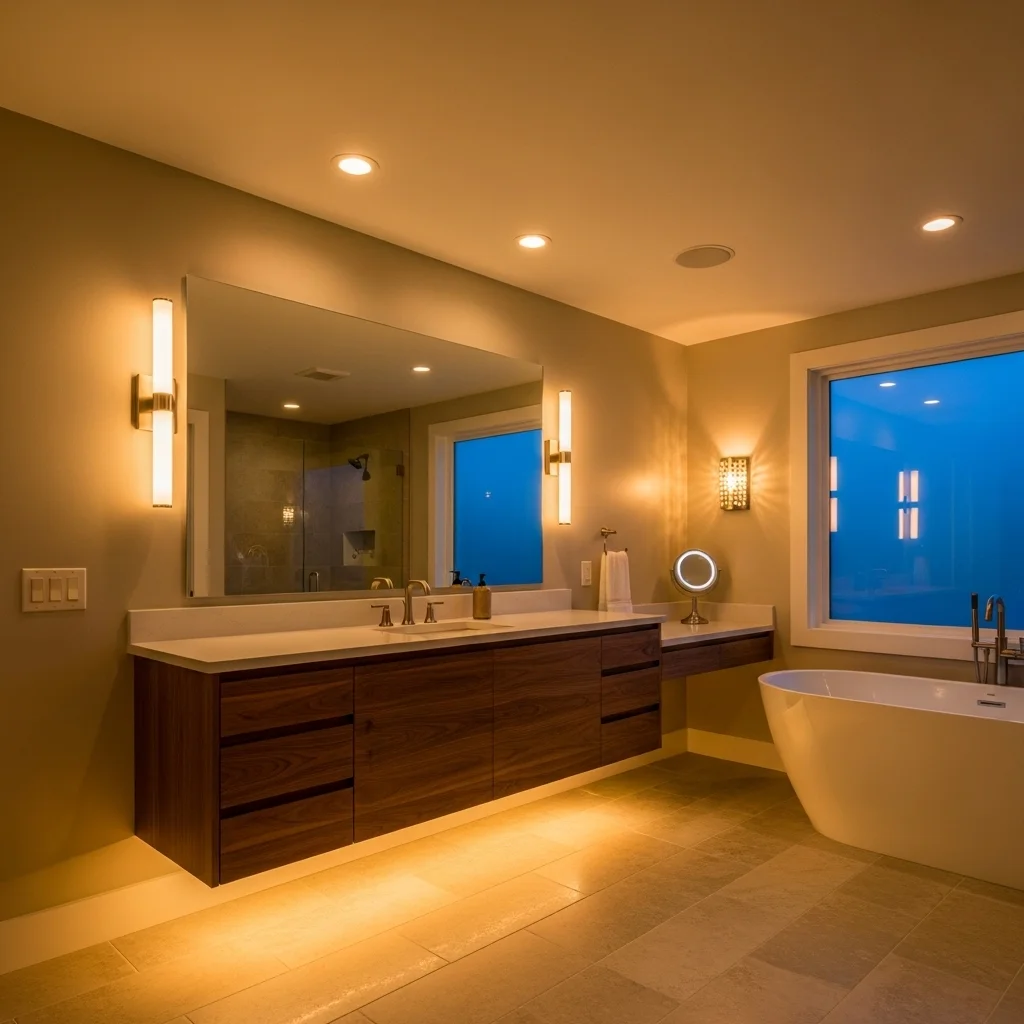
Task lighting is focused illumination designed for specific functions primarily the vanity area. The biggest mistake people make here is mounting a single light above the mirror and calling it done. Overhead light casts downward shadows on the face, which is exactly what you don’t want when you’re trying to apply makeup or shave. The solution is to flank the mirror with vertical sconces on either side at approximately eye level. This distributes light evenly across the face the way professional makeup artists light their subjects. Hotel bathrooms figured this out decades ago.
Accent lighting is the layer that creates atmosphere and it’s what separates a functional bathroom from a genuinely luxurious one. This might be LED strip lighting under a floating vanity that creates a soft warm glow at floor level. It might be a backlit mirror. It might be a small wall sconce near the bathtub that gives you warm light for an evening soak without turning on the full overhead system.
Dimmer switches on everything are non-negotiable. The ability to bring the light down in the evening transforms the bathroom from a purely functional space into something restorative.
If you can only make one change to your bathroom today, upgrade the lighting. The return on investment in terms of how the space feels is higher than almost anything else you could do.
3. Choose a Freestanding Bathtub as the Focal Point
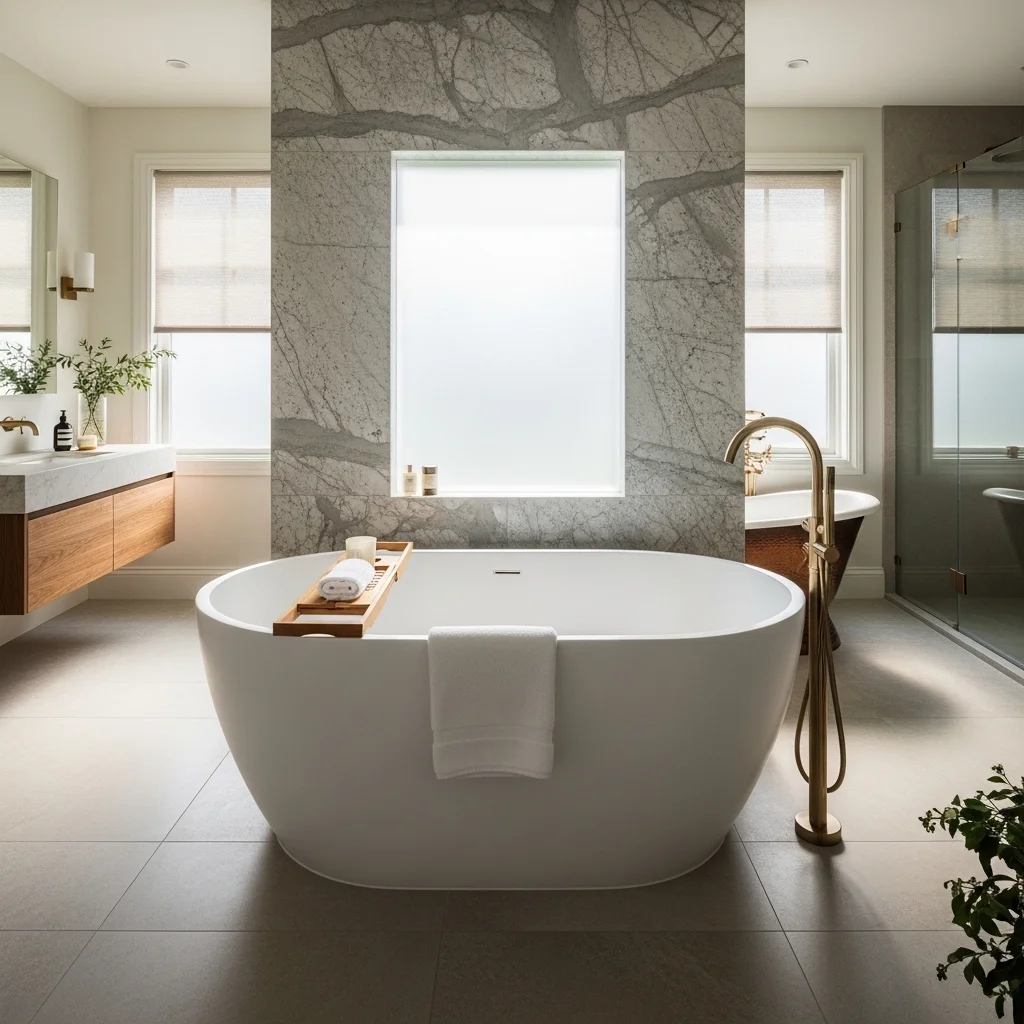
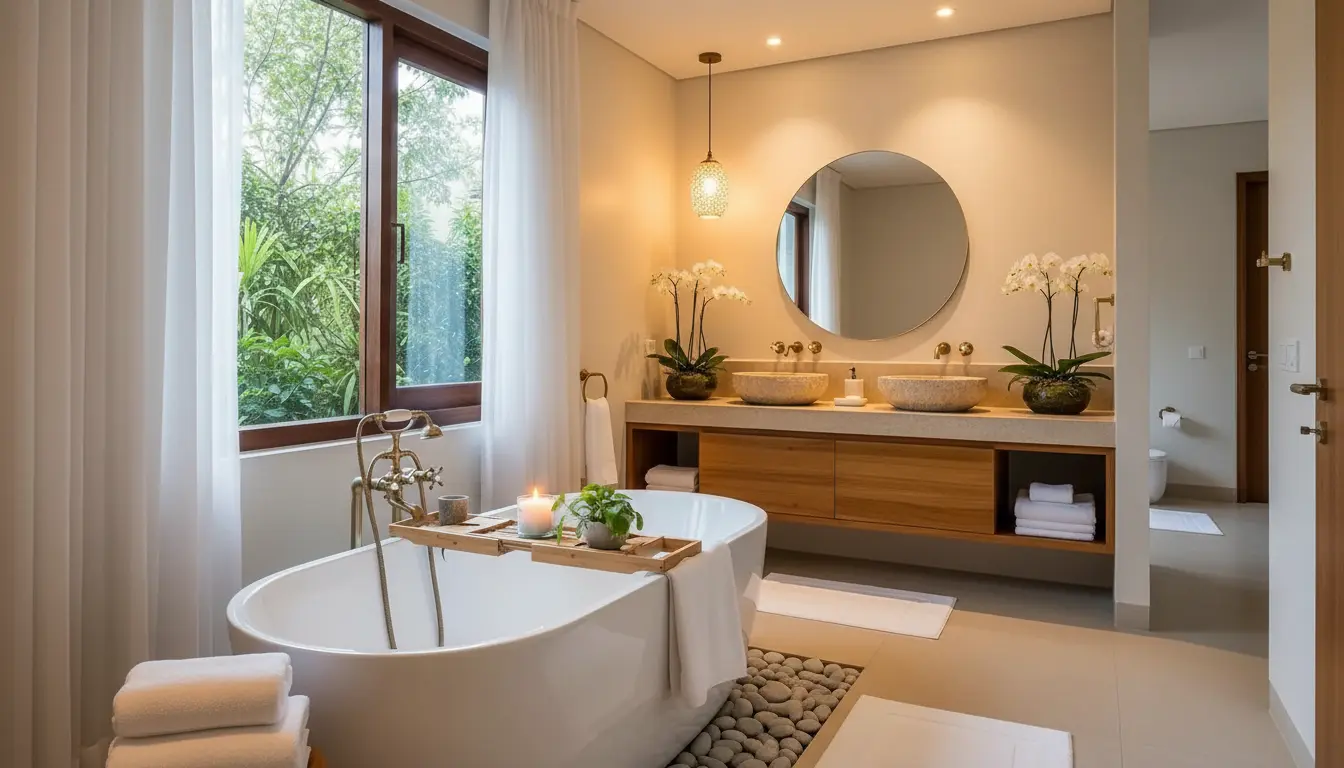
A freestanding bathtub is to a luxury bathroom what a fireplace is to a living room. It’s architectural. It creates a focal point around which everything else in the room organizes itself. Even in a bathroom where everything else is relatively simple, a beautiful freestanding tub makes the entire space feel considered and deliberate.
Placement matters enormously. The most dramatic positioning is centered on a feature wall, ideally with a window behind or above it if the privacy situation allows. Natural light on a white freestanding tub is one of the most photographed interior design moments for good reason it’s genuinely beautiful. In longer, narrower bathrooms, positioning the tub at the far end creates a sense of destination, of something to move toward.
The floor-mounted tub filler, the faucet that rises from the floor beside a freestanding tub, is almost always worth the extra plumbing complexity. Wall-mounted faucets work but can look slightly awkward with a fully freestanding tub. The floor-mounted option completes the visual picture.
One realistic note: freestanding tubs are not the most practical bathing solution for everyday use. They can be harder to enter and exit, particularly for older adults or those with mobility considerations. They’re also typically not compatible with shower attachments unless you add a handheld option. These are real tradeoffs worth considering.
4. Install Heated Floors You’ll Wonder How You Lived Without Them
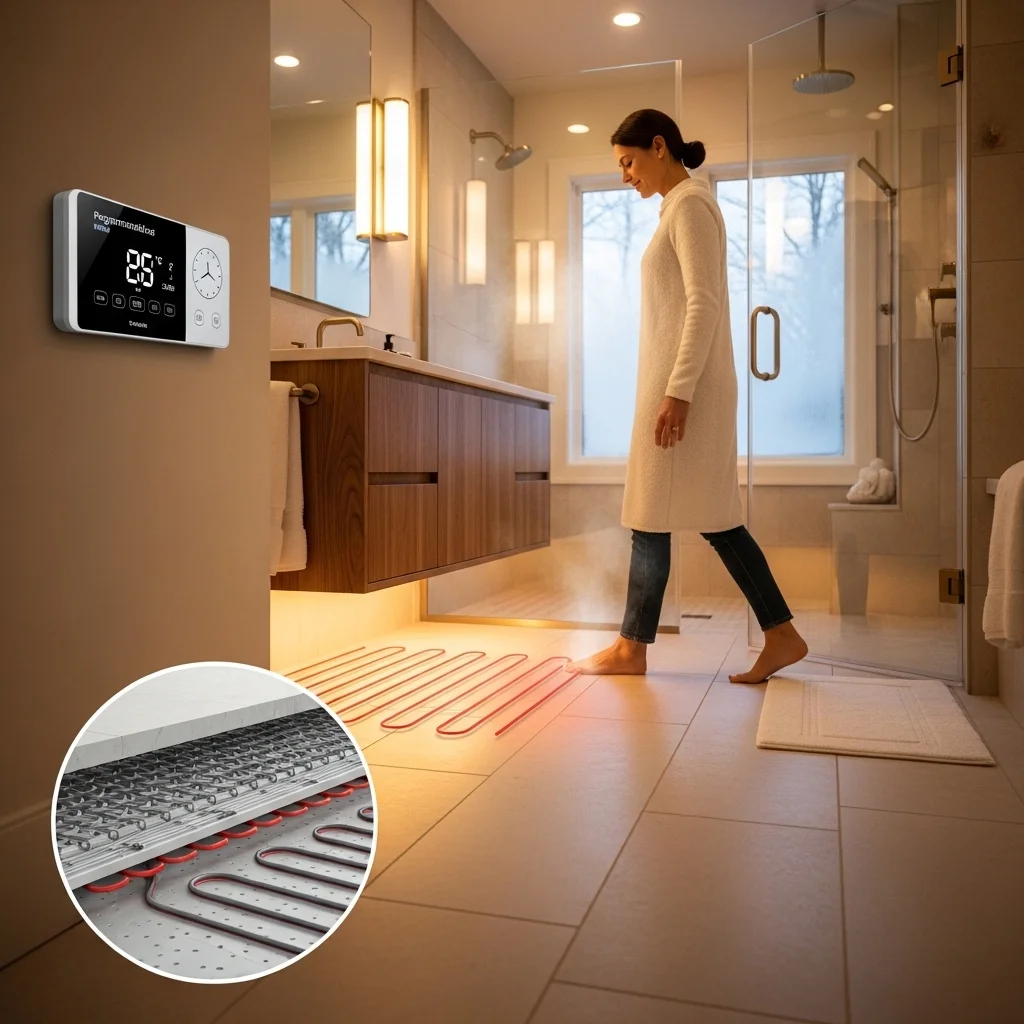
Of all the luxury bathroom upgrades I’ve experienced, heated floors might have the highest ratio of everyday impact to perceived extravagance. The first time you step out of a warm shower onto a bathroom floor that’s the same temperature as the rest of your body particularly on a cold morning in January, something shifts in your understanding of what comfort can mean.
Radiant floor heating in bathrooms is far more achievable than most people assume. The technology has improved significantly, and costs have come down. The two main options are hydronic systems, which circulate warm water through pipes beneath the floor and are typically installed during major renovations, and electric mat systems, which are thin heating elements installed beneath tile during any floor installation or reinstallation.
Electric radiant mat systems are the more practical option for most home renovations. They can be installed under ceramic, porcelain, stone, and even some luxury vinyl tile products. A programmable thermostat allows you to set the floor to reach temperature before your alarm goes off, so the floor is warm when you first walk in.
The operating costs are lower than many people expect. A typical bathroom with electric radiant heat running for a few hours in the morning adds relatively little to monthly electricity bills, far less than a space heater, and infinitely more pleasant in how it distributes warmth.
From a resale perspective, heated bathroom floors are a feature that tends to resonate strongly with buyers. It’s one of those things that’s easy to appreciate the moment someone describes it and impossible to forget once experienced firsthand.
5. Create a Spa-Like Shower Experience
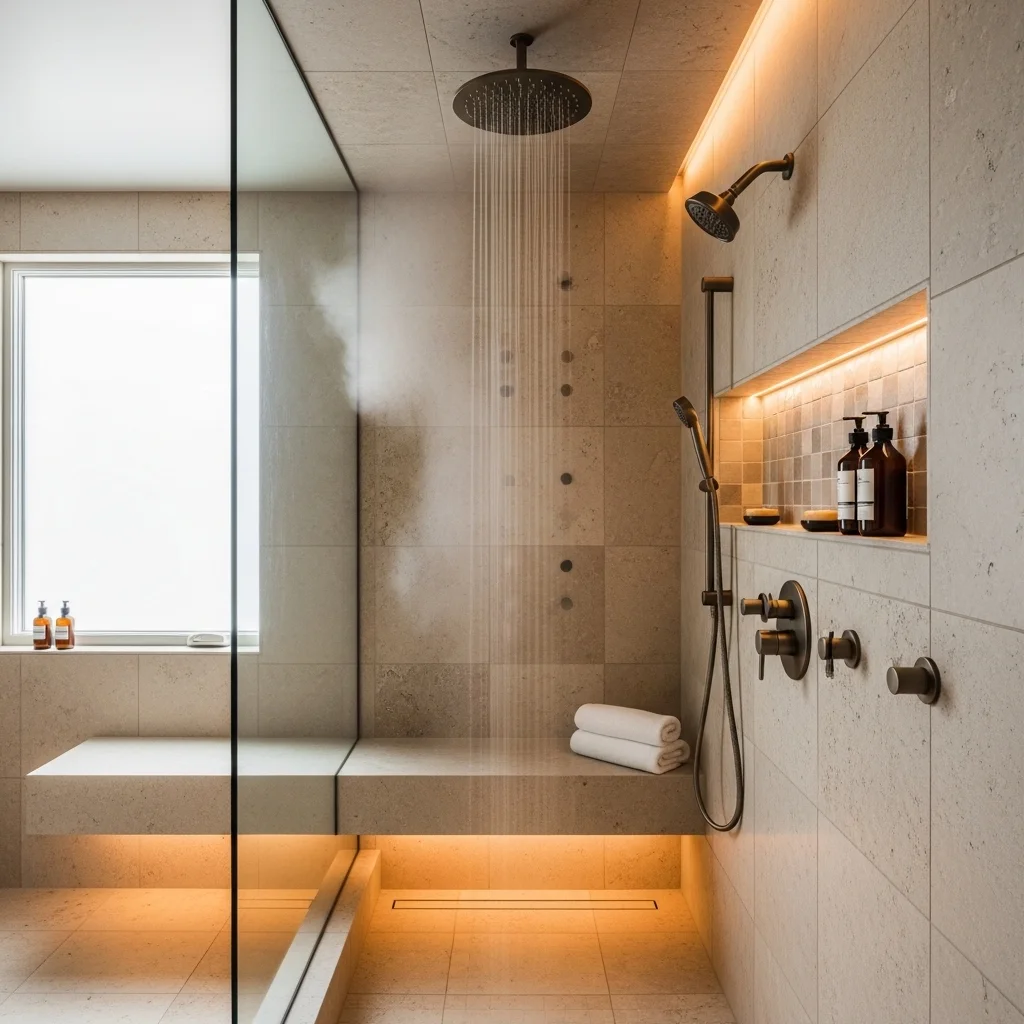
The shower has replaced the bathtub as the centerpiece of the modern luxury bathroom for most people. Where previous generations invested in soaking tubs, contemporary design increasingly focuses on the shower expanding it, improving it, and turning it into something that feels genuinely restorative rather than purely functional.
The first step is space. If your current shower is a small corner enclosure, the most transformative upgrade is expanding it or at the very least, removing the enclosure door and creating a wet room style open shower with a simple frameless glass panel. Open shower designs make bathrooms feel significantly larger and remove the visual clutter of framed shower doors and hardware.
Beyond space, the shower experience itself can be transformed through water delivery. A large format rain shower head, ceiling-mounted, at least 10 to 12 inches in diameter creates the sensation of standing in warm rain rather than standing under a functional nozzle. Add a secondary handheld attachment for practical rinsing, and consider a body spray system on the walls if the space and budget allow.
Frameless glass enclosures either fully frameless or with minimal metal framing are worth the premium over aluminum-framed alternatives. The difference in visual quality is significant, and frameless glass is also easier to clean because there are no metal tracks for soap scum to accumulate in.
Shower niches with recessed shelving built into the shower wall eliminate the visual clutter of plastic shower caddies and look genuinely beautiful, particularly when tiled to match or complement the shower walls. Stone or tile-lined niches with a small stone shelf are one of those details that elevate a shower from functional to boutique hotel quality.
The bench or seat deserves mention too. A built-in shower bench in stone or tiled material is both practical and visually satisfying it gives the shower a sense of settled permanence and allows for a more leisurely, spa-like experience.
6. Upgrade Your Vanity and Hardware
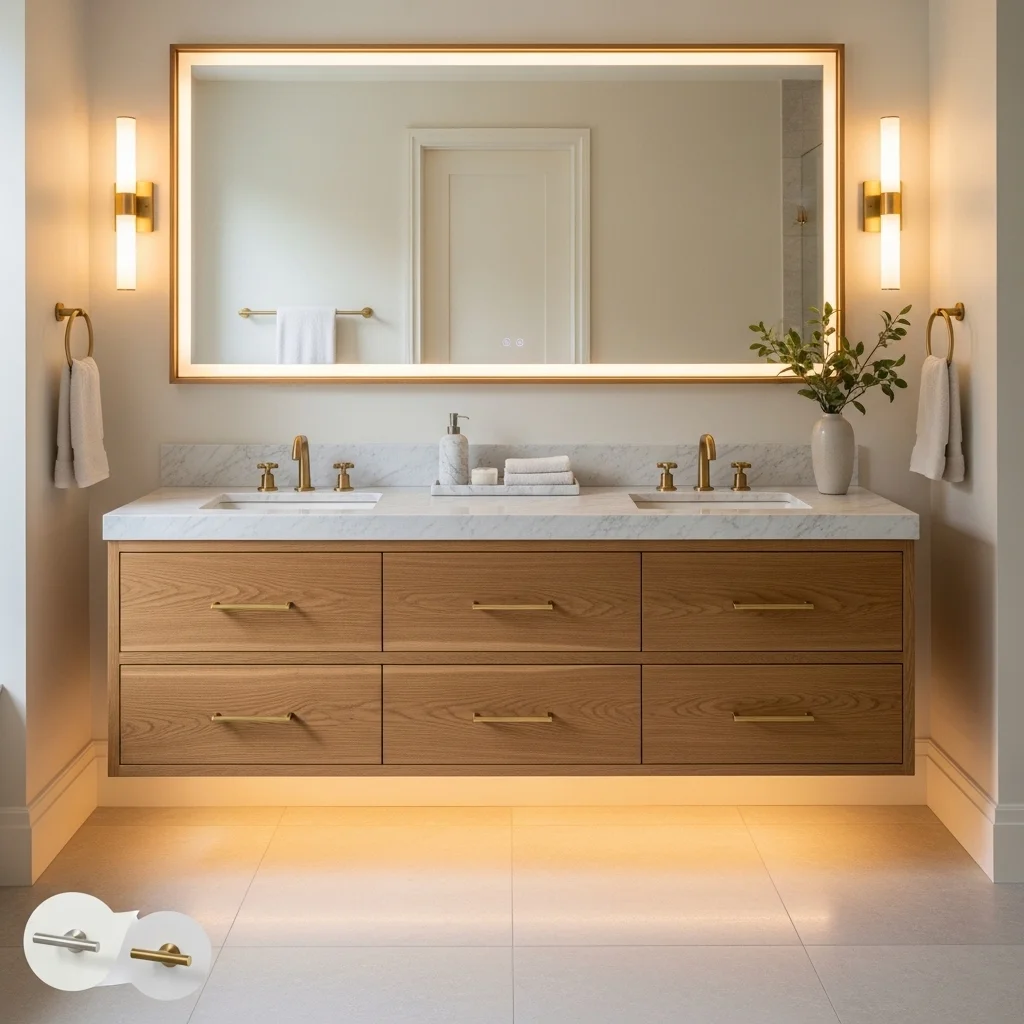
The vanity is the workhorse of the bathroom it holds the sink, provides storage, and anchors the grooming experience. It’s also one of the most visible elements in the room, which means a beautiful vanity does enormous visual work.
Floating vanities, wall-mounted units with no legs touching the floor, are a hallmark of contemporary luxury bathroom design, and for good reason. They make the floor visible and continuous, which makes the room feel larger. They’re easier to clean around. And the gap between the cabinet base and the floor is the perfect location for the LED strip lighting I mentioned earlier, which creates that soft, ambient glow that reads immediately as spa-quality.
For materials, solid wood vanities in natural or painted finishes have warmth and quality that flat-pack alternatives simply can’t match. If budget is a consideration, a quality flat-pack base can be transformed significantly by upgrading the countertop to stone, changing the hardware, and adding a quality mirror.
Hardware is the jewelry of a vanity, and it’s often underestimated. The difference between standard brushed nickel pulls and quality unlacquered brass or matte black hardware is subtle in cost but significant in effect. Hardware should be consistent throughout the bathroom, matching the faucet finish, the towel bars, the toilet roll holder, and any hooks. Mixing metals can work beautifully if done intentionally, but it requires thought; inconsistency that looks accidental reads as careless.
The sink itself warrants investment. Undermount sinks, flush or below the countertop, are cleaner-looking than drop-in options and easier to wipe down. Vessel sinks standalone basins sitting on top of the counter can be extremely beautiful, particularly in stone, ceramic, or hammered copper, though they require a lower counter height to be functional.
7. Add Texture Through Tiles: Think Beyond Basic White
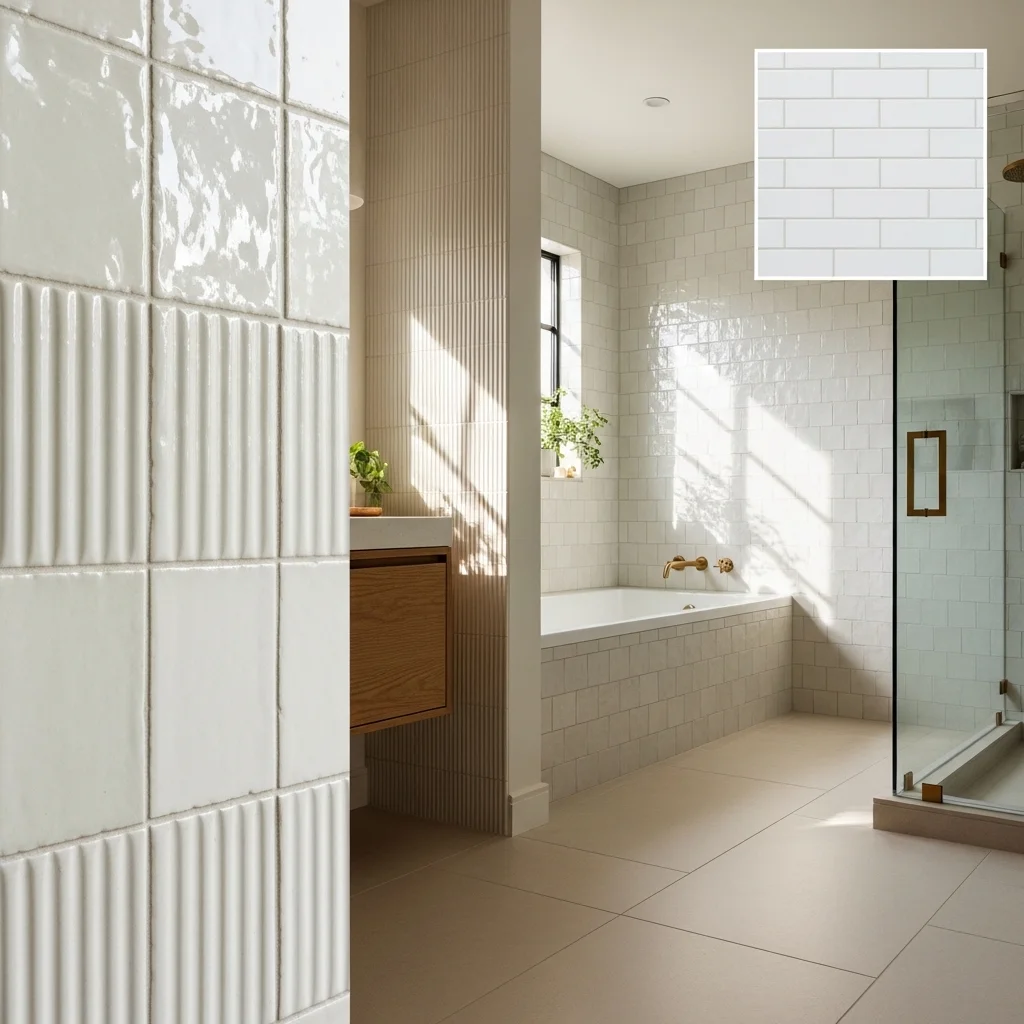
Tile is probably the most powerful design tool in a bathroom, and it’s an area where the gap between thoughtful and thoughtless choices is enormous. Basic white 4×4 ceramic subway tiles are fine. They’re clean, they work, and they’ve served bathrooms faithfully for decades. But in a luxury bathroom, tile becomes an opportunity to introduce texture, pattern, and visual depth that elevates the entire space.
Zellige tiles, the handmade Moroccan clay tiles with slightly irregular surfaces and glaze variations, have become enormously popular in high-end bathroom design, and for good reason. The slight imperfection in each tile means the surface catches light differently across its area, creating a sense of movement and texture that flat machine-made tiles simply cannot replicate. In a shower or as a feature wall, a field of zellige tiles in a warm white, sage green, or deep teal is genuinely beautiful.
Large-format tiles, 24×24 inches or larger, on floors and walls create a sense of expansiveness by reducing the number of visible grout lines, making surfaces look cleaner and more continuous. This is a particularly effective technique in smaller bathrooms where visual clutter can feel overwhelming.
Fluted or ribbed tiles tiles with vertical grooves or channels add architectural texture to walls without introducing color or pattern, which makes them versatile across different design styles. A fluted tile feature wall behind a bathtub or as a vanity backsplash is a contemporary detail that reads immediately as design-forward.
Grout color is a decision that deserves more thought than it usually gets. White grout shows everything and requires significant maintenance to keep clean. A tone-on-tone grout matching or closely coordinating with the tile color creates a more seamless surface that reads as more intentional and ages more gracefully.
8. Bring in Natural Elements Plants, Wood, and Stone Accessories
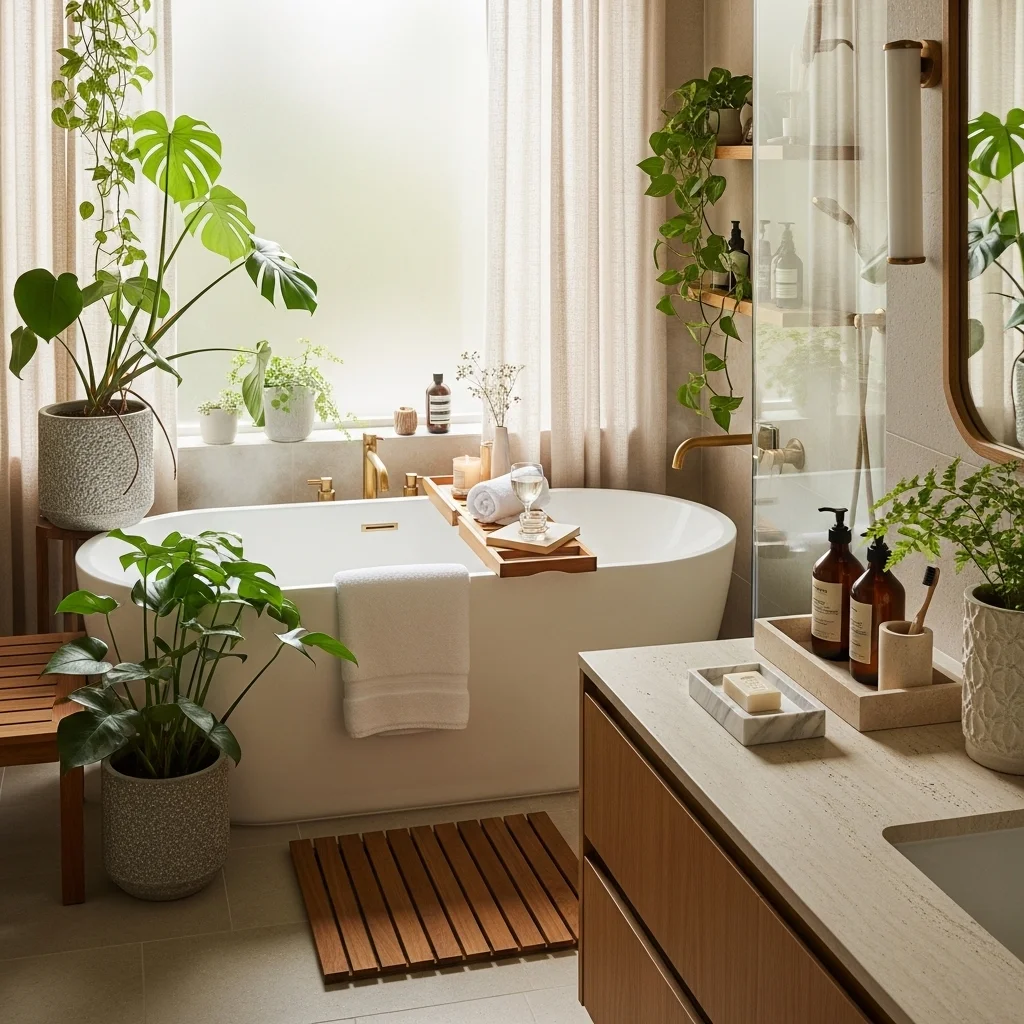
Luxury spas and high-end hotels have understood for years what residential bathroom design is only recently catching up to: natural materials and living elements create an atmosphere that manufactured materials simply cannot. There’s a reason every aspirational spa photograph features a wooden bath tray, a eucalyptus stem, and a stone soap dish. These elements communicate slowness, naturalness, and care in a way that chrome and plastic never will.
Plants in bathrooms are more viable than most people assume. Many species thrive in the warm, humid bathroom environment in fact, bathrooms can be ideal for plants that struggle elsewhere in the home. Pothos trails beautifully from a high shelf. Ferns love humidity. Peace lilies handle low light and warmth. A large monstera in the corner of a bathroom with decent natural light can be genuinely transformative. The green introduces life and color, filters air quality, and creates an atmosphere that’s immediately more spa-like than any accessory you could buy.
Teak wood elements bath mats, bath trays, shower benches add warmth that stone and tile alone can’t provide. Teak is particularly appropriate in wet environments because it’s naturally water-resistant and doesn’t harbor mold or mildew the way other woods might. A teak bath tray across a soaking tub, holding a candle, a small book, and a glass of wine, is as close to hotel bathroom perfection as a home can achieve.
Stone accessories, such as soap dishes, toothbrush holders, trays in marble, travertine, or onyx, add material consistency if your bathroom features stone surfaces, and they’re a relatively affordable way to introduce the luxury of natural stone if your main surfaces are tile or man-made materials. The weight and coolness of a marble soap dish feel categorically different from a plastic one, even if the functional difference is zero.
9. Curate Your Towels and Textiles Like a Hotel Does
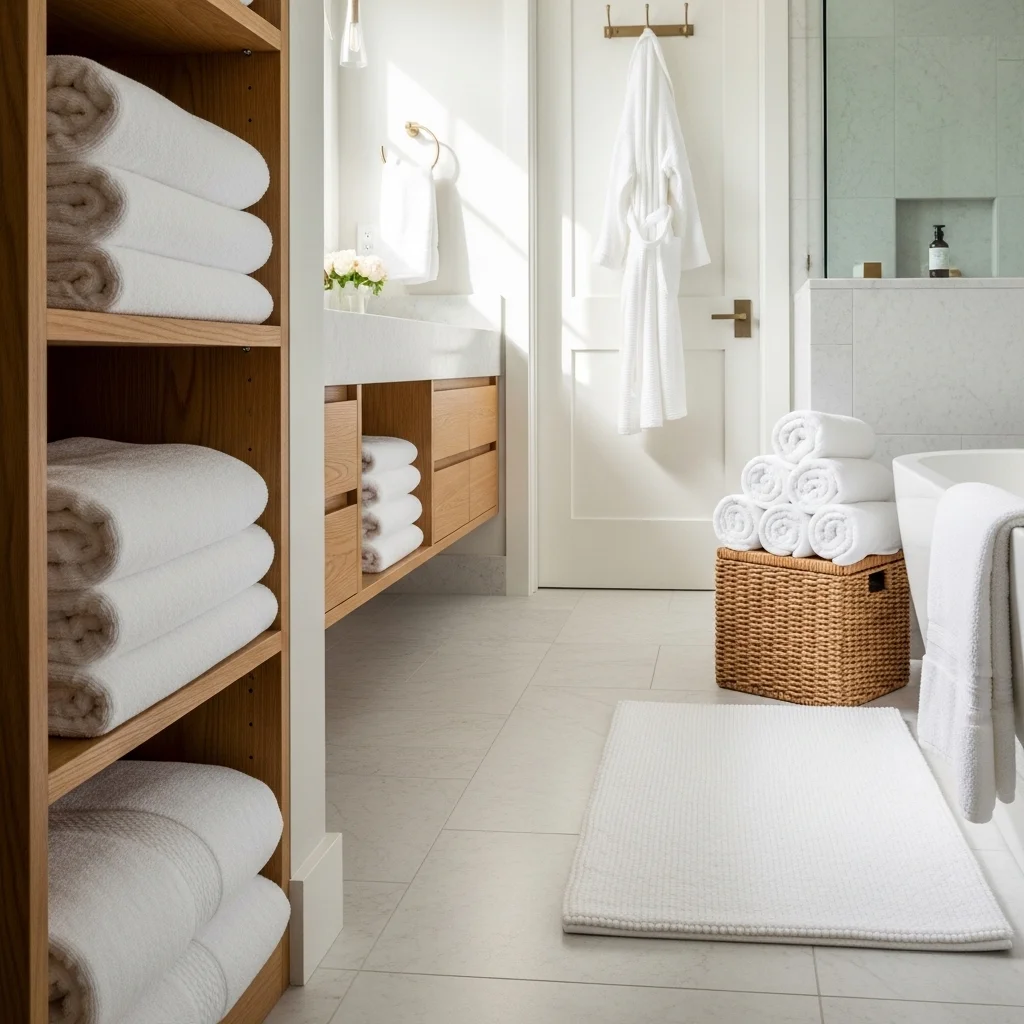
This is the area where the gap between a luxury hotel bathroom and most home bathrooms is most easily closed and most consistently overlooked. Hotels invest in their towels. Not just in quality, but in presentation. And both of those things matter more than most people realize.
Quality towels, genuinely high thread count, long-staple Egyptian or Turkish cotton feel different from the moment you pick them up. They’re heavier, more absorbent, and softer against the skin. They also last longer, which means the investment amortizes over time. A set of high-quality white towels in large bath sheet size is one of those purchases that changes the daily experience of your bathroom in a small but genuine way.
White towels, specifically, are worth advocating for. Hotels use them because white communicates cleanliness, because they can be bleached when needed, and because they work with any bathroom color scheme. A neat stack of white towels on an open shelf or in a wicker basket is a simple, universally effective luxury detail.
Presentation matters too. Towels loosely folded and shoved into a cabinet feel nothing like towels rolled neatly and displayed in a basket or stacked on a shelf. The physical quality of the towels is the same; the experience of encountering them is completely different. It takes two extra minutes after laundry.
Beyond towels, a quality bath mat thick, plush, again preferably in natural cotton and a waffle-weave robe hanging on a good hook on the back of the door complete the textile picture. These are small details individually. Collectively, they create the hotel bathroom atmosphere that most people assume requires renovation to achieve.
10. Edit Ruthlessly Luxury Is Defined as Much by What’s Absent as What’s Present
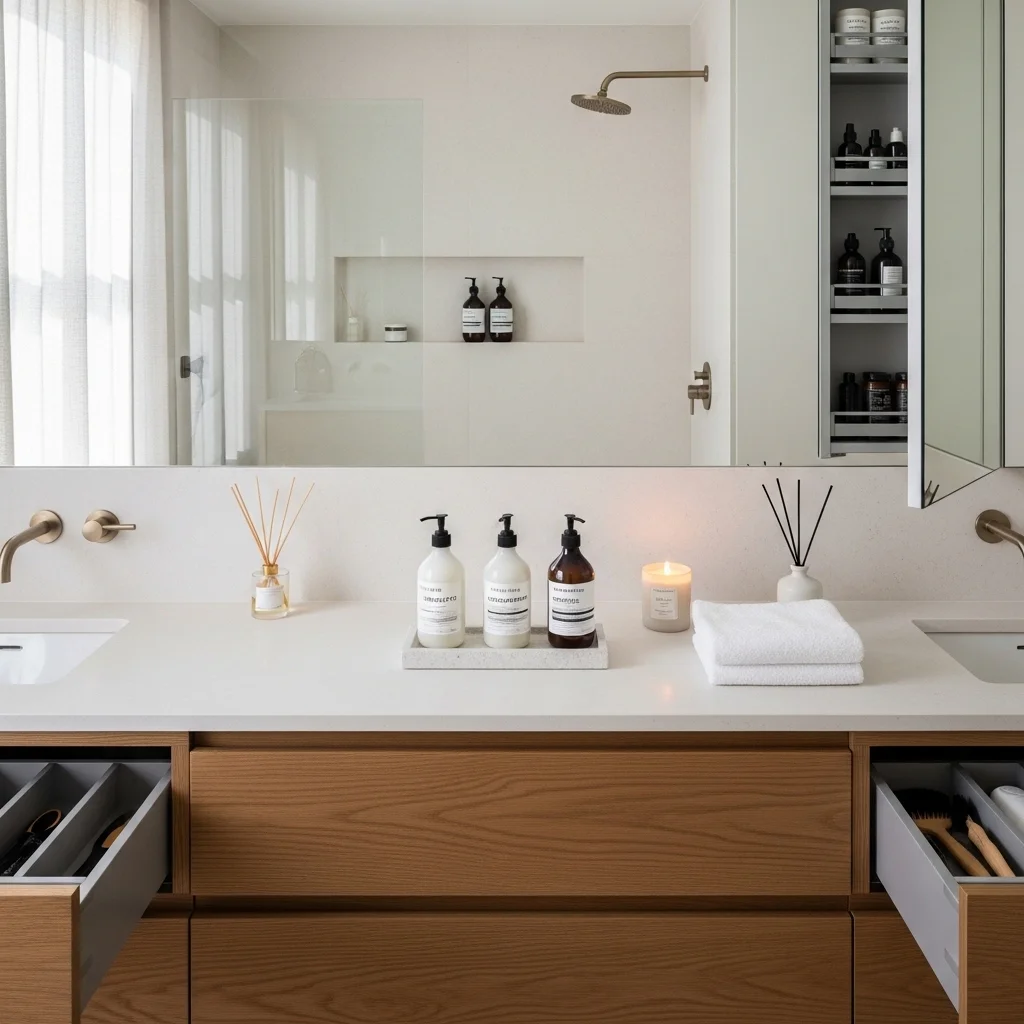
This is the principle I wish someone had told me earlier, because it runs counter to the instinct that more is more.
Walk into the bathroom of a truly luxurious hotel and notice what isn’t there. There are no plastic bottles crowding the shower ledge. There are no razors and shampoos and conditioners and body washes and exfoliating scrubs all competing for space. There’s no toilet brush in a cheap plastic holder visible in the corner. There are no bath toys from last weekend, no half-empty cleaning spray sitting on the back of the toilet, no clutter of expired medications in an open-topped basket.
Luxury spaces are edited spaces. They contain exactly what they need and nothing more, and everything that is present has been chosen and positioned intentionally.
This doesn’t mean your bathroom needs to be cold or impersonal. It means the editing is ruthless. Every item that lives on a visible surface should earn its place either functionally or aesthetically. Everything else lives behind closed doors, in drawers, in properly organized storage.
Good storage is therefore inseparable from luxury bathroom design. Deep drawers with organizer inserts, medicine cabinets with adjustable shelving, vanity cabinets with thought-out organization for what actually needs to live in a bathroom. These functional decisions create the conditions for the clean, calm surfaces that read as luxurious.
Decanting is a related strategy borrowed directly from hotel design. Rather than displaying multiple shampoo, conditioner, and body wash bottles in their original packaging, decant them into matching ceramic or glass dispensers. The visual effect of three or four matching frosted glass bottles versus a chaos of plastic is remarkable for something that costs almost nothing to implement.
Scent, finally, is worth considering as part of the editing approach. A single quality candle or a small reed diffuser in a calibrated fragrance, something clean and natural rather than aggressively artificial, is enough. Scent in a bathroom should be a barely-there background note, not a competing presence.
Pulling It All Together
The truth about luxury bathroom design is that it’s more about philosophy than budget. Yes, some of these ideas, the freestanding tub, the natural stone floor, the radiant heating, require meaningful investment. But others, the layered lighting, the edited surfaces, the quality towels, the plants, and natural accessories are achievable in almost any bathroom at almost any budget level.
The underlying principle running through all ten ideas is the same: intentionality. Every choice made with purpose, every detail considered in relation to the whole, every surface edited until only what earns its place remains. That’s what creates the spa-like quality that makes certain bathrooms unforgettable.
You don’t need to do all ten at once. Pick one or two that resonate most with your current space and current situation. Upgrade the lighting. Add a plant and a teak tray. Replace your towels. Swap the hardware. Each improvement compounds on the others, and over time, the accumulated effect of thoughtful choices is exactly what luxury looks and feels like in a real home.